From Junior Tasks to Market Meltdown: Claude’s Legal Weapon Unleashed
Executive Summary
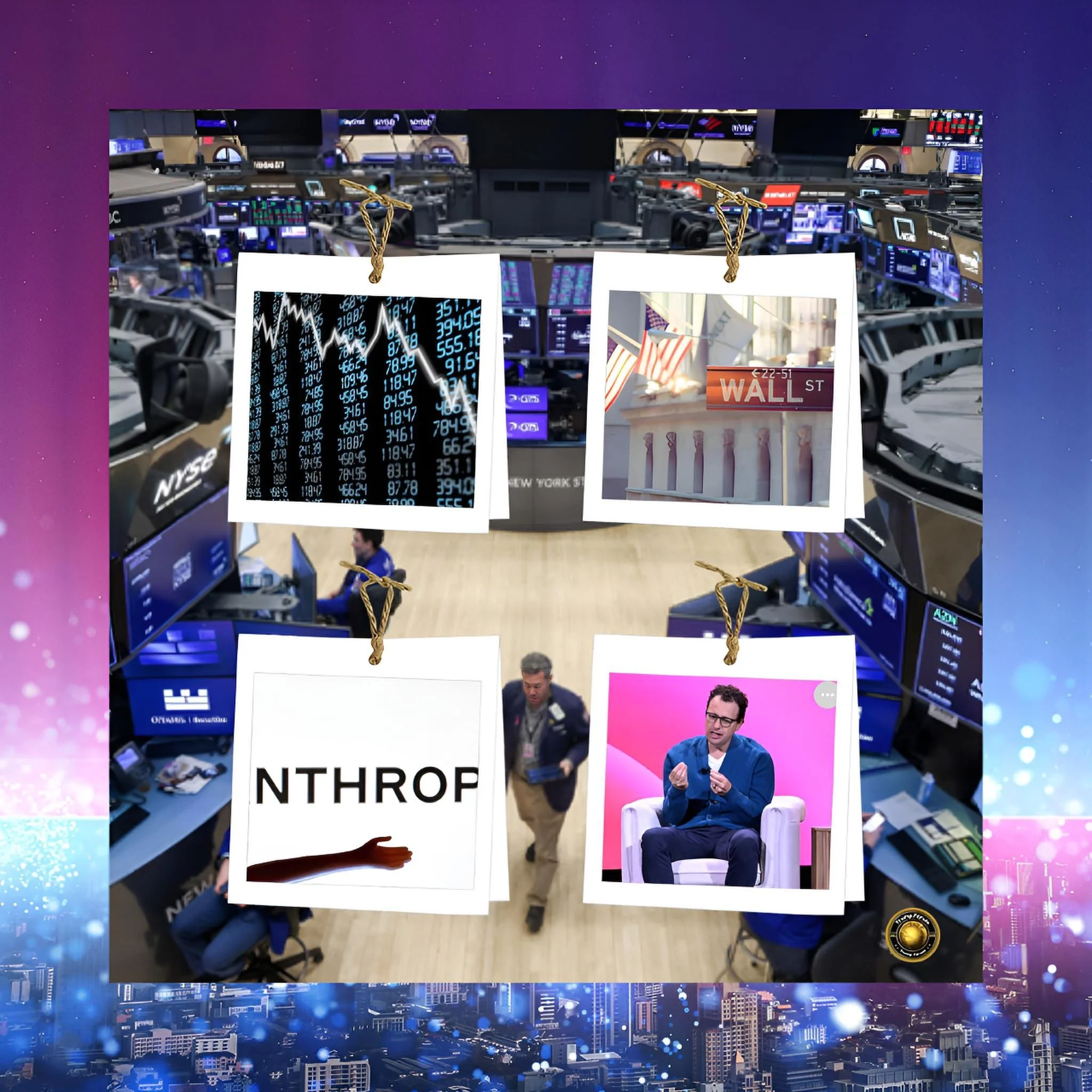
Anthropic's entry into the legal application layer with its Claude legal plugin triggered a violent selloff in legal tech, data analytics, and professional software stocks, wiping out billions in market value in Europe and the United States within days.
The episode exposed how dependent the incumbent ecosystem had become on foundation-model providers and how quickly investors now extrapolate from a single product announcement to sweeping narratives about the obsolescence of entrenched platforms and billable-hour economics.
Yet the underlying tool is, at least in its initial incarnation, a configurable workflow assistant rather than an autonomous digital attorney, automating contract review, NDA triage, compliance checklists, and standardized legal briefings while still requiring supervision and sign-off from licensed lawyers.
The speed and scale of the market reaction arguably reflected a mix of rational repricing of future cash flows and classic overreaction, as commentators from legal technology, information governance, and capital markets communities urged caution about assuming a near-term collapse of sophisticated enterprise platforms in favor of relatively basic plugins.
Anthropic appears to have anticipated controversy over legal risk, model safety, and the impact on associate-level work. Still, the extent of the cross-sector "SaaSpocalypse" was almost certainly greater than the company forecast, given that the plugin was launched as one of 11 vertical agents and described with repeated caveats that it does not provide legal advice.
The firm communicated guardrails and limitations but did relatively little to inoculate public markets and incumbent vendors against worst-case interpretations, leaving a vacuum that was rapidly filled by headlines about disrupted billable hours and existential threats to legacy software.
Introduction
The legal technology sector has spent the better part of a decade building products on top of the very foundation models that now appear poised to compete with it.
For years, the playbook was linear and reassuring: obtain APIs from Anthropic, OpenAI, or another leading model provider; wrap them in domain-specific prompts and user interfaces; add proprietary content and integrations; then sell the resulting platform to law firms, corporate legal departments, and government agencies.
Anthropic's decision to ship its own legal plugin inside the Claude Cowork environment broke that tacit truce between supplier and customer, signaling that the model provider intends to occupy parts of the application and workflow stack previously presumed safe for specialist vendors.
Within hours of the announcement, European legal publishers RELX and Wolters Kluwer, as well as other data-intensive professional software companies, saw their share prices fall between roughly 7% and 20%. At the same time, US-listed peers and broader software indices also weakened as investors extrapolated AI disruption risk across adjacent sectors.
This article examines whether that market selloff constituted a rational reassessment of future earnings or an emotional overreaction to the optics of a foundation-model provider "eating its ecosystem."
It also evaluates Anthropic's expectations and pre-launch communication strategy, assesses the maturity and limits of the plugin itself, and situates the episode within the larger evolution of legal AI from niche tools to agentic, workflow-level systems.
History and current status of the Legal AI playbook
Modern legal tech's embrace of large language models began in earnest in the late 2010s, when e-discovery, contract analytics, and research platforms started using machine learning to accelerate document review and search.
The emergence of general-purpose transformers accelerated this trend, but the industry's structure remained layered: model providers supplied generic intelligence; vendors translated that intelligence into domain-specific tools; lawyers and clients purchased the finished applications.
In this architecture, legal tech companies positioned themselves as value-added intermediaries, stitching together proprietary legal databases, workflow engines, and compliance logic, while foundation models remained, in theory, swappable infrastructure.
Thomson Reuters, RELX, and Wolters Kluwer built or acquired AI-enabled tools that sat atop their deep content repositories and were marketed as end-to-end research and drafting environments for practitioners.
Startups such as Harvey and others specialized in GenAI for law but still essentially treated Anthropic and its peers as upstream suppliers of raw cognitive capacity.
The current status quo, however, is more fluid. Anthropic's Claude models are already embedded in third-party platforms. Still, the company has progressively moved toward agentic use cases through its Cowork desktop application and a constellation of plugins designed to automate specific knowledge-work domains.
The legal plugin is one of 11 released in a single tranche, covering activities such as sales, customer support, and internal knowledge management, all framed as "workflows" that can be customized to an organization's data and risk appetite.
Key developments
The legal plugin and the market freefall
The central development was the public unveiling of Anthropic's legal plugin for Claude Cowork, a tool that connects the model to local and enterprise repositories and automates a range of low- to mid-level legal tasks.
On its technical documentation, Anthropic emphasizes that the plugin can review contracts, perform NDA triage, orchestrate compliance workflows, draft legal briefings, and generate templated responses aligned with an organization's internal playbooks and risk tolerances.
Crucially, the company repeats that the plugin assists legal workflows, does not provide legal advice, and that licensed attorneys must review all machine-generated analysis before use.
Despite these caveats, the market interpreted the launch as an aggressive move into the legal technology value chain.
In Europe, shares of Wolters Kluwer and RELX slipped by roughly 7%-11% in mid-session trading, with some intraday reports indicating even sharper drops, while other publishers and information providers also declined.
In the United States, legal software and data analytics companies saw similar pressure, and commentators noted that the fear spread into adjacent areas such as financial information services and consulting, with hundreds of billions of $ shaved off market capitalization at the peak of the rout.
Media narratives captured the existential tone. One headline described the plugin as a "shot across the bow" for entrenched legal software. At the same time, another framed the episode as a warning that when your AI supplier turns into your competitor, your multiple compresses instantly.
Social media and professional forums amplified the idea of a "SaaSpocalypse," in which horizontal agentic tools would commoditize vertical point solutions across legal, finance, and consulting.
Latest facts and emerging concerns
As more details emerged, a more nuanced picture developed. First, the plugin is not a fully autonomous legal agent; it functions as an orchestration layer between Claude and a firm's own document stores, templates, and workflows, and it demands non-trivial technical setup and integration effort.
This raises immediate practical questions about how many organizations will adopt it at scale in the near term, especially compared with mature, off-the-shelf legal platforms that already handle research, knowledge management, and matter lifecycle.
Second, the tool explicitly preserves the centrality of licensed attorneys by requiring human supervision and legal sign-off, a design choice likely influenced by regulatory, malpractice, and reputational considerations.
That said, its automation of associate-level tasks such as contract review and initial risk flagging feeds anxious debates about the sustainability of the billable-hour model, with some analysis suggesting that partner leverage and junior hiring could come under further pressure if such tools reach reliable performance.
Third, industry observers in information governance and e-discovery have warned against overinterpreting the first wave of market data.
They note that early reactions to breakthrough technologies often overshoot, both on the upside and downside, and they argue that proprietary legal data, deeply integrated search and analytics, and longstanding client relationships still confer meaningful advantages on incumbent vendors.
In this view, the plugin is a catalyst for innovation and repricing rather than a death sentence.
Cause-and-effect analysis
Market reaction versus overreaction
From a market-microstructure perspective, the selloff can be decomposed into several causal channels.
First, there is a rational component: if Anthropic and other foundation-model providers move aggressively into application layers, the long-term margin capture in legal and adjacent verticals may shift away from pure-play software vendors toward the model owners.
Investors are justified in re-evaluating expected cash flows in that scenario, especially for companies whose offerings can be partially replicated by agentic workflows that cost a fraction of legacy licensing fees.
Second, there is a reflexive narrative component. The idea that "horses" (traditional software) are about to be replaced by "cars" (General AI agents) is vivid, quotable, and easy to translate into aggressive trades, even if the analogy oversimplifies differences in risk, data, and domain specificity.
The same storyline fuels client fears that they may be overpaying for legal work that could be automated, which in turn exerts pressure on law firms and vendors to signal rapid adoption of cutting-edge tools.
Third, there is likely an overreaction component, grounded in a misperception of the plugin's current capabilities and adoption constraints.
Commentators have pointed out that many corporate legal departments and large firms lack the engineering resources to deploy and maintain complex plugins, that risk-averse governance structures slow down change, and that regulatory bodies remain cautious about unsupervised AI in legal decision-making.
In this context, a double-digit drawdown in publisher and legal software stocks may represent a temporary overshoot rather than an accurate pricing of imminent displacement.
In sum, the market reaction was not purely irrational. Still, it appears to have priced in a speed and universality of disruption that is inconsistent with the current maturity of the tool, the need for human review, and the stickiness of incumbent platforms.
Did anthropic expect this reaction, and did it educate the market?
Anthropic's public materials suggest that the firm expected intense interest and some anxiety from the legal community and regulators. Still, there is little evidence that it anticipated the scale of the cross-sector equity rout.
The company framed the legal plugin as one element of a broader suite of work-automation tools. It repeatedly emphasized safety, non-advisory status, and the requirement for attorney review, clearly attempting to pre-empt accusations that it was releasing an unsupervised robo-lawyer.
However, Anthropic did not mount anything resembling a full-spectrum investor-relations campaign to contextualize the launch for public markets and incumbent vendors.
It did not, for example, publish a detailed competitive-impact assessment, a partner roadmap, or a phased adoption timeline to dampen panic among its own customers about immediate revenue cannibalization.
In that sense, the firm excelled at educating technologists and lawyers about how to configure the plugin, but did less to inoculate financial markets against sensational interpretations.
The company's cautious language about legal advice, combined with its decision to release the legal plugin alongside multiple other vertical agents, indicates that it sought to present the move as evolutionary rather than revolutionary.
Yet the symbolic break — a model provider crossing decisively into the legal application tier — carried more communicative weight than the surrounding nuance, and competitors understandably read it as a warning that the moat between infrastructure and applications was narrowing.
Future steps for anthropic, incumbents, and regulators
The next phase will be defined less by immediate stock market volatility and more by how Anthropic, legal tech incumbents, clients, and regulators respond strategically.
For Anthropic, one logical step is to deepen partnerships with law firms and vendors, positioning the plugin as a platform on which others can build proprietary workflows and domain-specific functionalities, rather than as a monolithic replacement for existing systems.
More explicit articulation of its partner strategy, revenue-sharing models, and its long-term role in the legal stack would also help stabilize relationships with customers who now fear displacement.
Incumbent software and data providers will likely accelerate their own integration of frontier models, expanding from point features to more agentic orchestration while leveraging their advantages in curated legal content, structured datasets, and embedded enterprise workflows.
Rather than treating Anthropic's plugin purely as a threat, some will attempt to incorporate it or comparable capabilities into their platforms, turning the model provider's move into an opportunity for co-branded solutions that meet stringent professional standards.
Regulators and professional bodies, meanwhile, will need to refine guidance on the permissible use of AI in legal services, clarifying responsibility, disclosure, and quality-control obligations when agentic tools are embedded in everyday practice.
These frameworks will shape adoption curves as much as technical innovation, influencing whether tools like the Claude legal plugin become ubiquitous co-counsel or remain specialized assistants confined to low-risk tasks.
Conclusion
Anthropic's legal plugin crystallized a latent tension at the heart of the GenAI era: the same foundation models that power a thriving ecosystem of vertical applications can, at any moment, pivot into those verticals and claim a larger share of value.
The resulting market freefall in legal and professional software stocks reflected real concerns about future competitive dynamics, but it also revealed how quickly narratives of disruption can outrun the slower realities of enterprise adoption, regulatory oversight, and workflow integration.
Anthropic did some things right in educating the legal community, emphasizing safety, supervision, and the tool's status as an assistant rather than a robo-lawyer, but it underestimated the signaling impact of crossing the application boundary and did not fully prepare financial markets for the move.
Whether the initial selloff is remembered as an early, rational repricing of future cash flows or as a classic overreaction will depend on how quickly adoption spreads, how incumbents respond, and whether this plugin becomes a template for a broader agentic reordering of professional services.