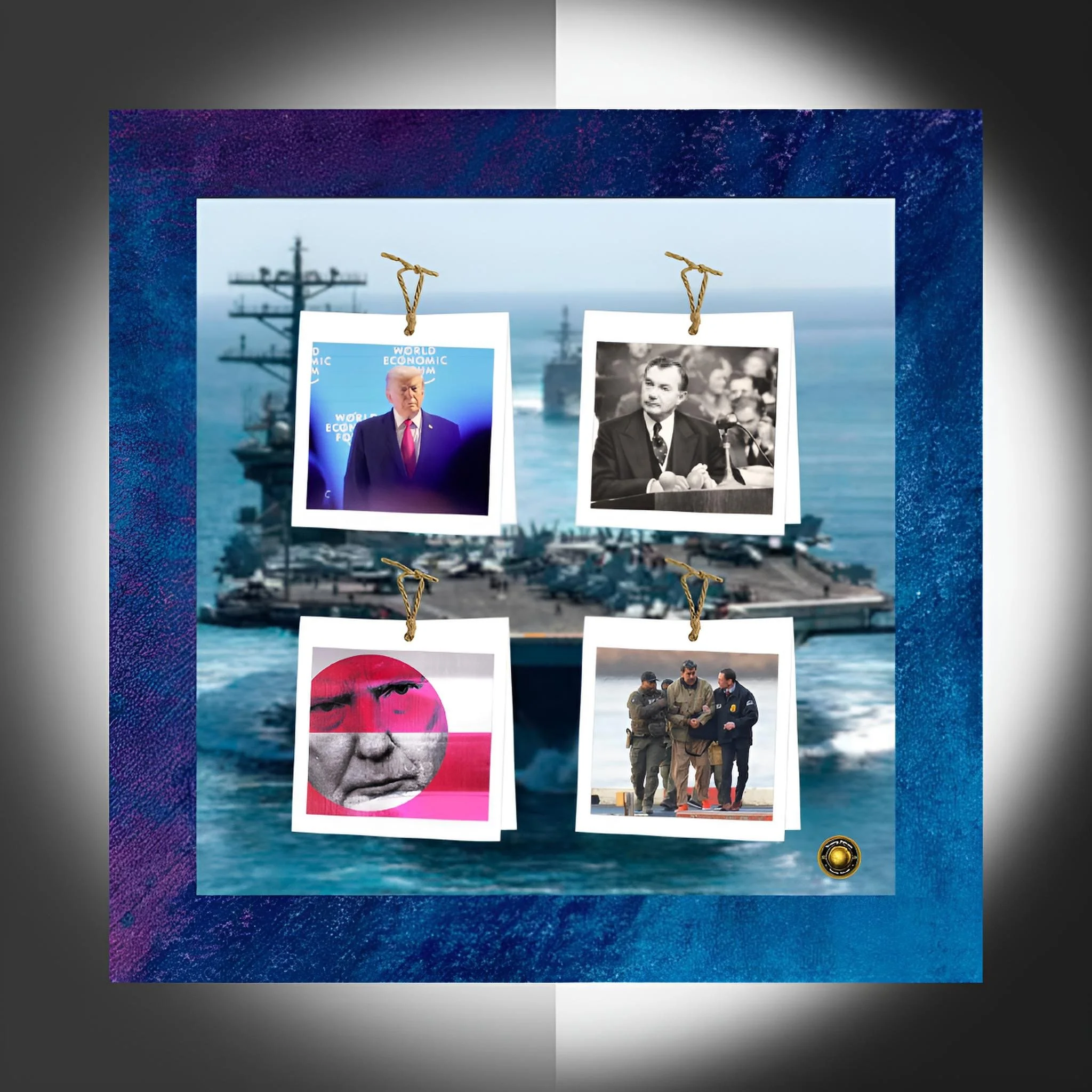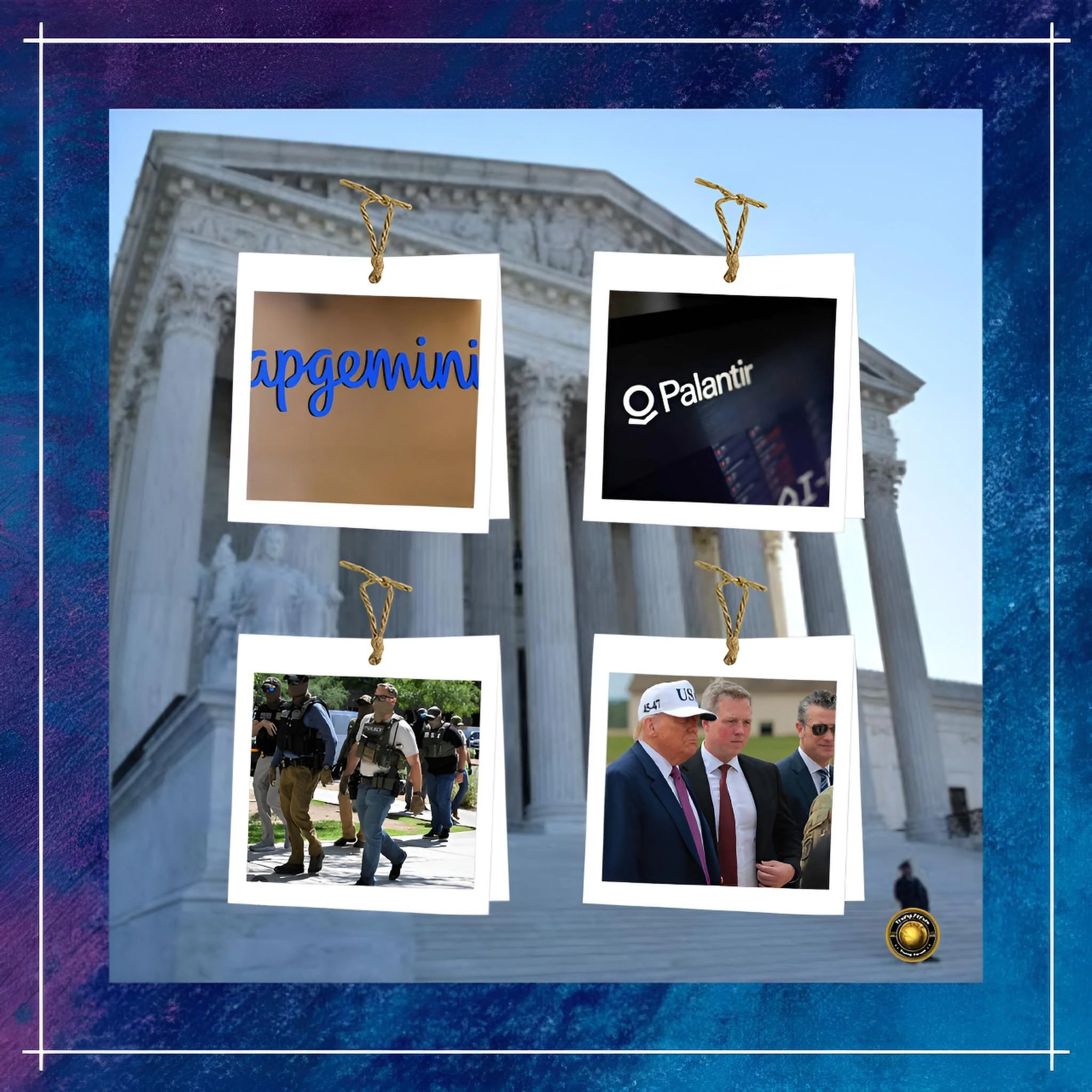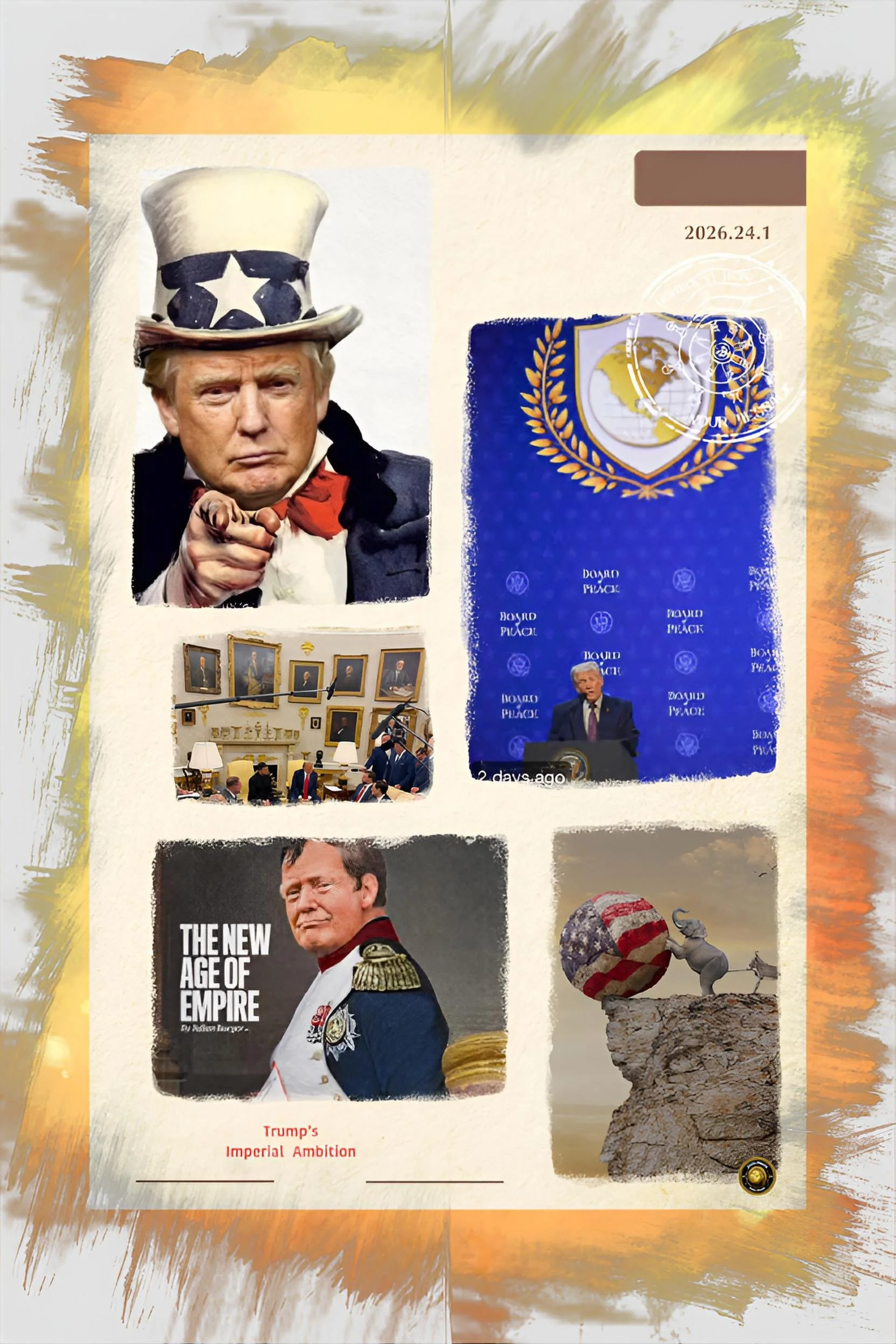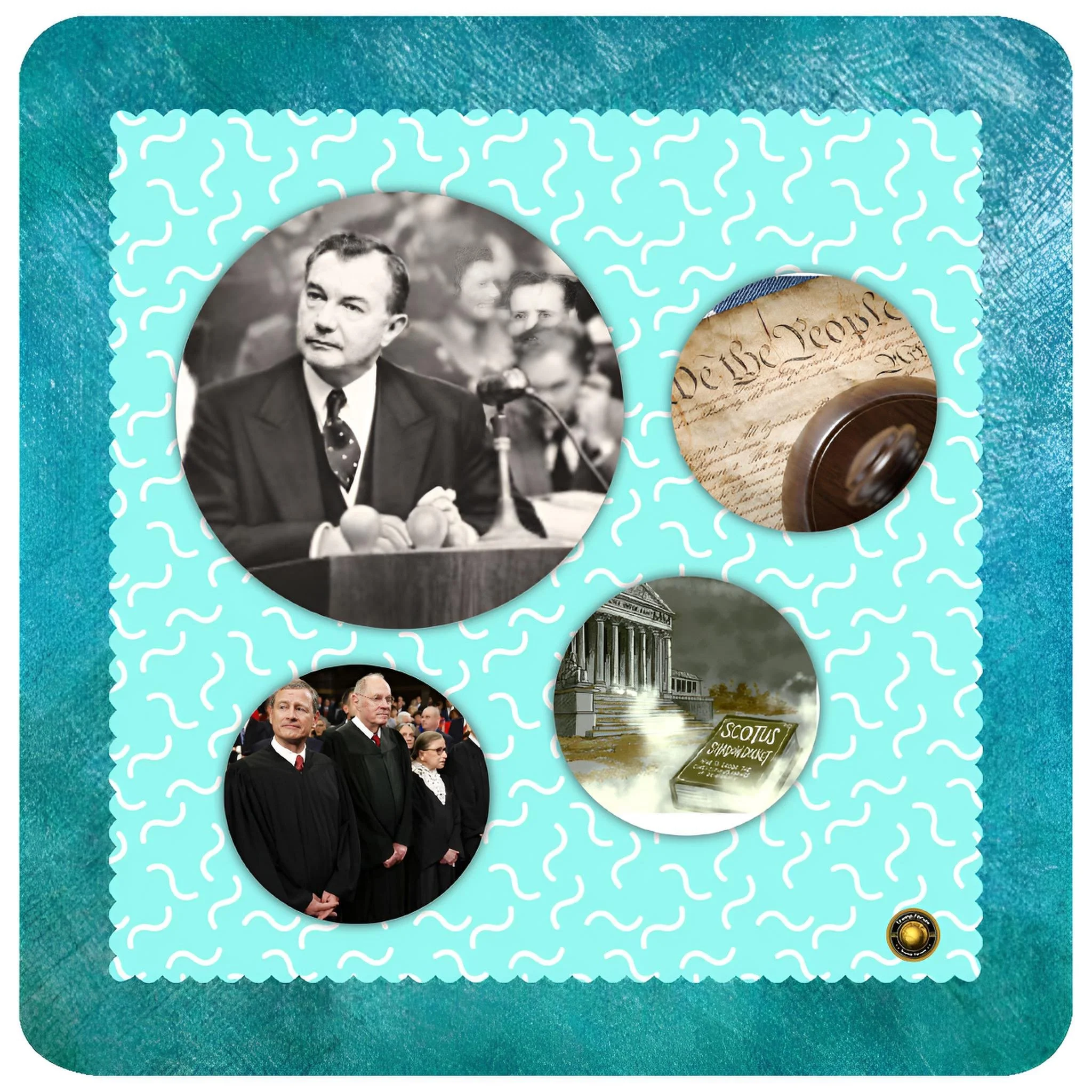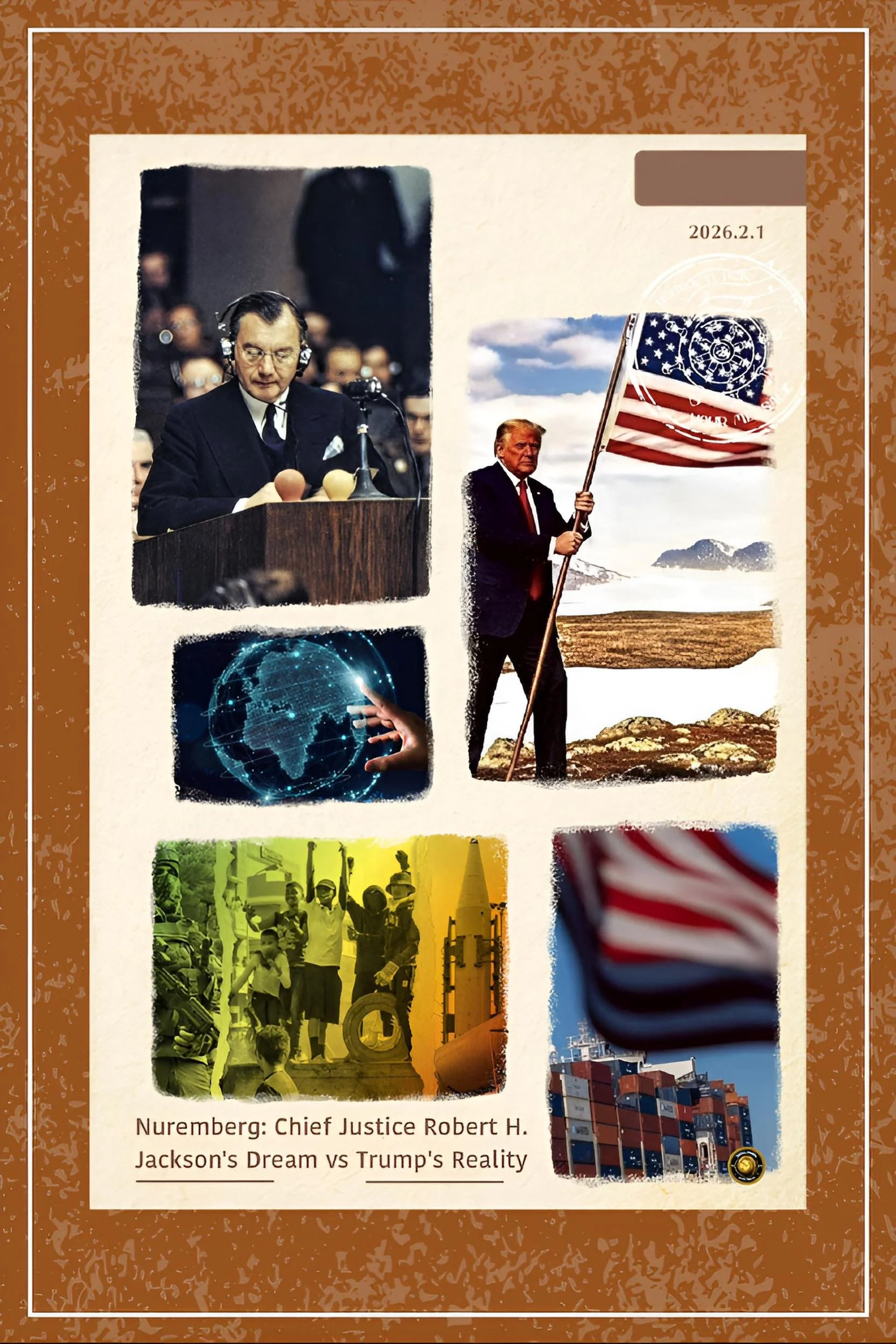
Nuremberg November 1945 : U.S Chief Justice Robert H. Jackson's Dream vs Trump's Reality: How the World Changed - Part I
Executive Summary
Justice Robert H. Jackson's 25,000-word opening statement at Nuremberg in November 1945 established a revolutionary principle: individuals who initiate wars of aggression must face criminal accountability, regardless of power or sovereignty. Jackson warned that if law failed to constrain power, civilization itself would collapse into cycles of conquest and counter-conquest.
Eighty years later, the Trump administration's conduct in 2026 demonstrates the categorical disintegration of the post-World War II legal order Jackson constructed. Between January 2025 and January 2026, the Trump administration conducted 658 air and drone strikes across seven nations—nearly equivalent to the entire Biden administration's 4-year strike total of 694.
These operations killed over 115 civilians and were conducted without Security Council authorization, Congressional notification, or valid legal justification.
Simultaneously, the administration has explicitly threatened territorial acquisition of Greenland, Canada, Cuba, and Colombia; supported separatism in Alberta to fracture a NATO ally; imposed tariffs exceeding 100% on trading partners; and adopted a Pentagon National Defense Strategy explicitly abandoning support for traditional allies.
This trajectory represents not merely violations of international law but the systemic rejection of the principle that law constrains state behavior.
The Trump administration has resurrected precisely what Jackson feared most: the Thucydidean formulation in which the strong do what they can, and the weak suffer what they must.
Introduction
The Stakes of Nuremberg
The Nuremberg Trial opened on 20 November 1945, just 163 days after Germany's unconditional surrender.
The political calculation was extraordinary: the victorious Allied powers deliberately submitted their defeated adversary to legal judgment rather than summary execution. This choice was not inevitable.
The Soviet delegation openly advocated for the summary execution of the Nazi leadership.
The Western Allies insisted instead upon trial, evidence, and legal process—a position that fell to Jackson to articulate and defend before the International Military Tribunal.
Jackson's opening statement laid the intellectual foundation for this extraordinary choice. He argued that civilization faced a bifurcation: either law would constrain power, or power would prevail over law. If the former were obtained, aggressive war could be suppressed through legal accountability. If the latter, humanity would descend into perpetual cycles of conquest and counter-conquest.
Jackson's rhetorical strategy was deliberately framed as a universal principle rather than victor's justice. He stated explicitly: "To pass these defendants a poisoned chalice is to put it to our own lips as well."
This formulation meant that any legal principle established at Nuremberg would necessarily bind not only the defeated Nazis but also the victorious Allies.
This principle of universality was the cornerstone of Jackson's intellectual architecture. It prevented the trial from becoming an instrument of vengeance. Instead, it transformed it into the articulation of binding legal norms applicable to all states, regardless of power or international standing.
Historical context
Aggressive War Before Nuremberg
Jackson's central innovation concerned the criminalization of aggressive war itself. Before 1945, international relations operated under what might be termed the Grotian paradigm: states possessed the legal right to initiate wars in pursuit of their perceived national interests, provided they did not violate specific treaty obligations.
Wars of conquest and territorial acquisition, while deplored on humanitarian grounds, were regarded as lawful expressions of state sovereignty.
The Kellogg-Briand Pact of 1928, which the United States and numerous other nations had signed, renounced war "as an instrument of national policy"—but this renunciation lacked any enforcement mechanism or consequence for violation. Germany's signatories of this pact, the Nazis, proceeded to wage aggressive war with impunity.
Jackson's argument fundamentally transformed this framework. He contended that the Kellogg-Briand Pact, combined with the Covenant of the League of Nations and various other treaty obligations, had fundamentally altered the legal status of aggressive war. It was no longer merely an unfortunate but permissible instrument of statecraft. It had become a crime—"the supreme international crime" in Jackson's formulation.
This was not retroactive lawmaking, Jackson argued, but rather the recognition of legal principles that antecedent treaties had established.
Jackson articulated this position with juridical precision: "Any resort to war—to any war—is a resort to inherently criminal means. War inevitably is a course of killings, assaults, deprivations of liberty, and destruction of property. An honestly defensive war is, of course, legal and protects those lawfully conducting it from criminal liability. But inherently criminal acts cannot be defended by showing that those who committed them were engaged in a war, when war itself is illegal."
This formulation, compressed into a single paragraph, articulated the revolutionary principle that distinguished between aggressive and defensive war—a distinction that, while evident in common-sense terms, had not been rigorously incorporated into international law before Nuremberg.
The Post-War Legal Architecture
Jackson's Four-Part Indictment and Individual Accountability
Jackson structured his prosecution around four categories of charges.
The 1st charged a conspiracy to commit crimes against peace.
The 2nd established liability for planning, initiating, and waging aggressive war.
The 3rd addressed war crimes committed during armed conflict.
The 4th encompassed crimes against humanity—atrocities committed against civilian populations, including persecution based on race, religion, or political affiliation.
Critically, Jackson insisted that these charges applied to individuals, not merely to the state of Germany or to the Nazi party as an abstract entity. This represented a fundamental break with prior practice.
Historically, international law had conceived of itself as governing relations between states, not the conduct of individuals within states. The principle of state sovereignty has provided virtually absolute protection to state officials acting in their official capacity. Jackson rejected this framework entirely.
Jackson's advocacy for individual accountability required confronting a fundamental defense: the claim of superior orders.
Military defendants argued that they had merely followed orders issued by Hitler and the Nazi leadership. In the context of totalitarian regimes where refusal to obey orders meant death, this defense possessed a certain moral and practical force.
Yet Jackson insisted that it could not prevail. He argued that accepting the superior orders defense would render individual accountability meaningless; any regime could insulate itself from legal consequence by issuing orders to subordinates.
Jackson, therefore, advocated for the elimination of the superior orders defense in its absolute form. However, he acknowledged that in cases of extreme constraint—where the moral choice had been genuinely impossible—mitigation of punishment might be appropriate.
The Core Principle: Law Must Constrain Power
Jackson's most profound argument concerned the relationship between law and power in international relations. He articulated his deepest fear in the form of a question: "Civilization asks whether law is so laggard as to be utterly helpless to deal with crimes of this magnitude by criminals of this order of importance. It does not expect that you can make war impossible. It does expect that your juridical action will put the forces of international law, its precepts, its prohibitions, and, most of all, its sanctions, on the side of peace, so that men and women of good will, in all countries, may have 'leave to live by no man's leave, underneath the law.'"
This passage revealed the existential stakes Jackson perceived
The trial was not merely about punishing individual Nazis.
It concerned whether international relations could operate according to legal principles applicable to all actors, or whether the global system would revert to what the ancient Greek historian
Thucydides had articulated: "The strong do what they can, and the weak suffer what they must." Jackson insisted that civilization's future depended upon rejecting the Thucydidean formulation and embracing instead a system in which even the strong remained subject to law.
Jackson concluded his opening statement with an extraordinary acknowledgment of the stakes: "The rule of law in the world, flouted by the lawlessness incited by these defendants, had to be restored at the cost to my country of over a million casualties, not to mention those of other nations. I cannot subscribe to the perverted reasoning that society may advance and strengthen the rule of law by the expenditure of moral innocence,
This passage framed the trial as the culmination of a civilizational struggle: mil.”
This passage framed the trial as the culmination of a civilizational struggle: millions of innocent lives had been sacrificed in World War II; the least the surviving powers could do was ensure that the leaders who had initiated that catastrophe faced legal accountability.
The Architecture of the Nuremberg Principles
Jackson's opening statement provided the intellectual scaffolding for the London Charter, which established the legal framework for the International Military Tribunal.
The resulting Nuremberg Principles, subsequently codified and adopted by the United Nations, established seven foundational precepts:
The 1st principle established that any person who committed a crime under international law was personally responsible and liable to punishment.
The 2nd principle defined crimes against peace as planning, preparation, initiation, or waging of a war of aggression or a war in violation of international treaties, agreements, or assurances.
The 3rd addressed war crimes—violations of the laws or customs of war.
The 4th encompassed crimes against humanity—murder, extermination, enslavement, deportation, and other inhumane acts, committed against civilian populations, whether or not in violation of domestic law.
Principles 5th and 6th addressed criminal participation and responsibility.
Principle 7th established that the fact that internal law did not impose a penalty for an act which constituted a crime against peace, a war crime, or a crime against humanity was immaterial; such acts remained criminal under international law.
Together, these principles established a legal architecture in which aggressive war was the central criminal act—the "supreme international crime" in Jackson's formulation—and in which individual leaders bore direct accountability for initiating such wars.
Jackson's Question Answered
Jackson posed a question that contained an implicit plea: "Civilization asks whether law is so laggard as to be utterly helpless to deal with crimes of this magnitude by criminals of this order of importance."
The question had a specific meaning. Jackson feared that powerful states might decide that international law was merely inconvenient rhetoric, that law imposed no binding constraints on great-power behavior, and that, consequently, powerful states could wage aggressive wars, appropriate foreign territory, and dominate weaker states without facing legal consequences.
The Trump administration's conduct in 2026 provides a definitive answer to Jackson's question. It is an answer Jackson would have found deeply troubling, because it suggests that civilization has indeed proven "so laggard as to be utterly helpless" to constrain aggressive state action.
The 2026 Transformation
From Violation to Categorical Rejection
The Trump administration's conduct in 2026 represents a qualitative shift from violating international law to the categorical rejection of the principle that international law constrains state behavior.
This distinction is crucial. Prior outstanding power violations of international law—the Soviet invasion of Hungary in 1956, the American invasion of Iraq in 2003, the Russian invasion of Georgia in 2008—occurred within a framework in which the violating state at least maintained the rhetorical pretense that international law remained binding.
The violating state attempted to justify its actions through international law's categories: self-defense, humanitarian intervention, and Security Council authorization obtained through creative interpretation. The Trump administration has dispensed with such pretense.
Between January 2025 and January 2026, the Trump administration authorized 658 air and drone strikes across seven nations: Venezuela, Iran, Yemen, Syria, Somalia, Iraq, and Nigeria.
These strikes killed an estimated 115 civilians. The strikes were conducted without Security Council authorization, without valid self-defense claims under Article 51 of the UN Charter, without Congressional approval pursuant to the War Powers Resolution, and without valid justification under international humanitarian law.
The administration's public statements regarding these operations revealed a calculated indifference to international legal constraints.
The Venezuela Operation: The Threshold Moment
The Trump administration's January 3, 2026, invasion of Venezuela crystallized the shift from violation to categorical rejection of international law.
Operation Absolute Resolve involved large-scale air strikes on Caracas, the capital of Venezuela, followed by the deployment of U.S. special forces who breached President Nicolás Maduro's compound, killed approximately 75 Cuban and Venezuelan guards, and forcibly extracted Maduro and his wife, Cilia Flores, transporting them to New York for prosecution on narcotics trafficking charges.
No prior warning was provided. No legal authority existed for military intervention. Venezuela had not attacked the United States, eliminating any colorable self-defense claim.
The UN Security Council had not authorized the operation. Congress had not approved the operation. The operation violated UN Charter Article 2(4), which prohibits the use of force against the territorial integrity or political independence of any state.
The Trump administration's characterization of the operation proved revealing. Secretary of State Marco Rubio framed it as a "law enforcement operation" against a "narco-terrorist."
This rhetorical maneuver attempted to recategorize military invasion as internal law enforcement, thereby suggesting that jurisdiction exceeded territorial constraints. Trump explicitly stated: "We will run Venezuela. We will control the oil." He announced a $300 million oil supply agreement and indicated that American oil companies would "restructure" Venezuelan oil production and assume control of it. This language, articulated with unmistakable clarity, stated that the operation was undertaken to appropriate Venezuelan resources and establish American hegemonic control over Venezuelan territory.
Threats of Territorial Acquisition and Expansion
Following the success in Venezuela, the Trump administration escalated its rhetoric regarding territorial acquisition.
Trump explicitly asserted that Greenland, a semi-autonomous Danish territory, was "essential for U.S. national security" and that the United States would acquire it, either through purchase, negotiated Compact of Free Association, or military seizure.
Trump stated, "We need Greenland for national security, and Denmark cannot manage that." He cited the presence of "Russian and Chinese vessels everywhere in Greenland" as justification.
When Danish Prime Minister Mette Frederiksen urged Trump to "cease the threats," Trump responded by demanding that Denmark cede Greenland.
NATO Secretary-General Mark Rutte attempted to mediate, and Trump claimed at Davos that an "Arctic security deal" had been struck, though the specifics remained entirely undisclosed.
Simultaneously, the Trump administration threatened military intervention in Cuba, characterizing it as "ready to fall" and suggesting that Maduro's removal would precipitate regime change in Cuba.
Secretary of State Rubio explicitly identified Maduro's removal as a necessary precursor to Cuban transformation.
Trump threatened Colombia, labeling its president a drug trafficker and stating that military intervention appeared appealing. Trump repeated his campaign-era proposal that Canada should become the "51st state." However, he subsequently softened this rhetoric, focusing on the territorial acquisition of specific strategic areas rather than wholesale annexation.
The Pentagon Strategy and Alliance Dissolution
The Trump administration's strategic intentions were crystallized in the Pentagon's 2026 National Defense Strategy, released on January 23, 2026.
The document represented a fundamental reordering of American strategic priorities. Homeland defense was elevated to the top priority, displacing the previous focus on deterring China.
The Western Hemisphere was elevated to second priority. The strategy explicitly invoked a "Trump corollary to the Monroe Doctrine," committing the United States to restore "American military dominance in the Western Hemisphere," "protect our Homeland and our access to key terrain throughout the region," and "deny adversaries' ability to position forces or other threatening capabilities in our hemisphere."
Most significantly, the Pentagon Strategy explicitly committed the United States to providing "more limited support" to its allies.
Rather than concealing this shift in diplomatic language, the document stated directly that the United States would press regional allies to "take greater responsibility for their own defense."
The strategy identified Canada's role in defending against "airborne and maritime threats," even as the administration's relationship with Ottawa had deteriorated. It outlined a desire to "secure key terrain in the Western Hemisphere, including Greenland and the Panama Canal."
Regarding East Asia, the strategy demoted Taiwan to such insignificance that it received no mention—a striking omission from previous iterations. The strategy pressed South Korea to assume "primary responsibility" for deterrence against North Korea.
Regarding Europe, the strategy characterized Russia as a "persistent but manageable threat" to NATO's eastern members rather than a systemic threat to American security.
The strategy reflected an explicit reordering of values: "American interests" now superseded "global community" interests.
A threat to an American was deemed categorically more significant than a threat to a non-American, no matter the magnitude.
This represented a fundamental inversion of the post-war order, which had rested on the proposition that international law established universal principles applicable to all human beings regardless of nationality.
The Canada Crisis: Separatism, Tariffs, and NATO Fracture
The Trump administration's assault on Canadian sovereignty revealed the practical application of this new strategic doctrine. On multiple fronts simultaneously, the administration pursued policies designed to weaken, fragment, and subordinate Canada.
First, the administration engaged in explicit support for separatism. The Alberta Prosperity Project, a group advocating for Alberta's independence from Canada, met with State Department and Treasury Department officials on 3 separate occasions beginning in April 2025.
In late January 2026, these meetings became public knowledge. Jeff Rath, legal counsel for the APP, stated that the group was scheduled to meet with State Department and Treasury officials to propose a $500 billion credit line to finance Alberta's "transition" to independence.
U.S. Treasury Secretary Scott Bessent characterized Alberta as a "natural partner for the U.S." and praised the province's "independent spirit."
White House Deputy Chief of Staff Stephen Miller supported the separatist agenda. The APP was collecting signatures to petition the Alberta legislature for an independence referendum; approximately 30% of Albertans currently support such a referendum.
The administration's support for Alberta separatism represented direct interference in the domestic affairs of a NATO ally, a categorical violation of the principle of non-intervention and a deliberate effort to fracture a close security partner.
Second, the administration conducted a comprehensive tariff war against Canada. Trump threatened 100% tariffs on Canadian goods if Canada finalized a trade agreement with China. He threatened 50% tariffs on "all aircraft manufactured in Canada" in response to Canada's refusal to certify American-made aircraft. He threatened to decertify Bombardier business jets produced in Canada, despite lacking legal authority to do so.
These tariffs were explicitly designed to punish Canada for asserting economic independence and trade diversification. The cumulative economic impact on Canada has been severe: unemployment reached its highest level in 9 years; Canadian travel to the United States declined 31% year-over-year; exports of American spirits to Canada plummeted 85% in the first quarter.
Third, the administration explicitly threatened the annexation of Canadian territory. Trump demanded that Canada cede Greenland or be subject to economic coercion. When Prime Minister Mark Carney resisted, Trump intensified tariff threats and characterized Carney as an incompetent "Governor" rather than an equal head of state.
The cumulative effect of these measures—separatism support, tariff warfare, annexation threats—was designed to destabilize Canada, weaken its government, and establish American hegemonic dominance over North American affairs.
The W.E.F. Speech and Allied Betrayal: Davos, January 21, 2026
Trump's address at the World Economic Forum in Davos on January 21, 2026 crystallized the new strategic doctrine.
Rather than reaffirming commitment to NATO, bilateral defense partnerships, or international legal principles, Trump issued implicit threats to allied nations while simultaneously demanding their capitulation to American demands.
Trump stated: "We want strong allies, not seriously weakened ones. We want Europe to be strong."
This phrasing conveyed an implicit threat: allies must remain strong enough to be useful but not so strong as to be independent. Trump threatened tariffs on eight European nations if they did not acquiesce to American demands regarding Greenland. He later backed off these specific tariffs following negotiations with NATO Secretary-General Mark Rutte, but only after establishing the principle that tariff warfare would be deployed against allies who resisted American demands.
Trump's speech revealed the fundamental reorientation of American foreign policy.
Rather than defending the post-war liberal international order premised on universal principles and multilateral cooperation, Trump articulated a new doctrine: American preeminence in every region, the subordination of allies to American interests, the willingness to threaten tariffs, military intervention, and territorial seizure against states that did not acquiesce to American demands.
The speech revealed that the administration regarded alliances not as mutual security arrangements but as instruments through which to project American power and extract economic resources.
Trump’s Iran Gambit: High-Stakes Brinkmanship on the Edge of Regional War
President Donald Trump has edged the United States and Iran into a perilous strategic standoff, brandishing the prospect of a punitive strike while insisting Tehran capitulate on uranium enrichment, ballistic missile constraints, and the violent suppression of protesters.
A substantial US naval armada now massed near Iran serves as both coercive leverage and a performative show of resolve, amplifying regional anxiety over miscalculation and unintended escalation. Iran’s leadership has responded with bellicose warnings that any US attack could trigger a wider regional conflagration, even as internal elites appear divided between maximalist defiance and more pragmatic engagement.
Against this volatile backdrop of suspicious explosions, live-fire drills, and frenzied shuttle diplomacy, the looming question is whether Trump will ultimately translate rhetorical brinkmanship into kinetic force or continue to weaponise ambiguity as an instrument of pressure.
The Ideological Inversion
From Jackson to Trump
Jackson's framework rested on the proposition that law could constrain power, that universal principles applicable to all states could prevent aggressive wars, and that civilization depended upon the willingness of powerful states to accept binding legal constraints on their behavior.
Jackson feared that powerful states might reject this framework and assert instead that power itself constituted the measure of right, that the strong could do what they could and the weak must suffer.
The Trump administration has explicitly embraced this Jacksonian-in-name-only doctrine while rejecting everything Jackson stood for. The administration's National Security Strategy explicitly prioritizes "civilizational identity," "regional prerogative," and "power interests" over adherence to international legal principles.
The Trump administration asserts that the United States is justified in pursuing military action in the Western Hemisphere without Security Council authorization because American interests are at stake. It asserts that it is justified in threatening territorial acquisition of Greenland, Canada, and potentially other neighbors because these acquisitions would advance American interests. It asserts that it is justified in imposing 100% tariffs on allied nations because such coercion serves American objectives.
The administration has rejected the universality principle that Jackson established; it has asserted instead that American interests supersede the interests of other states.
Cause and Effect
The Dissolution of Constraints
The Trump administration's conduct generates cascade effects that accelerate the dissolution of the post-war legal order.
First, by demonstrating that the United States—the architect of the post-war order—systematically violates the principles that order was designed to enforce, the administration delegitimizes the order itself.
When Russia invades Ukraine in violation of the UN Charter, it can now point to the Trump administration's invasion of Venezuela as American precedent.
When China contemplates military action against Taiwan, it can reference the fact that the United States conducted 658 strikes without legal justification and faced no consequences.
Second, by demonstrating that it will wage tariff warfare against allies, the administration accelerates the fragmentation of the Western alliance system.
Canada, Denmark, Germany, and other traditional American allies now recognize that they cannot rely upon American security guarantees. These nations will increasingly develop independent security arrangements, economic partnerships, and institutional frameworks.
The BRICS nations, the Shanghai Cooperation Organization, and various regional organizations will gain influence as nations seek security arrangements not dependent upon American goodwill.
Third, by supporting separatism in Alberta, the administration establishes the precedent that it will intervene in the internal affairs of other nations to fracture them or establish favorable regimes.
This precedent invites reciprocal action: Russia may support separatist movements in the United States or NATO member states; China may support separatist movements in American-allied nations; Israel may continue displacement of over a million Palestinain from Gaza and West Bank. And further attempt to occupy more land in Syria more than it already had after fall of Bashar Al-Asaad with no accountability.
The norm against interference in domestic affairs—a cornerstone of the post-war order—has been deliberately demolished.
Fourth, by conducting 658 strikes without legal justification, the administration eliminates the distinction between aggressive war and legitimate military action.
If the Trump administration can conduct strikes across multiple nations without justification and face no legal consequence, then all states possess equivalent right to conduct similar operations. This reflects an explicit regression to the pre-1945 international system in which aggressive war was a permissible instrument of statecraft.
Future Trajectory
Toward Regional Hegemony and Great Power Rivalry
The trajectory of the Trump administration's foreign policy suggests movement toward a fundamentally different international system from the post-war order Jackson constructed. Rather than a system organized around universal legal principles, international institutions, and multilateral cooperation, the emerging system will be organized around regional hegemonies and great power spheres of influence.
The Western Hemisphere will be organized as an American sphere, with the United States exercising hegemonic control over resources, territory, and political outcomes.
This has already commenced with the Venezuela operation, the separatism support in Alberta, and the threats against Colombia, Cuba, Mexico, and other hemisphere nations. The Arctic will be controlled by the United States through the acquisition of Greenland.
The Pacific will be organized around Chinese hegemony, with Taiwan integrated into the Chinese sphere and American military presence reduced.
The Eurasian landmass will be organized around Russian and Chinese spheres with contested borderlands. The Indian Ocean will see increased competition between Chinese, Indian, and American naval forces.
Within this emergent system, international law will function selectively: applied to weak states as a disciplinary mechanism, ignored by great powers pursuing vital interests.
The International Criminal Court will persist as a shadow institution, investigating and prosecuting leaders of secondary powers while great powers operate with impunity. The UN Security Council vetoes, unable to constrain any of the permanent members.
NATO will either dissolve or transform into a subordinate framework through which American hegemony operates. Multilateral institutions premised on universal principles will be increasingly abandoned in favor of bilateral arrangements and ad-hoc coalitions reflecting shifting great power interests.
Conclusion
Jackson's Warning Vindicated, His Framework Demolished
Jackson posed a question implicitly concerning civilization's future. He asked whether law could constrain power or whether civilization would revert to the Thucydidean formulation in which the strong do what they can and the weak suffer what they must.
The Trump administration's conduct in 2026 has provided a definitive answer. It has demonstrated that great powers will reject the legal framework that Jackson established, that they will wage wars of aggression without legal justification, that they will appropriate foreign resources and territory, that they will employ military force and economic coercion to dominate weaker states, and that they will face no legal consequence for these actions. The post-World War II legal order has not merely cracked; it has been deliberately dismantled by the very power that erected it.
Jackson's deepest fear has materialized. He wrote: "The greatest menace to peace is when mighty nations can argue that their might makes right, and that other nations must accept their force because resistance is futile."
The Trump administration has now explicitly embodied this menace. It has demonstrated through its conduct that American interests supersede international law, that military power justifies territorial acquisition, that the strong do indeed do what they can, and that the weak can only suffer what they must.
The implications extend far beyond the immediate geopolitical consequences of American hegemonic overreach in the Western Hemisphere. They concern the character of the international system itself. Jackson believed that civilization could survive only if law constrained power.
The Trump administration's conduct has validated his fear that civilization might not be capable of such constraint. The 658 strikes, the territorial threats, the ally betrayal, the tariff warfare, the separatism support—these actions together constitute not merely violations of international law but the categorical rejection of the principle that law should constrain state behavior.
Eighty years after Jackson's extraordinary articulation of faith in law's capacity to constrain power, civilization has been offered a dramatically different answer.
That answer will likely prove far more consequential than Jackson anticipated, reshaping not merely international legal institutions but the fundamental character of international relations for generations to come.