Arctic Amnesia: How Trump 2.0 Forced America to Remember the Far North
Executive Summary
Icebreaker Awakening: Trump 2.0 and the Battle to Win Back the High North
The United States has historically maintained an ambiguous and episodic engagement with Arctic affairs, oscillating between strategic neglect and rhetorical commitment.
While Alaska represents the nation's only terrestrial Arctic domain and constitutes a critical geopolitical asset, successive administrations failed to translate this geographic reality into coherent, sustained policy frameworks.
The Trump 2.0 administration—commencing in January 2025—has enacted a dramatic reorientation of Arctic strategy, characterized by extraordinary fiscal commitments, acquisitional ambitions, and a pragmatic yet unpredictable diplomatic posture.
This transformation represents both an overdue acknowledgment of Arctic geopolitical imperatives and a departure from conventional multilateral governance paradigms that have defined the region for 3 decades.
Introduction
Alaska occupies an unambiguous position in North American geography: located at the intersection of Russian, Canadian, and Pacific interests, it extends across the Arctic Circle and hosts critical defense infrastructure. Yet for decades, American Arctic policy existed as a subsidiary concern within broader foreign policy frameworks, overshadowed by Atlantic preoccupations and Indo-Pacific strategic priorities.
The asymmetric nature of U.S. Arctic engagement—marked by inadequate icebreaker fleets, minimal permanent infrastructure, and episodic policy articulations—contrasted sharply with sustained Russian Arctic militarization and the emergent Chinese positioning as a "near-Arctic state." The Arctic Council, established in 1996 as an institutional embodiment of post–Cold War Arctic cooperation, has devolved into paralysis since Russia's 2022 invasion of Ukraine precipitated the Council's suspension of official meetings.
Concurrently, climate-driven accessibility of Arctic shipping routes and the strategic imperative for rare-earth mineral procurement have rendered Arctic hegemony a paramount concern for great powers.
The Trump administration's intervention—signaled through the August 2025 Alaska summit between Presidents Trump and Putin, subsequent icebreaker procurement initiatives, and aggressive acquisition rhetoric regarding Greenland—represents a fundamental recalibration of American Arctic consciousness.
The American Arctic
A Century of Intermittent Engagement
American Arctic policy emerged from a paradoxical inheritance. The 1867 purchase of Alaska from Russia for $7.2 million (approximately $157 million in contemporary currency) established territorial sovereignty over the North American Arctic, yet this acquisition functioned principally as a commercial transaction devoid of strategic articulation.
Throughout the 20th century, American Arctic engagement remained cyclical, contingent upon Cold War exigencies. The establishment of the Distant Early Warning (DEW) Line—a network of radar stations spanning the Arctic—represented a focused response to Soviet aerial capabilities. However, the Cold War's conclusion precipitated a marked diminution in Arctic investment and institutional focus.
President Clinton's Presidential Decision Directive 26 (1994) constituted the first comprehensive articulation of American Arctic policy, emphasizing environmental stewardship and post–Cold War cooperation.
This cooperative orientation persisted through the Obama and Biden administrations, which privileged climate science collaboration and sustainable development frameworks.
Yet beneath these rhetorical commitments existed chronic underinvestment in the tangible capabilities requisite for Arctic operations: icebreaker procurement proceeded at glacial pace, infrastructure development languished, and permanent military establishments in northern Alaska stagnated.
The quantitative disparity illuminates the magnitude of American Arctic neglect. As of 2025, the United States operated 3 icebreakers—1 recently acquired commercially and 2 aging vessels of 1970s vintage—against Russia's 55+ icebreakers, including 7 nuclear-powered vessels.
China, despite possessing no Arctic coastline, had commissioned 4 icebreakers with additional vessels under construction. This disparity was not merely statistical but operationally determinative: American icebreaker capacity limitations effectively precluded year-round Arctic operations, constrained freedom-of-navigation assertions, and undermined emergency response capabilities throughout the Bering Strait and Arctic Ocean.
The Coast Guard, tasked with Arctic operations, operated with aging infrastructure and chronic capital constraints. Congressional testimonies in 2024 and 2025 revealed that the Coast Guard maintained only 2 icebreakers in "no-fail" operational status, with all other assets receiving diminished maintenance due to systemic underfunding.
Vice Admiral Peter Gautier testified that the U.S. required 8–9 icebreakers as an immediate necessity, yet the acquisition timeline extended beyond the decade.
Historical Foundations of Arctic Neglect
The roots of American Arctic policy deficiency extended beyond mere budgetary constraints. Institutional fragmentation characterized U.S. government Arctic engagement.
The Department of Defense, Department of State, Coast Guard, National Oceanic and Atmospheric Administration (NOAA), and assorted interagency bodies pursued compartmentalized Arctic objectives without coherent strategic integration.
The Arctic Council, despite American co-founding participation, never achieved the institutional salience of other regional forums. Russia, by contrast, articulated explicit Arctic strategies commencing in the early 2000s, designated vast zones under state administration, and pursued systematic militarization and economic development.
By the mid-2000s, Russia had commenced reactivation of Soviet-era Arctic bases, commenced reestablishment of its nuclear fleet presence, and prioritized Arctic resource extraction—particularly in liquefied natural gas (LNG) ventures.
Chinese entry into Arctic affairs, announced through the "Polar Silk Road" initiative aligned with Belt and Road ambitions, represented a conscious strategic expansion into a region where Beijing possessed no territorial claims but exercised increasing economic leverage through investment in Russian energy infrastructure and mining projects in Greenland and elsewhere.
The American Arctic establishment remained reactive throughout this period. The 2022 National Strategy for the Arctic Region, released under the Biden administration, represented a comprehensive articulation encompassing security, climate resilience, sustainable development, and international cooperation. Yet even this strategy was constrained by modest resource allocations relative to strategic ambitions.
Congressional budget processes, characterized by partisan fragmentation and competing national security priorities, precluded the sustained, multiyear commitments requisite for Arctic infrastructure development.
The absence of an Ambassador-at-Large for Arctic Affairs until 2025 exemplified institutional deficiencies that reflected bureaucratic rather than policy impediments.
The Trump Administration's Arctic Pivot
Strategic Reorientation and Resource Mobilization
The Trump 2.0 Arctic strategy—if coherent strategy terminology applies—represents a radical departure from its predecessor framework.
Three principal dimensions characterize this reorientation: unprecedented capital mobilization, hemispheric rather than universal governance framing, and a transactional approach to Arctic geopolitics unconstrained by cooperative multilateralism.
Capital Mobilization and Infrastructure Acceleration
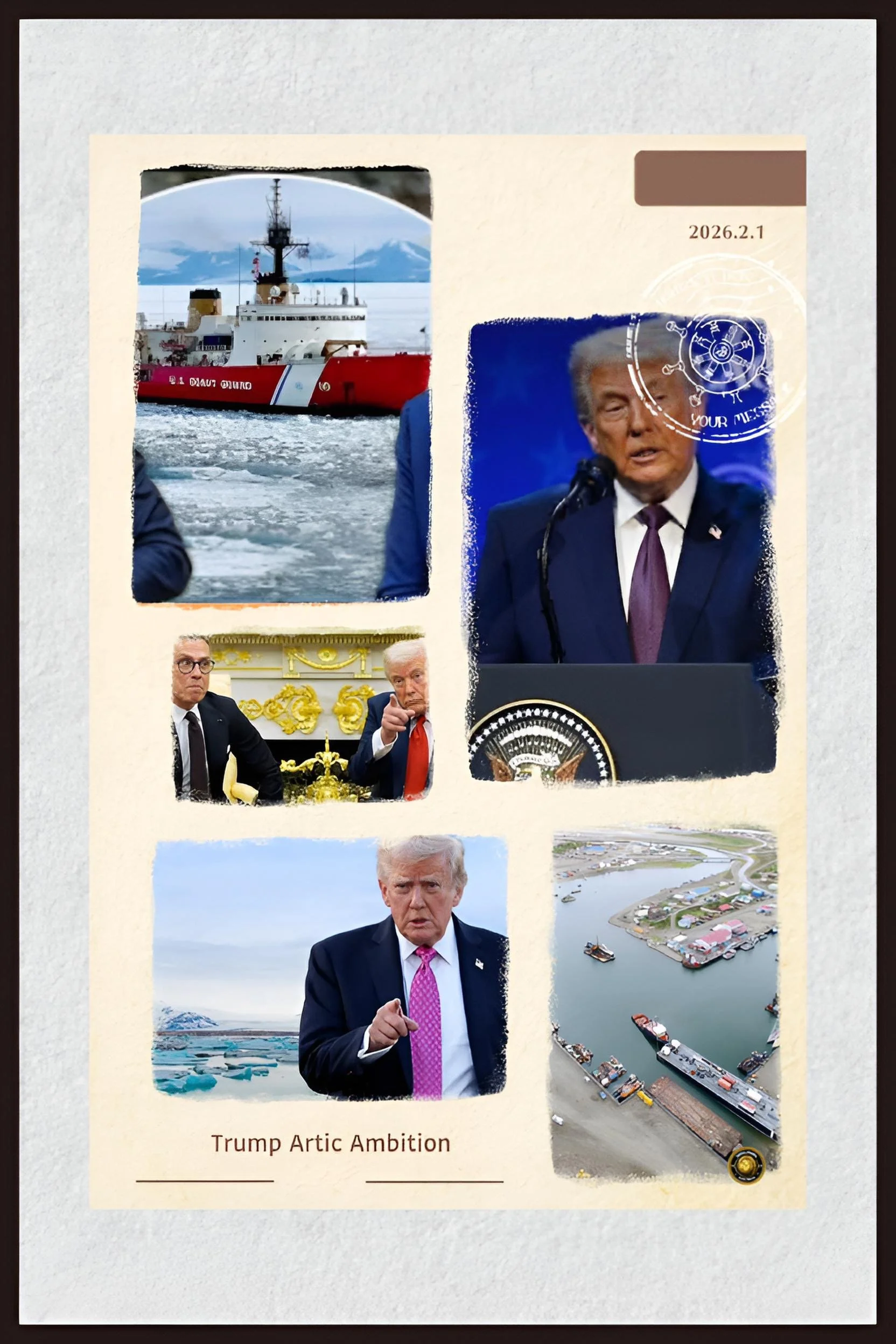
The One Big Beautiful Bill Act, enacted in 2025, authorized approximately $25 billion for Coast Guard modernization and Arctic capabilities development.
This sum constitutes the largest single capital commitment in United States Coast Guard history. The allocation encompasses approximately $9 billion earmarked specifically for Arctic maritime capabilities: $4.3 billion for up to 3 heavy Polar Security Cutters, $3.5 billion for medium Arctic Security Cutters (ASCs), and $816 million for light and medium icebreaking vessels.
Additionally, the legislation allocated nearly $2 billion for advanced radar systems at strategic locations (Shemya Island, Clear Air Station) and approximately $300 million for infrastructure development in Juneau, Alaska, to homeport the newly acquired icebreaker U.S. Coast Guard Cutter Storis—the first new heavy icebreaker commissioned in a generation.
The Pacific Deterrence Initiative component allocated $12 billion toward increased Arctic operational exercises and Alaskan Command expansion.
This capital surge necessitated unconventional acquisition modalities. Confronted with domestic shipyard capacity limitations and construction timelines extending beyond acceptable strategic horizons, the Trump administration invoked national security exemptions to bypass traditional "Buy American" statutory requirements.
In October 2025, President Trump announced a historic international agreement with Finland to construct 4 Arctic Security Cutters in Finnish shipyards, leveraging Helsinki's expertise in icebreaker design and production. Finland's Rauma Marine Constructions was awarded contracts in December 2025 to construct 2 ASCs for delivery in 2028, while Louisiana-based Bollinger Shipyards received contracts for 4 additional vessels with first delivery anticipated in 2029.
This arrangement—predicated upon the Icebreaker Collaboration Effort (ICE Pact)—represents a pragmatic acknowledgment of American shipbuilding limitations and Finnish technical superiority in polar vessel construction.
Beyond maritime capabilities, the Trump administration prioritized critical Arctic infrastructure long delayed by bureaucratic and fiscal constraints.
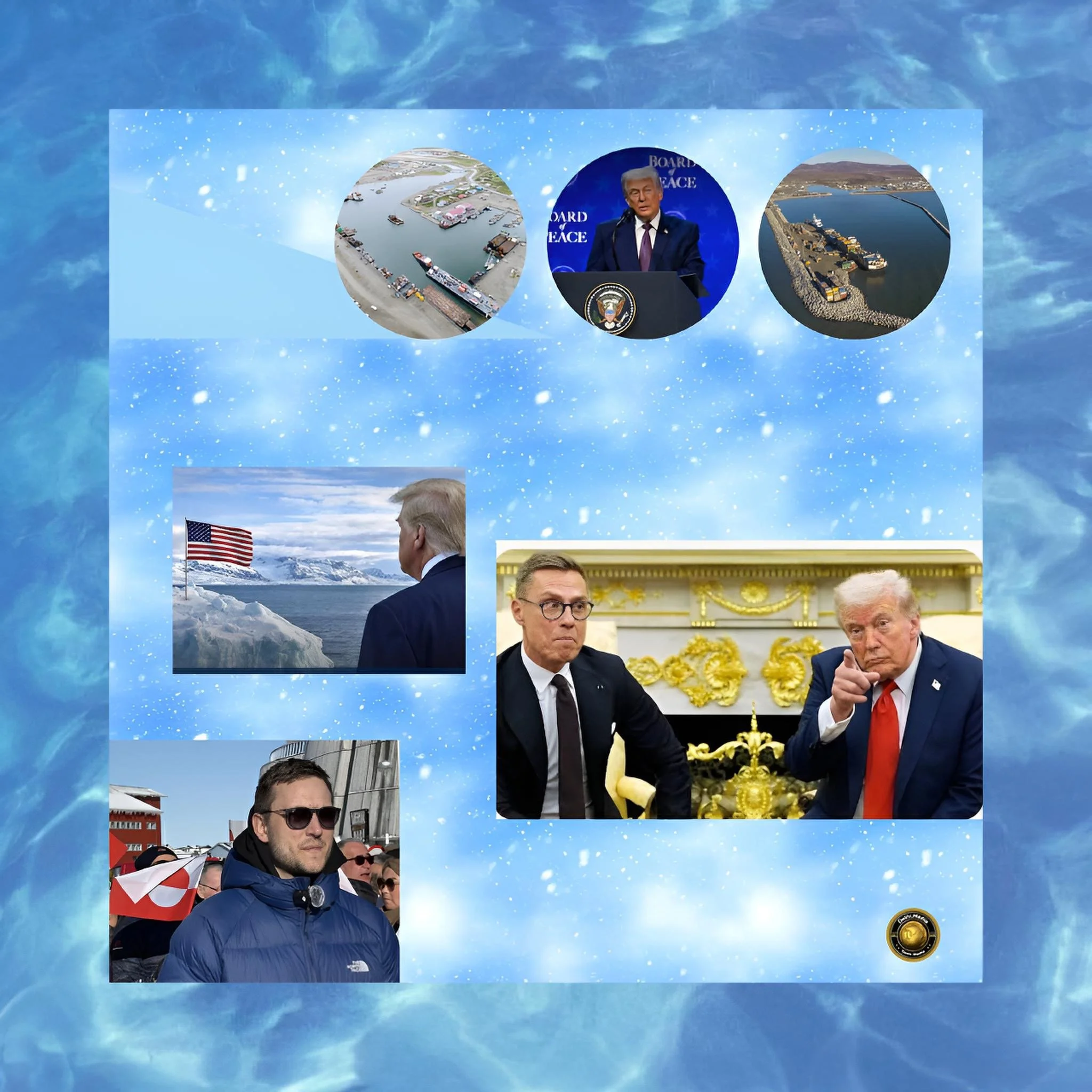
The Port of Nome Modification Project—proposed nearly 2 decades prior—advanced to active construction phase following the award of a $399.4 million contract to Kiewit Infrastructure West in August 2025. Phase 1A encompasses a 1,200-foot causeway extension and approximately 600 feet of new dock face, with full completion projected for 2029.
The expanded port will provide the only deep-draft Arctic harbor in the United States, capable of accommodating vessels requiring 40-foot depths and facilitating year-round operations independent of seasonal limitations. The strategic importance of Nome extends beyond commercial shipping: the port will serve as a logistics hub for Arctic research, emergency response operations, and military asset deployment.
Currently, the nearest deep-draft port is Dutch Harbor, situated 800 nautical miles distant—a distance that erodes operational responsiveness and increases transit costs by orders of magnitude.
Hemispheric Framing and the "Trump Corollary" to the Monroe Doctrine
The 2025 National Security Strategy released in December 2025 represents a significant departure from the Arctic-specific policy framing employed in the 2022 iteration.
Notably, the new strategy omits a dedicated "Arctic" section, substituting a hemispheric framework emphasizing "Western Hemisphere" primacy and asserting that "the Western Hemisphere remains free of hostile foreign incursion or ownership of key assets."
Strategic analysts have characterized this rhetorical reframing as articulating a "Trump Corollary" to the historic Monroe Doctrine, repositioning the North American Arctic—encompassing Alaska, Canadian Arctic territories, and Greenland—within a broader zone of exclusive American geopolitical interest.
This conceptualization effectively subordinates Arctic multilateralism to unilateral American hegemonic assertion.
The implications of this hemispheric framing extend to the Trump administration's unprecedented pursuit of Greenland acquisition.
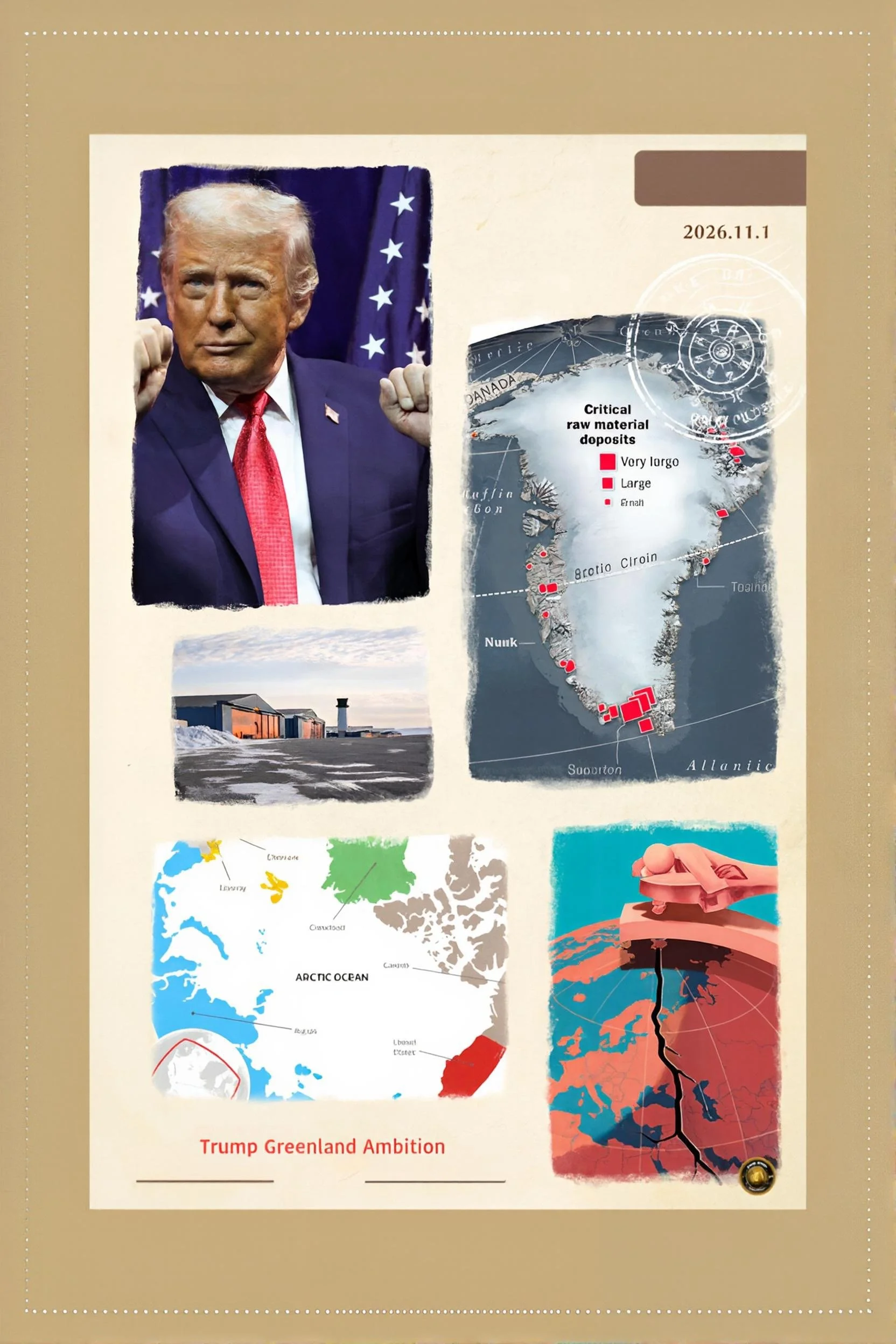
Beginning in January 2025 and escalating throughout early 2026, President Trump has repeatedly asserted American necessity for Greenlandic sovereignty, citing national security imperatives, rare-earth mineral access, and strategic Arctic positioning.
While initial proposals in 2019 had been dismissed as rhetorical excess, the 2025–2026 iteration demonstrated material commitment: the administration threatened progressively escalating tariffs (10% in February 2026, escalating to 25 percent in June) against Denmark, Norway, Sweden, France, Germany, the United Kingdom, the Netherlands, and Finland unless Denmark ceded Greenland to the United States.
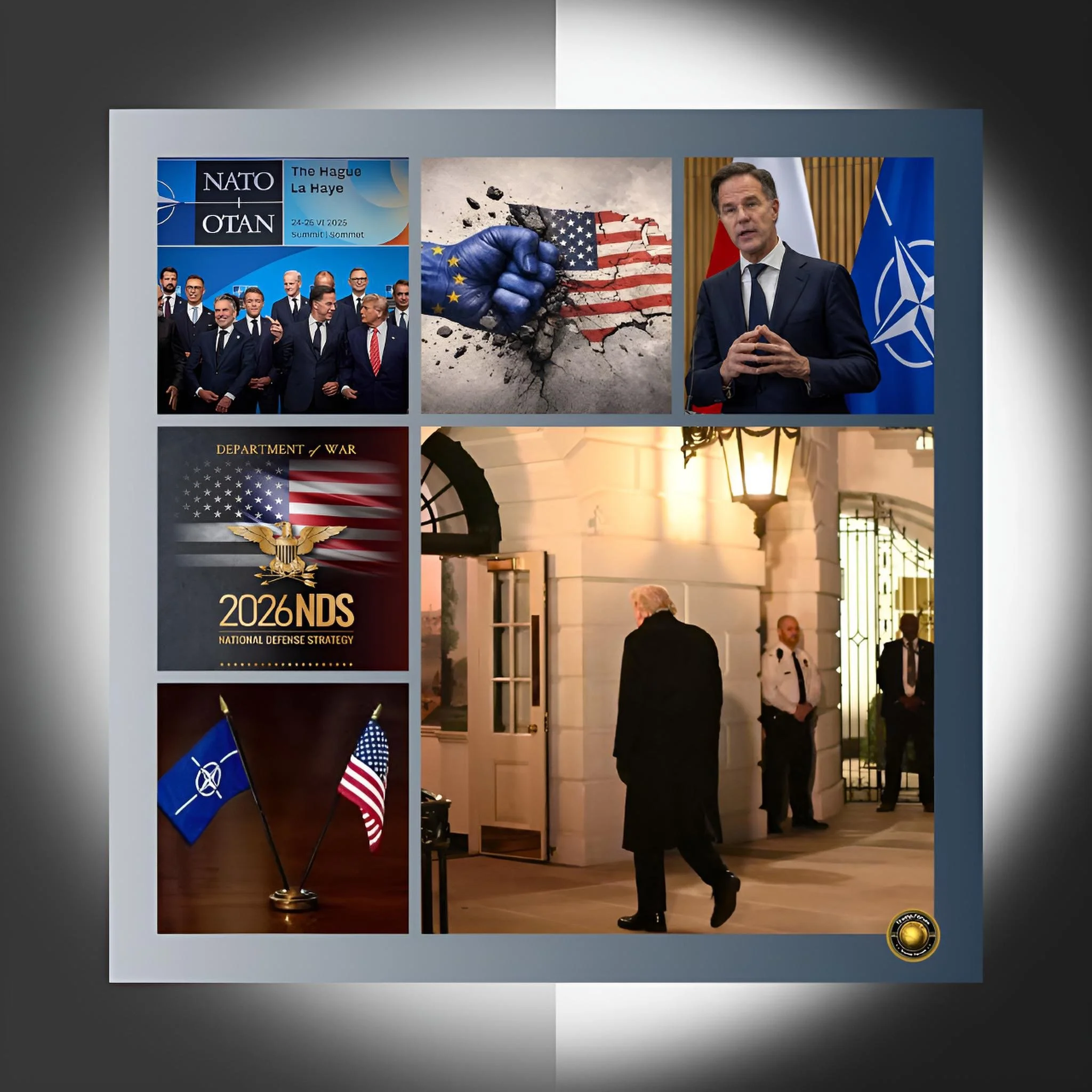
Although Trump retreated from explicit annexation rhetoric following meetings with NATO officials at the World Economic Forum in January 2026, the episode revealed a fundamental recalibration of American Arctic ambitions unconstrained by alliance norms or international law.
This hemispheric assertion serves multiple strategic purposes. It projects American sovereignty over Arctic shipping lanes, choke points, and resource zones; it signals to allied nations (particularly Canada and Denmark) that Arctic territorial arrangements remain subject to American strategic reconsideration; and it establishes a doctrine wherein American interest supersedes claims by allied nations or former colonial entities.
The administration's articulated rationale emphasizes Russian and Chinese Arctic encroachment, asserting that contemporary Arctic security conditions render traditional Atlantic alliance frameworks inadequate.
Secretary of State Marco Rubio and other senior officials have reiterated that the Arctic represents "the ultimate domain of competition" between great powers, necessitating exclusive American control over critical gateways.
Transactional Arctic Diplomacy and the Russia Calculus
The Trump administration's Arctic approach extends beyond unilateral assertion to encompass unprecedented diplomatic engagement with Russia.
The August 2025 Alaska summit—held at Joint Base Elmendorf-Richardson near Anchorage—represented a symbolic and substantive departure from Biden-era Arctic Council paralysis.
During the summit, Presidents Trump and Putin discussed potential Arctic cooperation initiatives, including joint energy development projects, nuclear icebreaker utilization for Alaskan gas development, and collaborative exploration of rare-earth mineral opportunities. Russian officials subsequently emphasized the "huge" mineral wealth accessible through Russian Arctic development and expressed openness to American technological partnerships and investment.
This transactional engagement reveals a pragmatic recalibration in Trump's Arctic calculus. While the administration simultaneously asserts hemispheric dominance and targets Greenland acquisition, it simultaneously explores economic interdependencies with Russia that could offset Moscow's reliance upon Chinese capital and technology—imperatives consequent upon Western sanctions regimes applied subsequent to Russia's 2022 Ukraine invasion.
Trump officials have explicitly articulated the objective of "driving a wedge" between Russia and China through Arctic economic cooperation, calculating that energy and resource partnerships in the Arctic could incentivize Russian reorientation toward Western economic frameworks.
This strategy represents a departure from unified Western opposition to Russian Arctic ambitions and signals potential American acquiescence to Russian Northern Sea Route development and energy exports to Asian markets, contingent upon favorable bilateral arrangements.
Arctic Geopolitical Competition
Russian and Chinese Positioning
Russian Arctic Strategy and Infrastructure Development
Russia's Arctic posture contrasts markedly with American intermittency. The Kremlin commenced systematic Arctic militarization in the 2000s, following the 2007 Arctic Council Arctic Ocean Conference in Ilulissat, Greenland, which established the 5-nation coastal state consortium (Canada, Denmark, Norway, Russia, United States) to coordinate Arctic maritime governance.
Russian strategy encompasses three integrated dimensions: energy resource extraction, Northern Sea Route (NSR) development, and military capability expansion.
The Northern Sea Route—stretching approximately 5,600 kilometers from the Barents Sea to the Bering Strait—represents Russia's principal economic and geopolitical Arctic objective.
Moscow claims the NSR as internal waters subject to exclusive Russian sovereignty, asserting rights under Article 234 of the United Nations Convention on the Law of the Sea (UNCLOS), which permits coastal states to adopt protective measures regarding ice-covered waters.
Russia operates the world's only nuclear-powered icebreaker fleet (7 vessels as of 2026), providing year-round navigation capabilities and generating revenue through icebreaker escort fees charged to international transiting vessels.
Cargo traffic on the NSR has expanded exponentially: 2024 witnessed 37.9 million tonnes of transit cargo and 92 confirmed voyages, representing a 20% increase over 2023.
Projections for 2025 anticipated further 20 percent growth, with 103 transit voyages completed through autumn 2025.
The NSR expansion derives from multiple drivers. Climate change has progressively diminished summer sea ice coverage, rendering higher-latitude routes increasingly viable during extended navigation seasons.
Russia's Arctic LNG 2 project—despite comprehensive Western sanctions imposed subsequent to the Ukraine invasion—has maintained production through technological innovation and Chinese capital substitution.
The Alexey Kosygin, Russia's first domestically-assembled Arc7 ice-class LNG carrier, completed its maiden Northern Sea Route transit in January 2026, demonstrating Russian capacity to develop indigenous Arctic shipping capabilities independent of Western technology.
This development signals that Russia has overcome critical sanctions-related constraints and can sustain Arctic energy exports through alternative supply chains and Chinese partnerships.
Beyond energy, Russia has systematically reactivated and expanded Arctic military installations. The Kremlin has recommissioned more than 50 Soviet-era Arctic bases, established new military facilities in the High North, and deployed advanced weapons systems including hypersonic missiles to Arctic positions.
The Northern Fleet, headquartered at Murmansk on the Kola Peninsula, operates Russia's strategic submarine forces and maintains the capacity to project power throughout the Arctic and into the Atlantic.
Russian military exercises have increased in frequency and scale, signaling Moscow's commitment to maintaining Arctic dominance and preventing NATO/Western military incursions into Russia's claimed Arctic zone.
Russian Arctic strategy serves multiple national objectives. Economically, the region accounts for approximately 6 percent of Russia's gross domestic product and 10 percent of exports, making Arctic development central to Russian federal revenue and technological advancement.
Strategically, the Arctic provides geographic separation from NATO encroachment following Finland and Sweden's accession to the alliance in 2023–2024.
Historically, Russian vulnerability to Arctic military intervention—manifested during the Russian Civil War (1918–1922) and World War II—has generated enduring strategic anxiety regarding Arctic security.
Contemporary Russian militarization represents an effort to establish "defense in depth," extending protective capabilities far beyond the Russian coastline to interdict potential NATO military activities.
Chinese Arctic Positioning and Economic Penetration
China's Arctic strategy—articulated through the "Polar Silk Road" initiative launched in 2018—represents a calculated extension of its Belt and Road Initiative framework into the High North.
Despite possessing no Arctic coastline, Beijing has designated itself a "near-Arctic state" and systematically cultivated economic influence through investment in Russian Arctic infrastructure, resource extraction projects, and shipping ventures.
Chinese capital participation in Russian Arctic energy projects has expanded precipitously. Chinese corporations maintain approximately 30% ownership stakes in Yamal LNG and 20% in Arctic LNG 2, generating revenue streams and technological access that sustain these projects amid Western sanctions.
Chinese shipping companies have established regular container service along the Northern Sea Route: in 2023, Chinese firms completed 7 NSR transits; this number doubled in 2024.
The China-Europe Arctic container express service launched in 2025, with the first vessel transiting from Lianyungang (China) to Arkhangelsk (Russia) via the NSR in approximately 20 days—substantially compressed compared to traditional Suez Canal routing requiring 40+ days and exposed to Houthi maritime threats in the Red Sea.
Chinese resource development interests extend to Greenland, where Chinese corporations pursue mining concessions for rare-earth elements, uranium, and iron ore—resources increasingly vital to China's battery and renewable energy manufacturing.
The Chinese government has positioned rare-earth access as a critical national security interest, particularly following self-imposed export restrictions designed to enhance Beijing's geopolitical leverage.
Greenland's estimated rare-earth reserves represent a potential alternative to Chinese monopolistic sourcing, incentivizing both American acquisition ambitions and Chinese investment.
The Strategic Implications of Arctic Transformation
The convergence of American policy reorientation, Russian Arctic dominance expansion, and Chinese resource penetration creates a tripartite geopolitical competition fundamentally distinct from prior Arctic governance paradigms.
The post–Cold War consensus emphasizing Arctic cooperation has devolved into strategic competition characterized by contested sovereignty claims, resource competition, and military capability expansion.
The International Maritime Organization and Arctic Council governance structures have proven inadequate to this transformed environment.
The Arctic Council's suspension following Russia's Ukraine invasion has eliminated the primary forum for circumpolar cooperation and consensus-building. While written procedures theoretically permit continued technical-level engagement, the practical constraints have precluded substantive collaborative initiatives on climate science, environmental protection, or maritime safety—functions critical to Arctic governance yet impossible without Russian participation.
The Ilulissat Declaration mechanism, linking the 5 Arctic coastal states, has similarly stalled, with Russia effectively isolated following Western sanctions and military condemnation.
The Trump administration's hemispheric framing and transactional Arctic engagement represent an explicit rejection of this cooperative paradigm.
By simultaneously asserting American hemispheric dominance, threatening Denmark with tariffs regarding Greenland, exploring economic partnerships with Russia, and mobilizing unprecedented capital for Arctic capabilities, the administration articulates a zero-sum Arctic strategy unconstrained by multilateral consensus or alliance solidarity.
This approach mirrors broader Trump administration foreign policy patterns emphasizing transactional relationships, unilateral assertions of national interest, and skepticism toward alliance commitments or international institutional frameworks.
Critical Mineral Securitization and Energy Politics
A tertiary dimension of Arctic competition concerns resource securitization.
The Trump administration has explicitly prioritized Arctic rare-earth minerals and energy resources as critical national security assets. Greenland's mineral wealth—including rare-earth elements, uranium, lithium, and iron ore—has assumed heightened significance as the administration seeks to reduce American dependence upon Chinese rare-earth supplies, which currently account for approximately 70% of American rare-earth imports.
The U.S. Department of Defense has invested substantially in critical mineral projects, including the Graphite One initiative near Nome, Alaska, which aims to produce graphite essential to lithium-ion battery manufacturing.
The expanded Port of Nome will facilitate Graphite One export logistics, creating a critical mineral supply chain anchored to American Arctic infrastructure.
Energy development represents a second resource vector. The Trump administration has reversed Biden-era restrictions upon oil and gas development in Arctic regions.
Congressional Review Act resolutions, signed by President Trump in late 2025, eliminated protections in the Arctic National Wildlife Refuge Coastal Plain and the Western Arctic, opening approximately 80% of western Arctic lands to oil and gas leasing.
This policy shift prioritizes energy independence and export revenue over environmental protections advocated by conservation organizations and Alaska Native communities.
The administration has articulated objectives to double Alaska oil exports and develop liquefied natural gas infrastructure—the proposed "big, beautiful twin" pipeline—despite economic challenges and permitting delays.
These resource securitization policies serve multiple Trump administration objectives: reducing energy import dependence, generating federal revenue through lease sales, and establishing American control over critical mineral supplies essential to battery technology and advanced manufacturing.
However, they simultaneously generate potential conflicts with environmental stewardship frameworks and Indigenous sovereignty concerns that have animated Arctic policy discourse since the 1990s.
The Indigenous Dimension
Sovereignty, Subsistence, and Arctic Communities
Arctic Indigenous peoples—encompassing Inuit, Yupik, Athabascan, and other communities—inhabit more than 80 percent of the North American Arctic and represent critical stakeholders in Arctic governance and development. Yet American Arctic policy has historically marginalized Indigenous participation and sovereignty. The Trump administration's approach further demonstrates this pattern through policies prioritizing extractive industries and military capabilities without meaningful Indigenous consultation or authority.
Alaska Native communities have articulated profound concerns regarding oil and gas development in Arctic regions critical to subsistence hunting and fishing.
The Arctic Refuge Coastal Plain and western Arctic ecosystems support caribou, polar bear, marine mammals, and fish populations upon which Indigenous communities depend for cultural survival and nutritional security.
Permafrost thaw—accelerated by climate change—threatens coastal communities, with several Alaska Native villages facing managed retreat inland due to erosion and infrastructure collapse. Federal policies enabling Arctic resource extraction intensify these vulnerabilities while excluding Indigenous decision-making authority.
Canadian Arctic Indigenous leadership, through organizations including Inuit Tapiriit Kanatami, has articulated explicit opposition to American Greenland acquisition rhetoric. Inuit leaders have warned that Trump's arguments regarding Denmark's inadequate defense and development of Greenland could presage similar American interventions regarding Canadian Arctic territories.
The assertion that external powers possess superior governance capacity or security capabilities implicitly replicates colonial frameworks that Indigenous peoples have actively contested for centuries.
This dynamic reveals the extent to which Arctic geopolitics, while superficially contemporary, replicates historical patterns of external domination and Indigenous marginalization.
The Future Arctic
Trajectories and Uncertainties
The Trump administration's Arctic strategy projects through the 2020s with measurable consequences. The icebreaker procurement timeline indicates that the U.S. will possess 6–9 modern medium and heavy polar icebreakers by 2029–2030, substantially closing the capability gap with Russia—though remaining asymmetrical to Russia's superior fleet.
The Port of Nome expansion, completed by 2029, will provide the critical infrastructure prerequisite for sustained Arctic operations and emergency response. The extensive radar system modernization will enhance domain awareness and missile warning capabilities. Cumulatively, these investments represent a fundamental restructuring of American Arctic operational capacity.
However, significant uncertainties persist. The geopolitical trajectory of Russia-U.S. relations remains indeterminate, contingent upon Ukraine conflict resolution and Trump administration foreign policy evolution. Should the administration pursue Arctic economic cooperation with Russia, Western Arctic sanctions regimes could partially dissolve, potentially enhancing Russian Arctic energy exports to Asian markets.
Conversely, continued confrontation could reinforce isolation and accelerate Russia-China Arctic integration, producing a geopolitically integrated Russian-Chinese Arctic sphere opposed to Western interests.
Arctic climate dynamics introduce additional uncertainty. While ice accessibility has expanded, creating navigation opportunities, the rate of future ice loss remains unpredictable. Some climate projections suggest deceleration in summer ice loss and potential cyclical ice recovery by mid-century. This climatic volatility renders long-term Arctic shipping projections speculative.
Similarly, the Northern Sea Route's viability as a permanent, profitable international shipping corridor depends upon sustained ice reduction, Russian security regime acceptability to international users, and competitive advantage vis-à-vis alternative routes (Suez Canal recovery, Transpolar routes).
Economic calculations regarding Arctic shipping currently assume exceptional Suez Canal disruption (Houthi attacks) generating route shift incentives; normalization of Suez transits could diminish NSR commercial viability.
Governance fragmentation presents an institutional challenge. The Arctic Council's paralysis, absent Russian reintegration, precludes circumpolar cooperation on environmental protection, climate science, and maritime safety—functions that transcend national boundaries yet require consensual multilateral frameworks.
The Trump administration's skepticism toward multilateral institutions renders American support for Arctic Council revival unlikely. This governance vacuum creates risks of maritime incidents, environmental disasters, and escalatory military dynamics absent coordinating mechanisms or deconfliction protocols.
Conclusion
The Arctic as Strategic Imperative and Governance Paradox
The transformation of American Arctic consciousness—from decades of intermittent neglect to unprecedented capital mobilization and hemispheric assertion—represents a significant geopolitical reorientation.
The Trump 2.0 administration has decisively rejected the cooperative Arctic paradigm that animated circumpolar relations since the Cold War's conclusion, substituting a transactional framework emphasizing American dominance, energy securitization, and unilateral assertions of national interest.
This reorientation reflects legitimate recognition that Arctic geopolitics have fundamentally transformed. Russian militarization, Chinese economic penetration, climate-driven accessibility, and resource competition have rendered passive American engagement strategically inadequate.
The fiscal and capital mobilization authorized through the One Big Beautiful Bill and articulated through icebreaker procurement, infrastructure development, and military capability expansion represent necessary responses to systemic Arctic capability deficiencies.
Yet this same reorientation reveals significant vulnerabilities. The rejection of multilateral governance frameworks, absent alternative institutional mechanisms, creates coordination vacuums potentially conducive to miscalculation and escalation.
The pursuit of absolute hemispheric dominance, evidenced through Greenland acquisition rhetoric and threatening postures toward allied nations, risks fracturing transatlantic alliance cohesion at a moment requiring unified response to Russian and Chinese Arctic ambitions.
The transactional engagement with Russia, premised upon economic incentives and Arctic cooperation, creates contradictions with asserted opposition to Russian Arctic hegemony and militarization.
The prioritization of extractive industries and military capabilities over environmental stewardship and Indigenous sovereignty perpetuates historical patterns of marginalization and asymmetric development.
The Arctic's future will be substantially determined by American policy choices across the remainder of Trump's presidency and into the 2026–2028 period. The investments authorized and infrastructure initiated will position the United States for enhanced Arctic presence and operational capability.
However, the absence of coherent diplomatic strategy, representative frameworks, and multilateral cooperation represents a significant liability as Arctic competition intensifies.
The Arctic, increasingly defined by geopolitical contestation and economic opportunity, demands not merely military and economic mobilization but sophisticated statecraft integrating security, economic, environmental, and humanitarian dimensions within coherent strategic frameworks.
The Trump administration's reorientation accomplishes the former; whether it achieves the latter remains profoundly uncertain.