Why Your Electricity Bill Is Rising: Understanding the AI Boom and America's Power Grid Problem
Summary
Artificial intelligence is changing America in ways you probably notice in your daily life.
ChatGPT answers your questions. Your smartphone recognizes your face. Netflix recommends shows you actually want to watch.
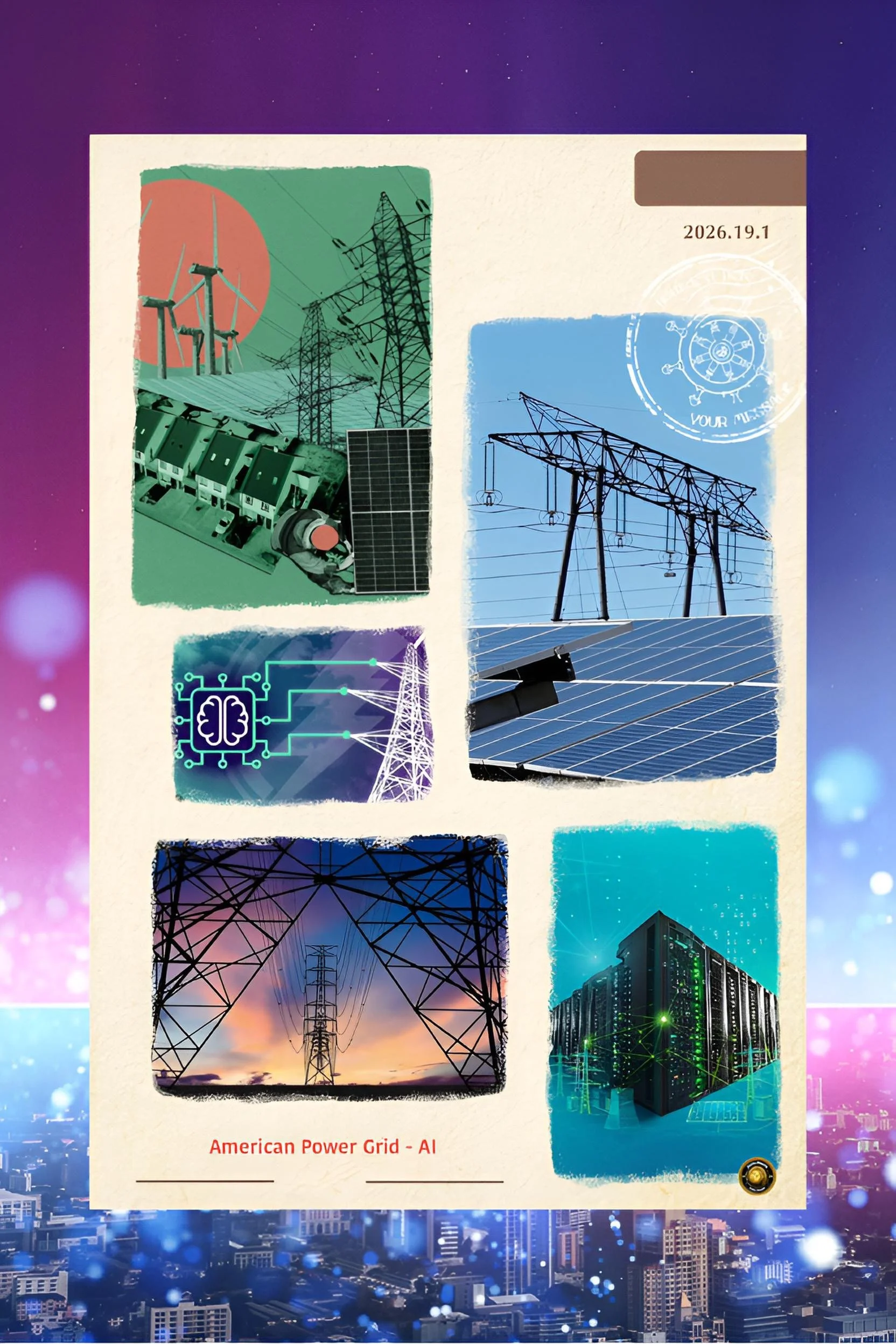
Behind all these conveniences sits a massive problem that nobody is really talking about: these AI systems need enormous amounts of electricity, and American power plants and transmission lines simply cannot keep up with the demand.
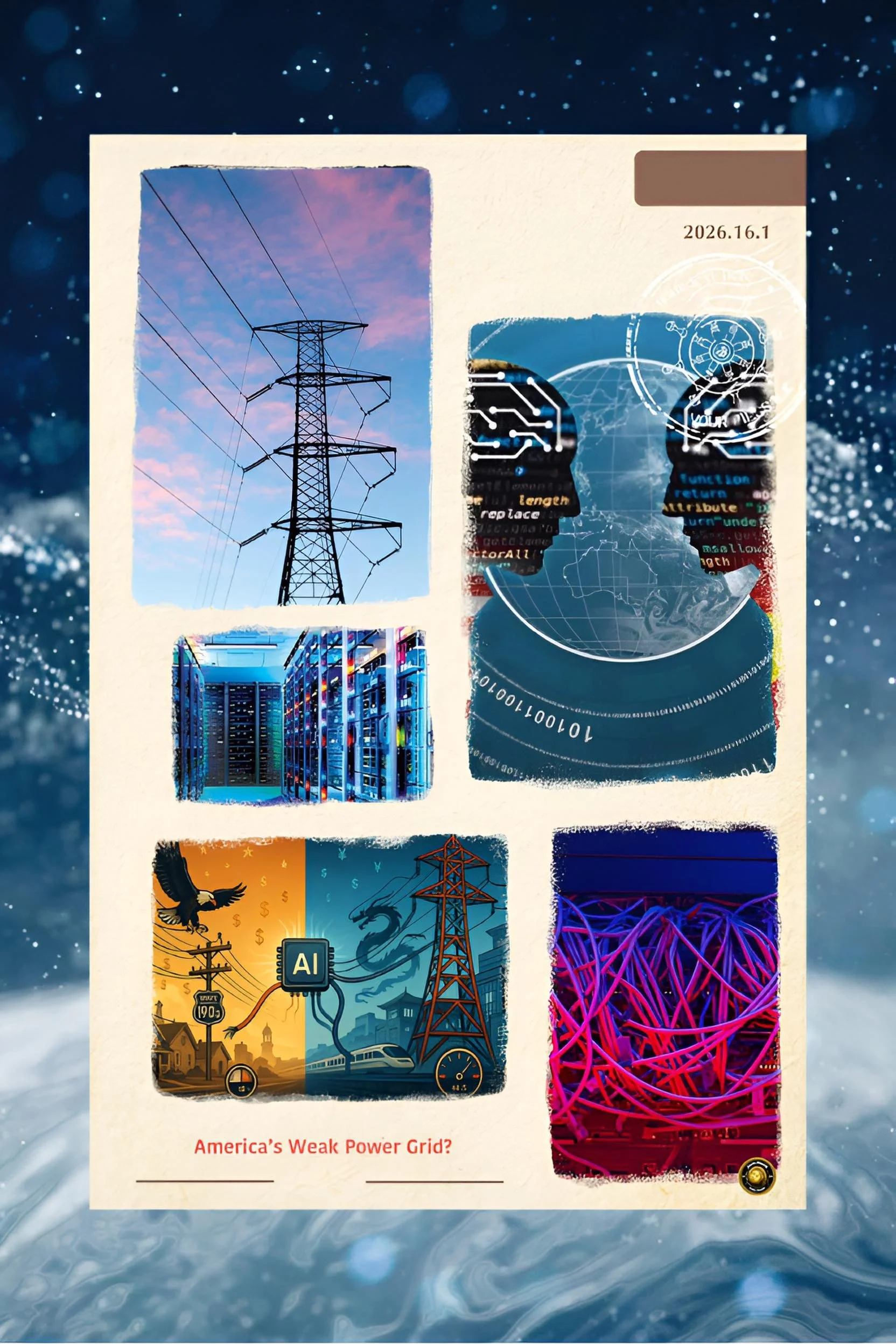
Let me explain what is happening in plain terms. Imagine the American electrical grid as a highway system. For the past twenty years, this highway was not very busy. Traffic remained flat.
The government and utility companies planned accordingly, building just enough roads and bridges for steady, predictable traffic. Nobody anticipated what would happen when suddenly millions of new trucks needed to drive on these roads every single day.
That is precisely what happened with artificial intelligence. About seven years ago, companies started developing large language models, the artificial intelligence systems that power ChatGPT and similar applications.
These systems require massive computer farms called data centers running continuously.
Each data center consumes as much electricity as a small city. In 2024, American data centers consumed enough electricity to power approximately 40 million homes.
By 2030, that number will more than double. Think about trying to power not just 40 million homes but 80 million homes with the same electrical grid designed for a completely different era.
The numbers tell the story better than words can. In 2024, data centers used 183 terawatt-hours of electricity. That is enough power to supply an entire country like Pakistan.
By 2030, this will increase to 426 terawatt-hours.
To understand the magnitude, imagine the electrical consumption of Germany and France combined, and that is what American data centers will require by 2030.
Add cryptocurrency mining on top of this, and the picture becomes even more challenging. Bitcoin mining alone consumes roughly 160 terawatt-hours globally each year.
About 25 to 91 terawatt-hours of this comes from the United States, consuming roughly 0.6 to 2.3 % of American electricity.
This might sound small until you consider that the 34 largest Bitcoin mining facilities in America consume more electricity than the entire city of Los Angeles uses annually.
Large cryptocurrency mining operations have deliberately set up in places like West Texas specifically because electricity is cheaper there, making these operations major players in regional electricity markets.
Here is what this means for your electricity bill. Utilities must upgrade aging power lines and build new power plants to meet this demand. These upgrades cost billions of dollars.
When utilities invest this much money, they pass the costs on to consumers through higher electricity rates.
In some areas near data centers, electricity prices have increased as much as 267 % over the past five years. Even areas farther away from data centers experience rate increases because utilities must upgrade shared transmission lines and power distribution systems.
The federal government has recognized this challenge as a serious threat to American economic competitiveness and national security.
In January 2026, the Trump administration announced a comprehensive strategy to address the electricity crisis.
The plan recognizes that if America cannot provide enough electricity for artificial intelligence data centers, the companies developing these technologies will build facilities in other countries where power is more readily available
This would mean losing billions in investment, good jobs, and technological leadership to foreign competitors.
The federal strategy focuses on multiple solutions working simultaneously. The first major strategy is building new nuclear power plants. Companies like Meta, Google, and Microsoft have signed contracts for over 10 gigawatts of new nuclear power.
To put this in perspective, a typical nuclear power plant generates about 1 gigawatt, so these companies are essentially committing to funding ten large nuclear power plants worth of electricity. The government is supporting this through accelerated permitting processes and financial incentives.
Beyond large nuclear plants, a newer technology called small modular reactors offers exciting possibilities. These are compact nuclear reactors that can be installed directly at data center facilities, providing dedicated power without depending on shared electrical grids.
Think of it like having your own power plant on your property rather than relying on a shared system. Companies are working to have the first of these small reactors operational around 2030. This technology could revolutionize how data centers get their power.
Renewable energy including solar and wind power provides another major part of the solution. However, solar and wind have a problem: they do not generate power when the sun is not shining or the wind is not blowing, but data centers need power 24 hours a day.
This is where battery storage systems become crucial. Imagine giant batteries storing energy when the sun shines or wind blows strong, then releasing that energy when needed.
The cost of these batteries has dropped dramatically, making this approach increasingly practical. Some data center facilities are now being designed with combinations of solar panels, wind turbines, and battery systems that work together to provide power around the clock.
Geothermal energy, which harnesses heat from deep within the earth, offers another solution that often gets overlooked. Geothermal can provide power 24 hours a day with a reliability above 90 percent, which means it generates power almost all the time.
A research study estimated that geothermal energy could meet between 55 and 64 % of new data center electricity demands by the early 2030s.
In some optimal locations, geothermal could theoretically meet all the new electricity demand from data centers. These advantages make geothermal particularly attractive for powering artificial intelligence facilities.
Another important strategy involves making data centers more flexible about when they use electricity.
Some artificial intelligence workloads, particularly machine learning training, can tolerate brief interruptions. Google has already developed technology allowing it to shift non-urgent computational tasks to times when the power grid is less stressed.
By participating in demand response programs, data centers essentially agree to reduce their electricity consumption during peak demand periods when the grid is strained. In exchange, utilities pay them for this service. This approach helps the grid without requiring new power plants to be built.
The government is also accelerating the modernization of aging transmission lines that carry electricity from power plants to homes and businesses.
The Department of Energy plans to build 7,500 miles of new high-voltage transmission lines by 2030. This is a massive undertaking comparable to building the interstate highway system in terms of scale and complexity.
These new lines will carry renewable energy from wind and solar farms in remote regions to data centers and population centers that need the power.
Despite these efforts, challenges remain substantial. The process of getting approval to build new power plants, transmission lines, and interconnection facilities remains slow.
Companies applying to connect new generation capacity to the electrical grid currently wait more than three years on average for approval studies to be completed.
Even after approval, construction typically takes several more years. If artificial intelligence electricity demand grows faster than infrastructure can be built, electricity prices will spike dramatically, and data centers may struggle to secure adequate power, potentially slowing artificial intelligence innovation and economic growth.
The geographic concentration of data centers also creates challenges.
Northern Virginia, for example, currently has 561 data center facilities consuming about 26 % of the region's total electricity supply.
This creates enormous strain on local power systems. While spreading data centers to other regions would help, companies tend to cluster data centers in established locations because of existing network connections and infrastructure, making rapid geographic diversification difficult.
International competition adds urgency to these challenges.
China invested $625 billion in clean energy infrastructure in 2024 and built massive transmission systems to move renewable power across the country.
Countries providing abundant, reliable, inexpensive electricity will attract data center investments and artificial intelligence development. If America cannot solve its electricity problems, companies may simply build their major artificial intelligence facilities elsewhere.
The path forward requires coordinated action from federal and state governments, utility companies, technology companies, and private investors. Small modular nuclear reactors need accelerated development and deployment. Renewable energy systems combined with battery storage must expand rapidly. Geothermal technology development requires government support and streamlined permitting.
Grid modernization including new transmission lines must proceed at unprecedented speed. Data center operators must become partners in grid stability through demand flexibility participation.
The stakes could not be higher. Electricity availability now determines whether America maintains leadership in artificial intelligence or cedes this transformative technology to countries with superior power infrastructure. The technical solutions exist.
Success depends on whether all the actors involved can coordinate effectively and move with sufficient speed to keep pace with the explosive growth of artificial intelligence.
The next few years will prove decisive in determining whether American artificial intelligence innovation continues driving economic growth or stumbles due to inadequate electricity infrastructure.