South Korea’s Political Crisis: Presidential Impeachment, Release from Prison, and the Path Toward Elections
Introduction
South Korea finds itself at a critical juncture in its democratic history. The nation grapples with the fallout from President Yoon Suk Yeol’s impeachment, his recent release from prison, and the looming possibility of a snap presidential election.
The unfolding crisis, rooted in Yoon’s controversial declaration of martial law in December 2024, has exposed deep political divisions, tested constitutional norms, and ignited widespread public debate about the balance of power and the rule of law.
The author's analysis examines the legal, political, and societal dimensions of the crisis, analyzes the implications of Yoon’s release, and evaluates the prospects for early elections amid escalating tensions.
The Impeachment and Release of President Yoon Suk Yeol
Legal Basis for Impeachment and Arrest
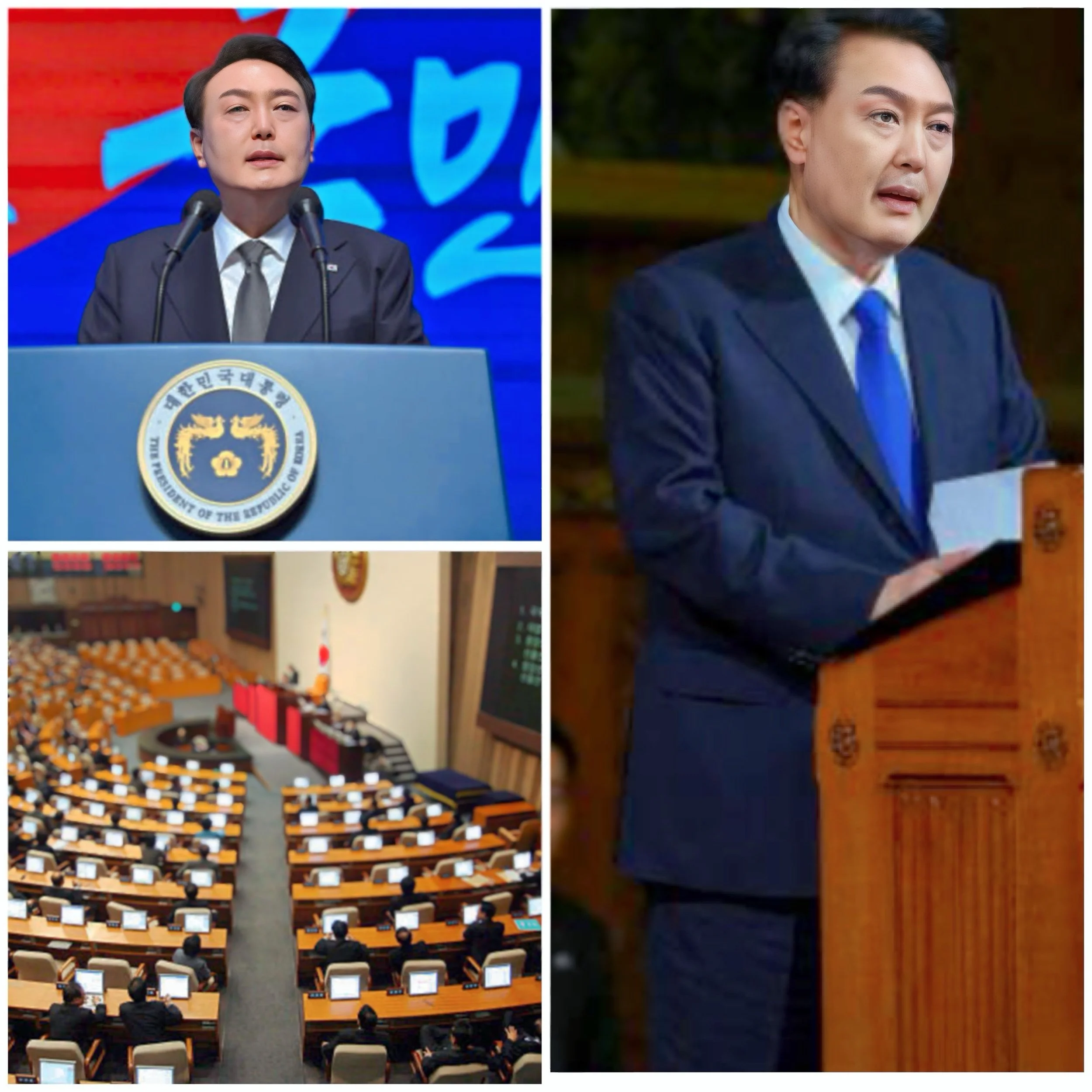
President Yoon Suk Yeol’s impeachment by the National Assembly on December 14, 2024, marked the third presidential impeachment in South Korea’s history and the first to involve criminal insurrection charges.
The impeachment stemmed from his declaration of martial law on December 3, 2024, which authorized the deployment of military forces to the National Assembly and other government institutions.
While Yoon revoked the decree six hours later under intense legislative and public pressure, the opposition-dominated parliament accused him of attempting to subvert democratic processes and undermine constitutional order.
The impeachment process, governed by Article 65 of South Korea’s constitution, required a two-thirds majority (200 votes) in the 300-member National Assembly.
The second impeachment motion succeeded with 204 votes in favor, including 12 defectors from Yoon’s ruling People Power Party (PPP), reflecting internal party dissent over his leadership.
Following his impeachment, Yoon was immediately suspended from office, with Prime Minister Han Duck-soo assuming the role of acting president.
Concurrently, prosecutors indicted Yoon on charges of insurrection, a crime punishable by life imprisonment or the death penalty under South Korean law.
Release from Detention and Judicial Controversies
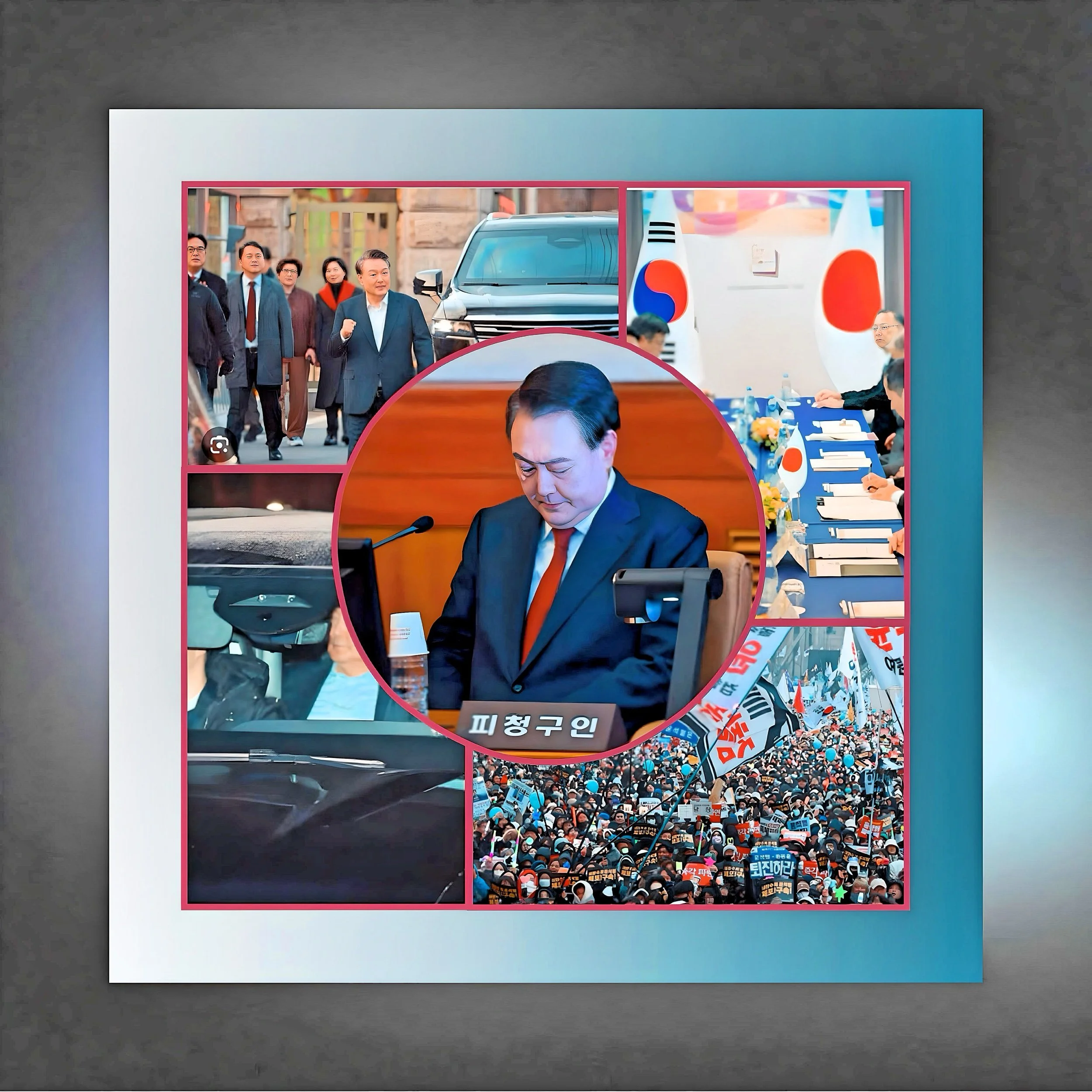
On March 8, 2025, the Seoul Central District Court ordered Yoon’s release from prison, citing procedural irregularities in his arrest warrant and the expiration of the legally permissible detention period.
The court emphasized the need to address “issues regarding the legality of the investigation process,” particularly whether prosecutors overstepped their authority by charging a sitting president with insurrection without explicit constitutional provisions. Yoon’s legal team hailed the decision as a victory for due process, arguing that the charges were politically motivated and lacked a firm legal foundation.
Yoon’s release sparked polarized reactions. Supporters gathered outside the Seoul Detention Center to celebrate his return to the presidential residence, waving South Korean and U.S. flags and chanting slogans condemning the impeachment as a “judicial coup.”
Conversely, opposition leaders and civic groups criticized the court’s decision, alleging judicial bias and warning that Yoon’s freedom could embolden authoritarian tendencies within the conservative establishment.
Ongoing Impeachment Trial and Constitutional Court Deliberations
The Constitutional Court, tasked with reviewing the impeachment’s validity, concluded hearings on February 24, 2025, after 11 sessions spanning 73 days. Key arguments centered on whether Yoon’s martial law decree constituted a legitimate exercise of presidential authority or an unconstitutional power grab.
Prosecutors accused Yoon of plotting to suspend the National Assembly and arrest opposition lawmakers, drawing parallels to the authoritarian regimes of Park Chung-hee and Chun Doo-hwan. Yoon’s defense team countered that his actions were a “desperate measure” to counteract legislative gridlock and alleged pro-North Korean sympathies within the opposition.
The court’s nine justices, including two appointed by Yoon, must reach a verdict by June 2025, though legal analysts anticipate a ruling by late March 2025.
A decision to uphold the impeachment would permanently remove Yoon from office and trigger a snap presidential election within 60 days.
If the court reinstates him, Yoon could resume his duties but remain subject to criminal prosecution.
Pathways to a Snap Presidential Election
Constitutional Requirements and Timelines
South Korea’s constitution mandates that a presidential election be held within 60 days if the office becomes vacant due to resignation, impeachment, or death. With Yoon’s impeachment pending judicial review, the timing of a potential election hinges on the Constitutional Court’s ruling.
Should the court uphold the impeachment by March 2025, the election would occur by May 2025. Conversely, a delayed verdict could push the election to August 2025.
The election would follow a single-round plurality system, with candidates requiring no minimum vote threshold to win. Notably, the constitution bars incumbent and former presidents from seeking re-election, rendering Yoon ineligible regardless of the trial’s outcome.
Political Landscape and Prospective Candidates
The political arena has already begun aligning for a contentious election, with major parties vetting candidates and consolidating alliances. Polling data from January 2025 reveals a fractured electorate, with no candidate commanding a decisive majority.
Democratic Party of Korea (DPK)
The progressive DPK, which controls the National Assembly, is coalescing around Lee Jae-myung, its current leader and former presidential candidate.
Lee, who narrowly lost to Yoon in the 2022 election, has positioned himself as a defender of democratic norms against executive overreach. Polls show him leading with 28–39% support nationwide, particularly in the Jeolla and Gwangju regions, where he garners over 50% approval.
Other DPK contenders include Kim Dong-yeon, governor of Gyeonggi Province, and Kim Kyoung-soo, a former South Gyeongsang governor implicated in a 2018 opinion-rigging scandal.
People Power Party (PPP)
The conservative PPP faces internal strife following Yoon’s impeachment, with factions divided between loyalists and reformers advocating for a break from his legacy. Han Dong-hoon, Yoon’s former justice minister and PPP leader, initially spearheaded efforts to broker Yoon’s resignation but has since distanced himself to avoid association with the scandal. Seoul Mayor Oh Se-hoon and Daegu Mayor Hong Joon-pyo are emerging as frontrunners, leveraging their regional bases and administrative experience. Polls indicate moderate support for PPP candidates in traditional conservative strongholds like Daegu and North Gyeongsang Province.
Minor Parties and Independent Candidates
The New Reform Party, led by ex-PPP member Lee Jun-Seok, and the New Future Party, headed by former Prime Minister Lee Nak-yon, aim to capitalize on voter disillusionment with mainstream parties. As a youth-oriented reformer, Lee Jun-Seok has criticized both the DPK’s progressivism and the PPP’s authoritarian leanings, advocating for centrist policies.
Public Opinion and Regional Divisions
Geographic and generational cleavages continue to shape electoral dynamics. Polls from January 2025 reveal stark contrasts: Lee Jae-myung dominates in the progressive southwest (Jeolla/Gwangju), while PPP candidates lead in the conservative southeast (Daegu/North Gyeongsang). Younger voters (ages 18–39) express more skepticism toward both major parties, with 24.9% favoring independent or third-party candidates.
The impeachment crisis has further polarized the electorate. A January 2025 survey found 45.1% of respondents supporting Yoon’s removal, 37.9% opposing it, and 17% undecided. Regional disparities persist, with 55% of Jeolla residents endorsing impeachment compared to 32% in Daegu.
Implications of Yoon’s Release and the Road Ahead
Legal Precedents and Democratic Norms
Yoon’s release, while procedurally sound, raises questions about accountability for high-ranking officials. Legal scholars note that South Korea’s constitution lacks explicit mechanisms for prosecuting sitting presidents, creating ambiguity around the scope of presidential immunity. The Constitutional Court’s impending ruling could establish critical precedents regarding the limits of executive power and the judiciary’s role in checking presidential overreach.
Societal Reactions and Civil Unrest
The crisis has inflamed societal tensions, with frequent protests in Seoul and other major cities. Pro-Yoon demonstrations, often attended by older conservatives, frame the impeachment as a left-wing conspiracy to destabilize the government. Anti-Yoon rallies, led by students and labor unions, accuse the president of betraying democratic principles and demand his permanent removal. Clashes between factions have occasionally turned violent, prompting heightened police presence near government buildings and courts.
International Perspectives and Diplomatic Ramifications
Yoon’s legal troubles have strained South Korea’s foreign relations, particularly with the United States and Japan. The Biden administration has cautiously avoided taking sides, emphasizing the importance of democratic processes. China and North Korea, meanwhile, have seized on the turmoil to critique South Korea’s governance model, with Pyongyang’s state media labeling the crisis a “collapse of capitalist pseudo-democracy.”
Domestically, the scandal has delayed key policy initiatives, including defense cost-sharing negotiations with the U.S. and efforts to mend ties with Japan over historical disputes. A prolonged political vacuum could undermine South Korea’s economic stability, particularly amid slowing growth and rising household debt.
Conclusion
A Nation at a Crossroads
South Korea’s political future hangs in the balance as the Constitutional Court deliberates President Yoon Suk Yeol’s fate. His release from prison, though a procedural milestone, has done little to quell the underlying tensions fueling the crisis. The court’s verdict, expected imminently, will either validate the impeachment as a necessary check on executive power or rebuke it as an overreach of legislative authority.
Regardless of the outcome, the crisis has underscored vulnerabilities in South Korea’s constitutional framework, particularly the absence of clear guidelines for prosecuting presidents and resolving executive-legislative conflicts. Reforms, such as adopting a parliamentary system or expanding judicial oversight, may gain traction in the election’s aftermath.
The nation currently braces for a pivotal electoral contest that could redefine its political trajectory. With trust in institutions eroding and partisan animosities intensifying, the next president will inherit a fractured mandate and the daunting task of healing a deeply divided society.