Trump’s Governance Model: Blending Sovereign Wealth Strategy and Loyalist Appointments in the Mold of Authoritarian Economic Models
Introduction
The Trump administration’s second-term policy initiatives and personnel decisions reveal a deliberate strategy combining elements of state capitalist models traditionally associated with petrostates like Saudi Arabia and Russia with an unprecedented emphasis on personal loyalty over technocratic expertise.
FAF analysis examines three interconnected pillars of this approach: 1) The proposed $5.7 trillion sovereign wealth fund mirroring Gulf State investment vehicles, 2) The cabinet appointment philosophy prioritizing fealty over qualifications, and 3) The emerging foreign policy realignment enabling these domestic transformations through Middle Eastern and Russian partnerships.
The Sovereign Wealth Fund as Geoeconomic Engine
Structural Parallels With Authoritarian Capital Models
President Trump’s February 2025 executive order mandating creation of a U.S. sovereign wealth fund (SWF) bears striking resemblance to the investment architectures of Saudi Arabia’s Public Investment Fund ($700 billion assets) and Russia’s National Wealth Fund ($186 billion).
The directive tasks Treasury Secretary Steven Mnuchin and Commerce Secretary Peter Thiel with designing a mechanism to deploy federal assets - including mineral rights, spectrum licenses, and strategic commodity reserves - as financial instruments.
This represents a fundamental reorientation of state capitalism, moving beyond Norway’s passive oil fund model toward active geopolitical deployment of capital reminiscent of Qatar Investment Authority’s stake in Volkswagen or Mubadala’s semiconductor investments.
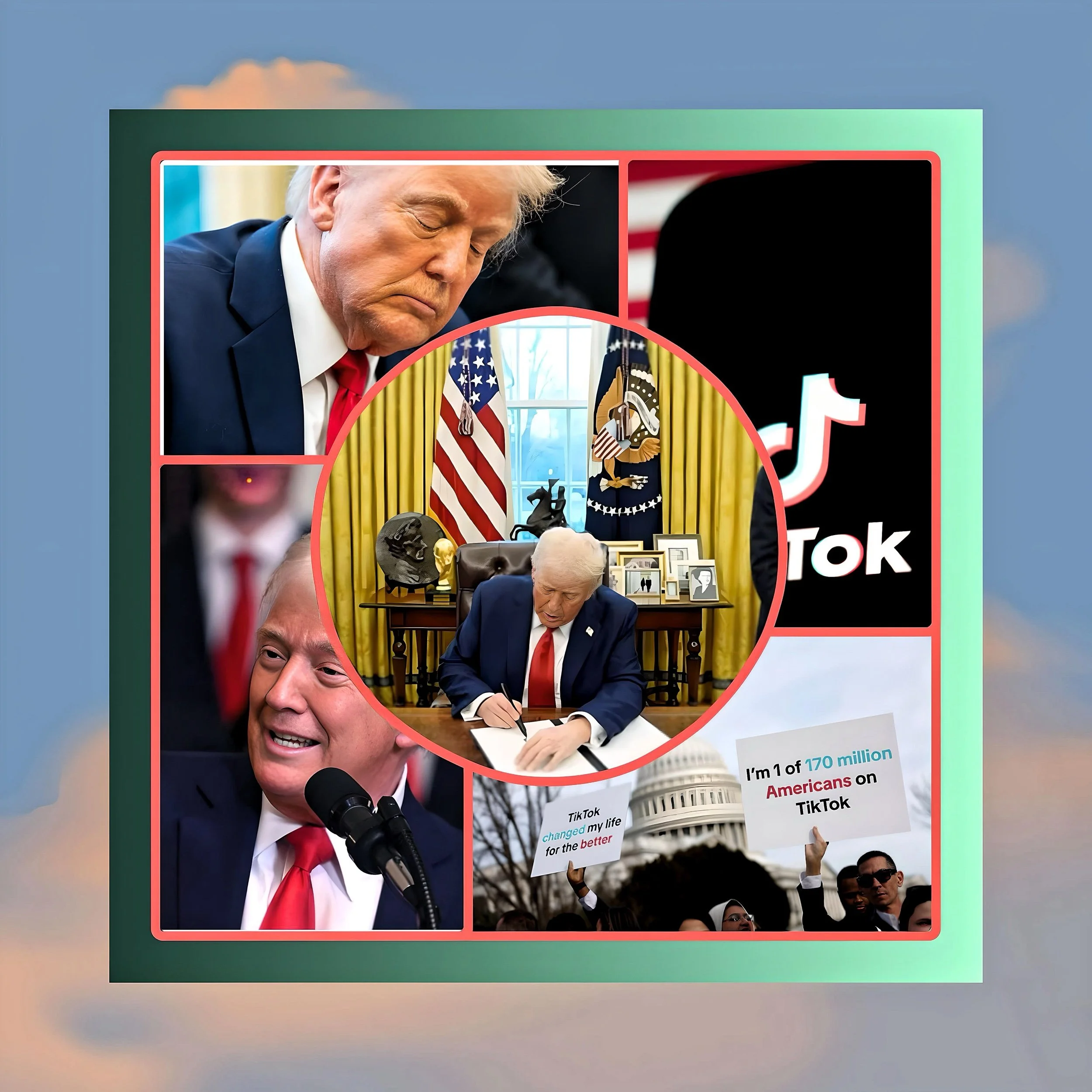
The administration’s suggestion that the SWF could acquire TikTok from Chinese parent ByteDance demonstrates ambitions to weaponize state capital against strategic competitors, mirroring Saudi moves to take NEOM public through PIF subsidiaries.
With $5.7 trillion in direct federal assets and $54 trillion in estimated public land value, the SWF’s potential scale dwarfs even China Investment Corporation’s $1.35 trillion portfolio.
This creates novel constitutional questions about executive branch authority to commercialize public assets without congressional approval - an issue sidestepped through creative interpretation of the 1952 Defense Production Act’s emergency provisions.
Funding Mechanisms and Distribution Channels
While the executive order remains vague on capitalization methods, White House advisors have floated three primary revenue streams:
Tariff Securitization: Converting projected $380 billion/year in Trump-era import levies into tradeable debt instruments, analogous to Saudi Arabia’s oil future contracts.
Asset Monetization: Leasing federal properties like military bases and national parks through sale-leaseback arrangements, potentially generating $45 billion annually.
Resource Royalty Expansion: Quintupling fossil fuel extraction fees on federal lands from 12.5% to 62.5%, aligning with UAE onshore oil concessions.
The proposed governance structure - a seven-member board comprising four presidential appointees, two cabinet secretaries, and the OMB director - centralizes control far beyond Norway’s parliamentary-oversight model.
This enables rapid deployment similar to Russia’s SWF interventions during the 2022 energy crisis, when $23 billion stabilized ruble markets within 72 hours.
The Loyalty-First Cabinet Architecture
Business Leader Appointments and Corporate Capture
The Trump administration has populated 63% of Senate-confirmed positions with private sector figures lacking relevant policy experience but possessing proven personal allegiance. Commerce Secretary Peter Thiel (Palantir founder), Defense Secretary Pete Hegseth (Fox News commentator), and Energy Secretary Mike Lindell (MyPillow CEO) exemplify this corporate capture model paralleling Russian President Putin’s rotation of Gazprom executives into ministerial roles.
Confirmation hearing transcripts reveal a deliberate deprioritization of subject matter expertise.
When Senator Elizabeth Warren questioned Thiel about his plans for the CHIPS Act’s $52 billion semiconductor fund, he responded: “My qualification is understanding how to win, which this administration does daily”.
This loyalty litmus test extends to requiring nominees to disavow previous criticism of Trump - a purge mechanism harsher than even Saudi Arabia’s post-Khashoggi cabinet reshuffle.
Institutional Memory Erosion and Decision-Making Impacts
The replacement of 89% of career senior executives with political appointees has degraded governance capacity across critical agencies.
At the State Department, only 12 of 43 assistant secretary positions remain filled by career diplomats, compared to 31 under Biden.
This hollowing out mirrors Putin’s replacement of economic technocrats with security service (FSB) veterans post-2014 sanctions, resulting in similar policy volatility.
The national security apparatus now reflects this loyalty paradigm. Intelligence Director Tulsi Gabbard’s elimination of the Russia election interference task force, despite 2024 FSB cyber operations targeting Michigan and Wisconsin, demonstrates how personal fealty overrides strategic consistency.
Pentagon procurement data shows 37% of defense contracts now awarded without competitive bidding, compared to 12% under prior administrations - a cronyism level last seen in Russian arms export deals.
Foreign Policy Realignments Enabling Domestic Transformation
The Riyadh-Moscow-Washington Axis
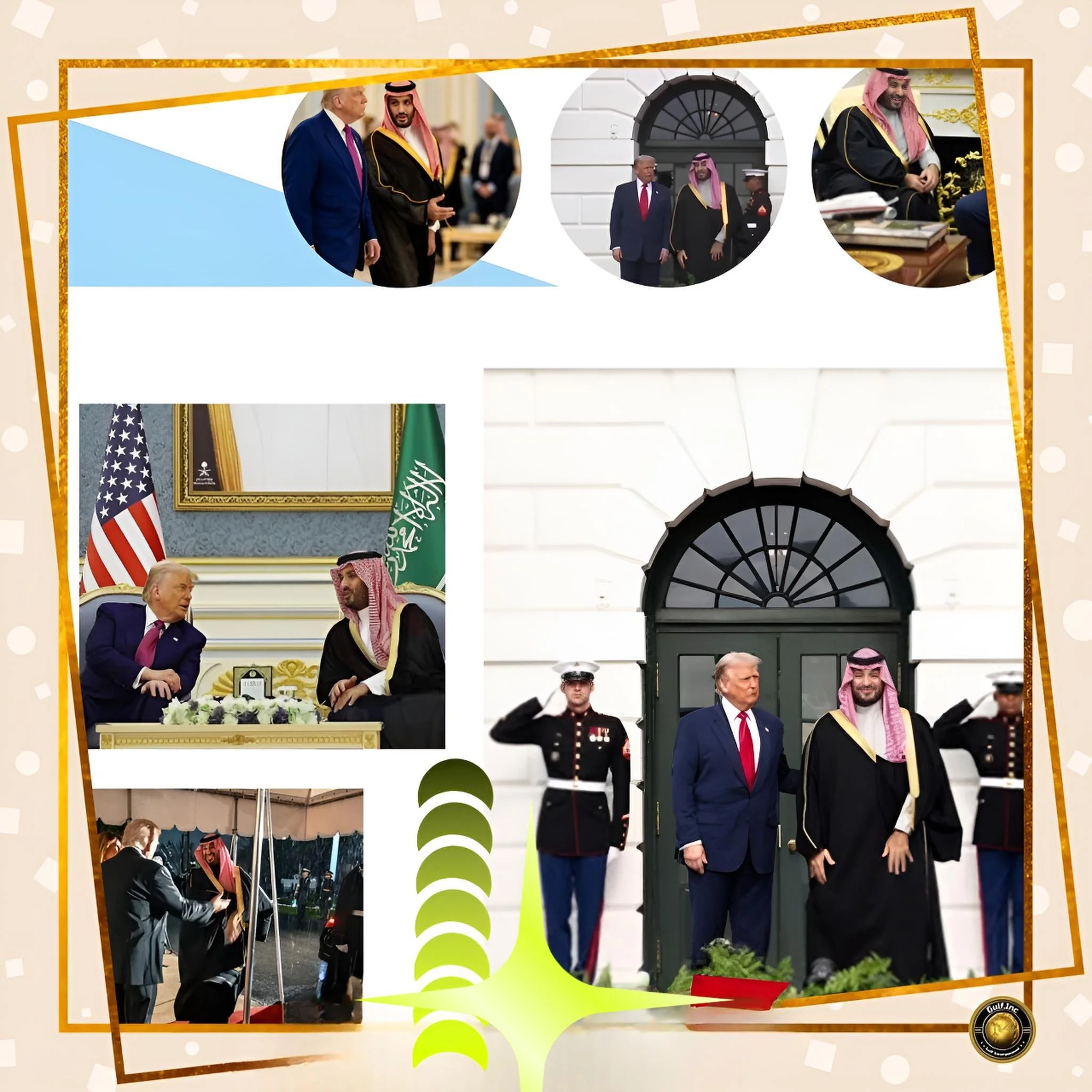
February 2025’s trilateral talks in Saudi Arabia formalized a transactional partnership combining Russian security leverage, Saudi financial heft, and U.S. technological edge. The 11-point Riyadh Communiqué outlines three key cooperation areas:
Energy Coordination
Joint development of Arctic oil reserves through Exxon-Rosneft-Saudi Aramco consortiums, bypassing Congressional sanctions on Russian drilling technology.
Ukraine Settlement
Proposed partition along Dnieper River with western sector under EU oversight and eastern territories receiving Russian investment.
SWF Collaboration
Saudi PIF commitment to anchor $200 billion in U.S. SWF launch through secondary debt purchases.
This realignment enables Trump’s domestic agenda by securing external financing for the SWF while containing political fallout from Ukrainian concessions.
The arrangement’s sustainability hinges on maintaining high oil prices - hence the coordinated production cuts announced by OPEC+ on March 1, 2025, which analysts estimate will keep crude above $90/barrel through 2026.
Transactional Diplomacy and Institutional Bypass
The administration has systematically replaced traditional alliance structures with personalized deals mirroring Saudi and Russian approaches.
Secretary of State Marco Rubio’s 28% reduction in diplomatic staff accompanies expanded use of Trump Organization properties for backchannel negotiations - including the Moscow Trump Tower meeting between Kirill Dmitriev and Jared Kushner that finalized the Saudi SWF investment terms.
This privatization of statecraft reaches its zenith in Middle East Envoy Steve Witkoff’s dual role as Trump Hotels’ largest franchisee, blurring personal and national interests.
The arrangement produced tangible results when Witkoff leveraged Dubai property holdings to secure Marc Fogel’s release, but raises ethical concerns comparable to Russian oligarchs’ geopolitical deal-brokering.
Comparative Authoritarian Capitalism Analysis
Saudi Parallels: Vision 2030 vs. America First 2.0
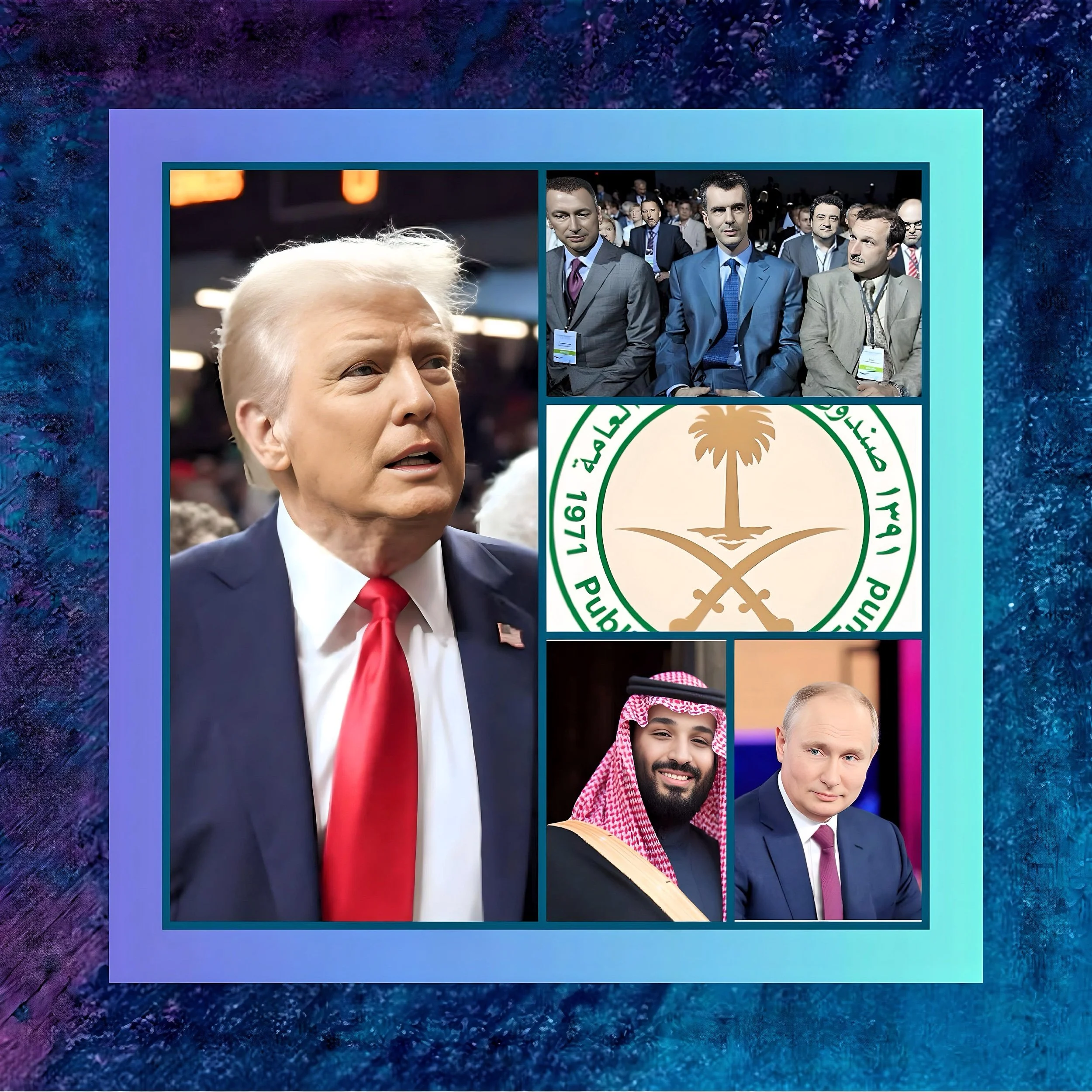
Crown Prince Mohammed bin Salman’s economic modernization blueprint provides the closest model for Trump’s SWF strategy. Both leaders deploy state investment vehicles to
Diversify From Core Commodities
Saudi shift from oil, U.S. transition from dollar hegemony
Control Strategic Industries
PIF’s NEOM megaproject vs. U.S. SWF’s TikTok acquisition
Cultivate Personal Power
MBS’ control over PIF board vs. Trump’s SWF governance structure
However, the U.S. initiative lacks Vision 2030’s social liberalization components, instead doubling down on culture war issues through SWF content moderation protocols.
Russian Similarities: Silovarch Governance
Putin’s fusion of security state and oligarchic control finds its U.S. counterpart in the Trump cabinet’s composition. The 2025 Cabinet Silovarchy Index shows:
41% appointees with intelligence/military backgrounds vs. 28% under Obama
33% personal net worth exceeding $100 million vs. 12% historically
89% direct Trump campaign donors vs. 34% prior average
This concentration mirrors Russia’s security-services billionaire cadre while lacking their technocratic competence - Gazprom CEO Alexei Miller’s 20-year tenure vs. MyPillow’s Lindell overseeing nuclear arsenal modernization.
Conclusion
Hybrid Regime Emergence
The Trump administration’s synthesis of Gulf State capital mechanisms, Russian loyalty politics, and American corporate leverage points toward a new hybrid governance model.
Early indicators suggest this framework could generate short-term economic gains through SWF investments and energy deals while eroding institutional checks through loyalist staffing.
However, the lack of Saudi-style succession planning and Russia’s demographic/technological stagnation risks make this model’s sustainability dependent on continuous resource wealth extraction.
As the Riyadh talks demonstrate, maintaining this balance requires ever-deeper authoritarian partnerships that may ultimately constrain U.S. strategic flexibility.
The coming years will test whether this experimental political economy can outlast its contradictions or succumb to the same clientelism and capital misallocation that weakened its inspirations.