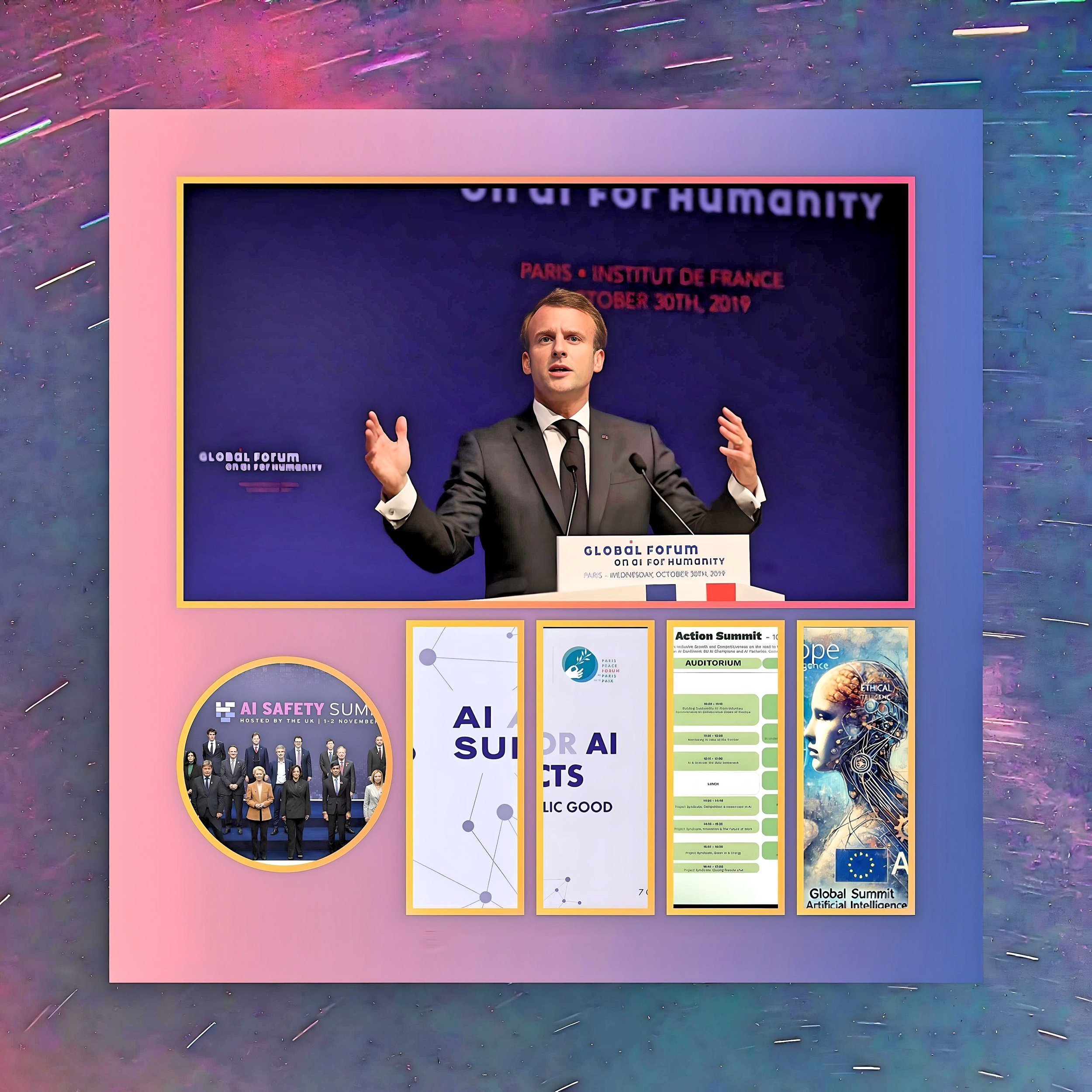
France AI summit kicked off - Update
Introduction
The AI Action Summit in Paris has commenced as part of a week-long series of global events (February 6–11, 2025) aimed at advancing international cooperation on artificial intelligence governance, innovation, and ethical development. Organized by France and co-hosted by India, the summit represents a strategic effort to position Paris as a global AI hub while addressing pressing challenges such as environmental sustainability, labor disruption, and equitable access.
Key Events and Structure
February 6–7
International AI, Science and Society Conference at the Institute Polytechnique de Paris, featuring debates on AI’s societal impacts with experts like Meta’s Ya LeCun and Google DeepMind’s Demis Hassabis.
February 8–9
Cultural events open to the public, exploring AI’s intersection with art and media.
February 10–11
High-level summit at the Grand Palais, involving heads of state (e.g., U.S. Vice President JD Vance, China’s Vice Premier Ding Xuexiang, and German Chancellor Olaf Scholz) and tech leaders like OpenAI’s Sam Altman.
France’s Strategic Goals
Leadership in Europe
France aims to solidify its position as Europe’s AI frontrunner, leveraging its ecosystem of 600 AI startups, supercomputing resources, and partnerships with global firms like Google and Meta.
Broadening the Agenda
Unlike previous summits focused on existential risks (e.g., the 2023 UK Bletchley Summit), Paris emphasizes “action”—prioritizing labor market adaptation, environmental sustainability, and inclusive governance.
Global South Inclusion
Co-hosting with India reflects efforts to engage developing nations in shaping AI policies and reducing U.S.-China dominance.
Major Announcements and Initiatives
35 New Data Center
France unveiled plans to expand AI infrastructure, targeting energy-efficient computing.
$2.5 Billion Public-Private Fund
Proposed to support ethical AI development and global accessibility.
Open-Source Advocacy
Discussions on promoting open-source models to democratize AI innovation.
Challenges and Controversies
U.S.-China Tensions
The absence of technical staff from the U.S. AI Safety Institute in the delegation highlights potential friction over regulatory priorities.
Corporate Influence
Critics argue the summit sidelines safety concerns to accommodate tech giants, despite France’s emphasis on “human-centric” AI.
Conclusion
The summit culminates on February 11 with a plenary session of world leaders, aiming to forge actionable commitments on AI governance and sustainability