The Psychology of Color in Smart Cities: A Glimpse into 2050 and Beyond
Introduction
Imagine stepping into a cityscape in 2050, where every hue and shade is meticulously crafted to enhance our urban experience. The psychology of color isn’t just a design afterthought; it’s a pivotal element in shaping the smart cities of our future. However, smart cities are not a distant dream—they are already emerging today. From Singapore’s intelligent lighting systems to Los Angeles' illuminated crosswalks, cities are beginning to use color and technology in real-time to improve safety, energy efficiency, and well-being. Looking ahead, the integration of color psychology will evolve from static urban aesthetics to dynamic, AI-powered urban environments.
The Power of Color in Urban Design
Colors have a profound impact on our emotions and behaviors. Research indicates that color not only gives people the impression of warmth and cold but also affects their perception of distance (MDPI.COM). Today’s smart cities are already leveraging these psychological effects. For example, cities like Copenhagen use adaptive streetlights that change brightness and color based on pedestrian activity, while Seoul integrates digital screens that shift colors to reflect air quality levels. In the future, urban colors will become even more interactive, responding in real time to both environmental and social data.
The Science of Color Psychology
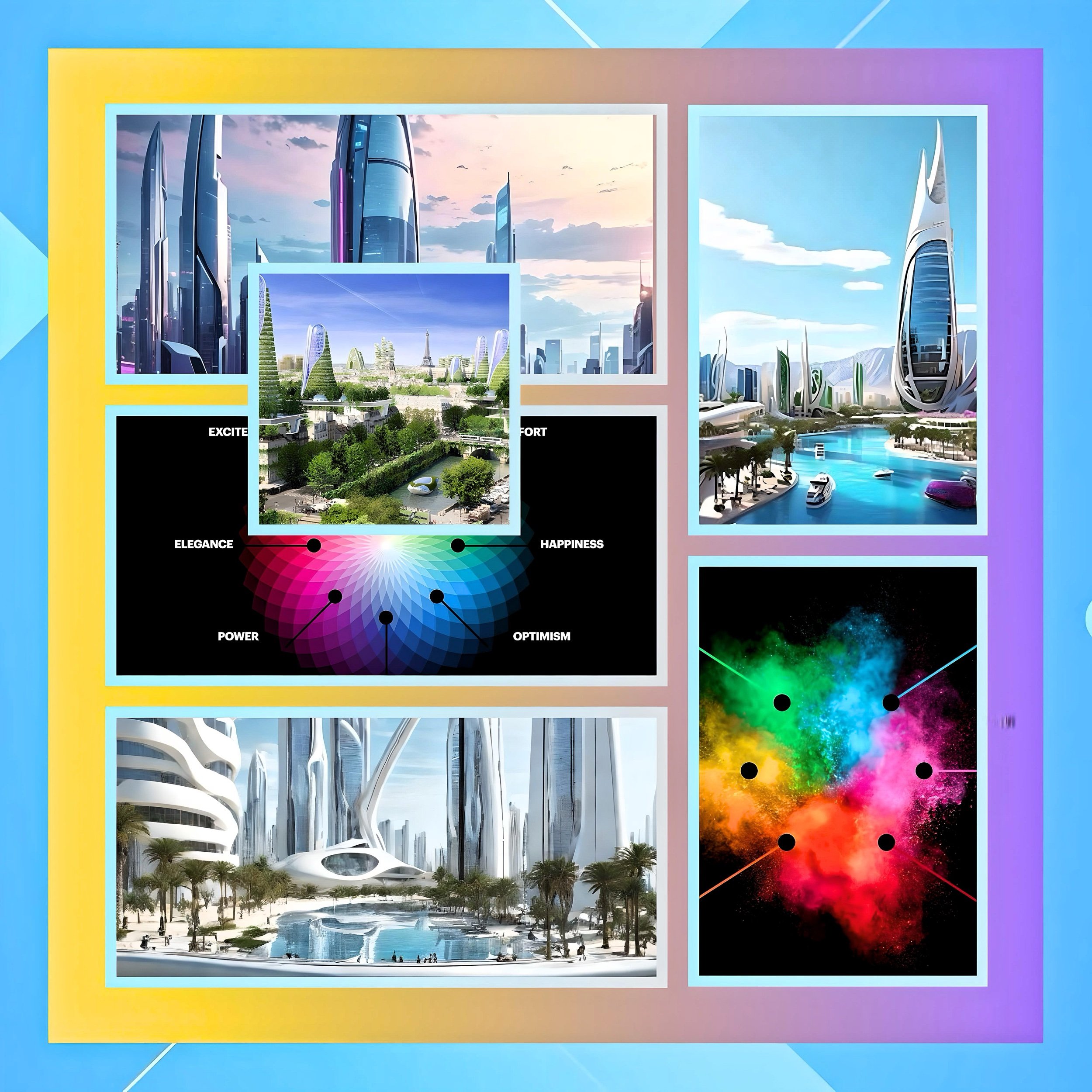
Color isn’t just an aesthetic element; it has profound psychological and physiological effects on human behavior. Research indicates that colors influence emotions, perception, and even productivity. Warm hues like red and orange can evoke energy and urgency, while cool tones like blue and green are associated with calmness and concentration. Already, major cities are applying these principles—Los Angeles' smart crosswalks, which glow green when it's safe to walk, are a prime example of how color psychology is shaping urban life today. As we move forward, urban planners will harness color in even more dynamic ways, creating cities that cater to human needs on a subconscious level.
Where We Are Today: Smart Cities in Action
Singapore’s Smart City Initiatives
Singapore, a global leader in smart urban planning, uses dynamic LED street lighting to enhance visibility and reduce energy consumption.
The Marina Bay Sands district integrates interactive façade lighting that adjusts based on events and energy efficiency goals.
Copenhagen, Denmark – Smart Street Lighting
Copenhagen employs adaptive streetlights that change brightness and color based on traffic flow and pedestrian movement, significantly cutting down on unnecessary energy usage.
Los Angeles, USA – Smart Crosswalks
LA has begun testing illuminated crosswalks that change color when pedestrians are present, improving safety and accessibility for all road users.
Seoul, South Korea – AI-Powered City Monitoring
South Korea is integrating real-time environmental monitoring with digital billboards that change color to indicate air pollution levels and climate conditions.
Tokyo, Japan – Bioluminescent Roads
Tokyo is experimenting with bioluminescent materials in sidewalks, reducing the need for traditional street lighting and contributing to sustainability efforts.
Futuristic Applications in Smart Cities
As technology advances, color will become an even more integral part of urban life, transforming cityscapes in the following ways:
Hyper-Adaptive Cityscapes
Future buildings will adjust their colors based on environmental and social data, reflecting air quality, energy efficiency needs, or even community mood.
Bioluminescent Streets and Eco-Friendly Lighting
Inspired by deep-sea organisms, future cities may use naturally glowing roads and sidewalks to reduce reliance on artificial lighting.
AI-Powered Emotional Mapping
AI-driven urban design will enable cities to alter colors in public spaces based on real-time stress levels, helping to mitigate congestion-related anxiety.
Neon Smart Highways
Smart roads with color-changing technology will provide real-time traffic updates and weather warnings, improving road safety.
Looking Ahead: The Cities of 2070 and Beyond
As technology and neuroscience advance, future cities will integrate color in ways we can barely imagine today. Some possibilities include:
Holographic Color Projection
Public spaces may use holographic displays to create immersive color experiences, altering the atmosphere of entire city blocks instantly.
Emotion-Synced Environments
Personal wearable devices could sync with urban color systems, adjusting surroundings to match an individual’s emotional state.
Augmented Reality (AR) Color Layers
Instead of painting buildings, AR overlays could allow people to personalize the colors they see in urban spaces.
Neural-Responsive Spaces
Advances in brain-computer interfaces could enable cities to respond dynamically to human emotions, turning parks into energy-boosting environments or streets into stress-reducing pathways.
Challenges and Ethical Considerations
While the integration of color psychology in urban planning holds great promise, it also presents challenges:
Cultural Sensitivity
Colors carry different meanings across cultures, and their application must be carefully considered to avoid unintended negative connotations.
Overstimulation Risks
Excessive use of color could lead to sensory overload, diminishing its intended effects and causing cognitive fatigue.
Manipulation Concerns
Ethically, should cities use color to subtly influence behavior? Issues of consent and autonomy must be addressed.
Technological Dependence
Smart color-responsive infrastructures must remain adaptable and resilient to prevent malfunctions or obsolescence.
Conclusion
As we move beyond 2050, smart cities will be more than clusters of advanced technology—they will be living, breathing ecosystems designed to harmonize with human emotions and environmental needs. Today, cities are already embracing adaptive color technologies, paving the way for a future where urban design enhances well-being, promotes sustainability, and fosters connection. By balancing innovation with ethical responsibility, we can ensure that the future of urban design is not just intelligent but deeply human-centric.