AI in Special Education: How It’s Changing Lives
introduction
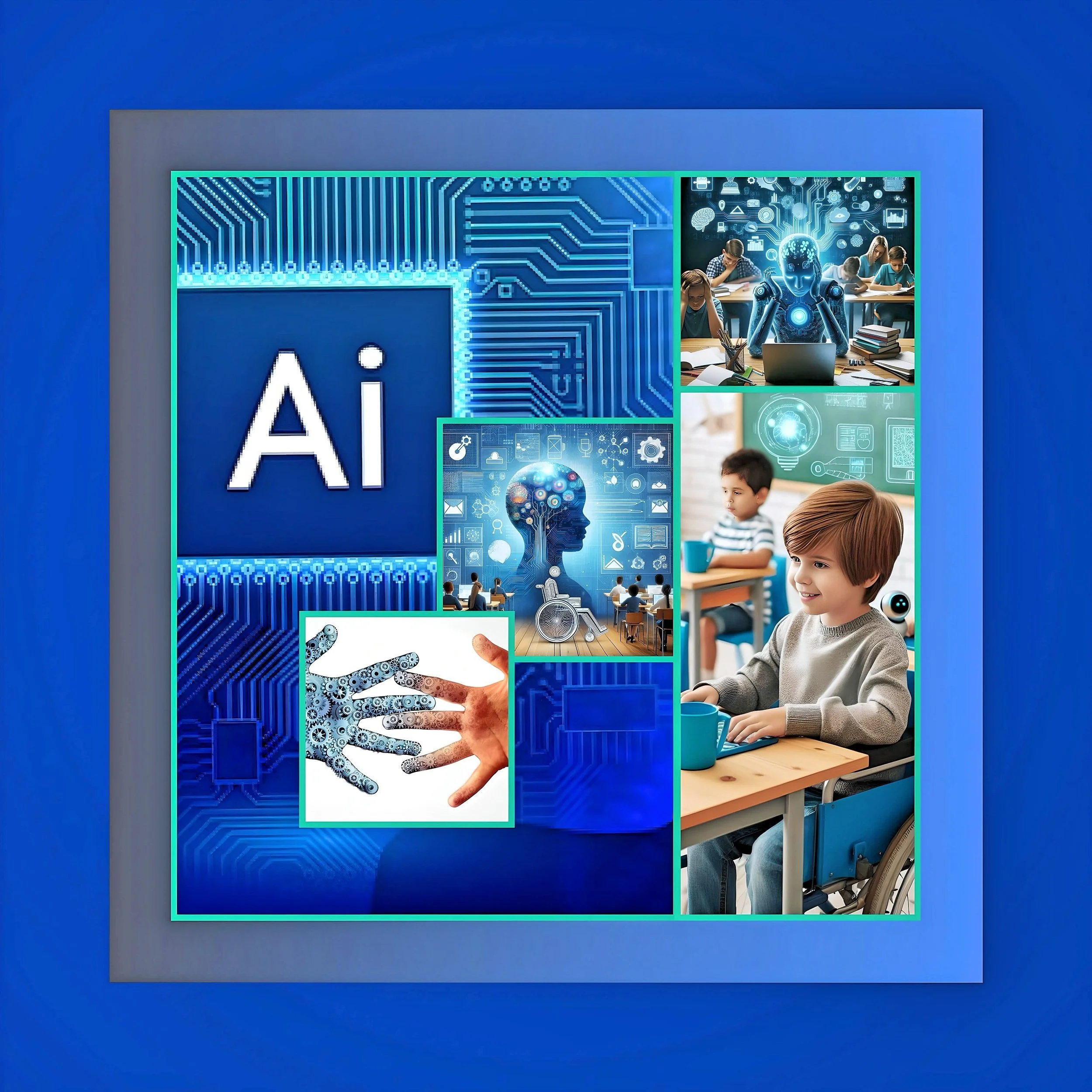
AI is not just reshaping general education; it is revolutionizing special education, providing tailored support for students with diverse learning needs.
From personalized learning tools to robotics-driven assistance and futuristic brain-interface technology, AI is unlocking new possibilities for neurodiverse students and those with disabilities, ensuring no child is left behind.
Understanding AI, AGI, and ASI
AI (Artificial Intelligence) currently assists with adaptive learning. Advanced General Intelligence (AGI) could one day create dynamic learning environments tailored to all students.
Looking further, Artificial Superintelligence (ASI) might enable real-time learning adaptations based on brain activity, potentially eliminating barriers for students with neurodiverse conditions.
While AGI and ASI remain theoretical, today’s AI tools — including AI-powered robots — are already making a measurable impact.
Personalized Learning for Neurodiverse Students
AI-driven platforms adjust to individual learning styles, offering customized content for students with dyslexia, ADHD, autism, and other learning differences.
Tools like Speechify and Microsoft Immersive Reader help students with reading and comprehension challenges by converting text to speech and highlighting words as they are read aloud.
In Finland, AI-powered educational assistant Kokoro helps students with ADHD stay engaged by adjusting the difficulty of lessons in real-time.
Similarly, Carnegie Learning’s MATHia provides step-by-step guidance tailored to a student’s problem-solving process, making math more accessible for students who struggle with numbers.
In addition, AI-powered robots are being introduced into classrooms to provide interactive, personalized learning experiences.
Robots like QTrobot, developed to assist children with autism, use facial expressions and verbal cues to teach social and communication skills in an engaging and structured way.
Speech and Communication Assistance
AI-powered speech recognition tools are breaking communication barriers for nonverbal students.
Voicett, an app that translates non-standard speech into clear communication, is already being used by individuals with cerebral palsy and Down syndrome.
Google’s Look to Speak, which enables users to select phrases using just the eye movements, has been a game-changer for students with motor disabilities.
In Japan, researchers have developed AI-powered sign language translators that bridge the gap between deaf students and their hearing peers, fostering inclusion in the classroom.
Beyond apps, robotic assistants like Milo, a humanoid robot designed to engage children with autism, help students practice social interaction and speech patterns in a structured environment.
These robots provide consistency and patience, reinforcing learning in ways that human teachers might not always have the time for.
Predictive Analytics for Early Intervention
AI is enabling early detection of learning difficulties by analyzing student performance patterns.
Researchers at Stanford University have developed AI models that analyze keystroke dynamics, helping identify dyslexia in children as early as kindergarten.
Similarly, IBM’s Watson AI is being tested to predict signs of autism spectrum disorder (ASD) by analyzing children’s facial expressions and speech patterns.
These tools empower educators and parents to intervene sooner, providing necessary support before challenges escalate.
The earlier a learning difference is detected, the better the chances of creating an effective support plan.
Some schools are also experimenting with AI-powered robotic tutors that can assess student responses, recognize signs of frustration or disengagement, and adjust their teaching approach accordingly.
These robots can function as early intervention tools, providing additional support in classrooms with high student-to-teacher ratios.
Ethical Considerations and Accessibility
While AI in special education presents incredible opportunities, it also raises ethical concerns. Data privacy, accessibility, and the risk of over-reliance on technology must be addressed.
AI tools should be designed to be inclusive and affordable, ensuring that students in underprivileged communities have equal access to these advancements.
Organizations like AI4ALL and The World Bank’s AI for Education Initiative are advocating for responsible AI use in education, emphasizing the importance of human oversight and ethical AI development.
Looking Ahead to 2050: A Magical Future for Education
By 2050, AGI could create hyper-personalized learning experiences, adapting education to each student’s neurological makeup.
Imagine an AI tutor who understands a student’s emotions and adjusts lessons accordingly, much like a compassionate human teacher.
Brain-computer interfaces, currently in experimental stages at companies like Neuralink, might one day allow students with severe disabilities to control digital devices using only their thoughts.
Robotic assistants could become even more sophisticated, serving as full-time classroom aides, helping students with mobility challenges, and even acting as personalized learning companions that adapt to each child’s emotional and cognitive needs.
These robots might integrate directly with AI-driven brain interfaces, allowing seamless communication between students and their digital learning environments.
In a world where ASI becomes a reality, AI-driven prosthetics and brain-linked communication tools can ensure that every child, regardless of ability, has equal access to education and self-expression.
Imagine a child with a learning disability using AI-enhanced virtual reality to explore history firsthand, experiencing ancient civilizations as if they were there.
Conclusion
AI is transforming special education in ways that once seemed like science fiction.
While the journey toward AGI and ASI is still unfolding, today’s AI tools are already changing lives, providing tailored support, breaking communication barriers, and ensuring early intervention for learning challenges.
The integration of robotics is further amplifying these efforts, creating more interactive, engaging, and effective learning experiences.
As technology continues to advance, the dream of an education system where every child can thrive, regardless of ability, is becoming a reality.
By embracing innovation while maintaining ethical oversight, we can create a future where AI in education is not just revolutionary but truly magical.