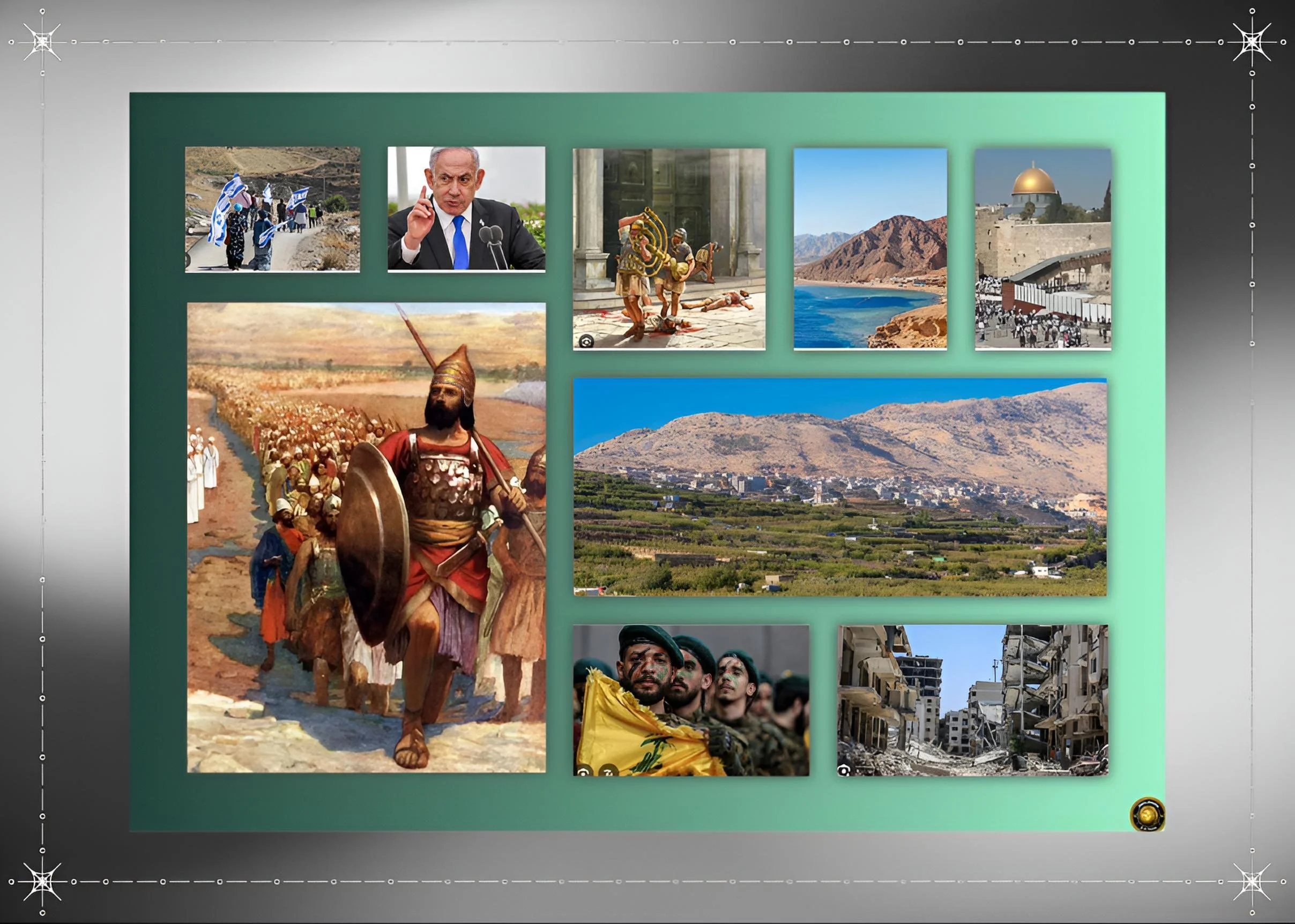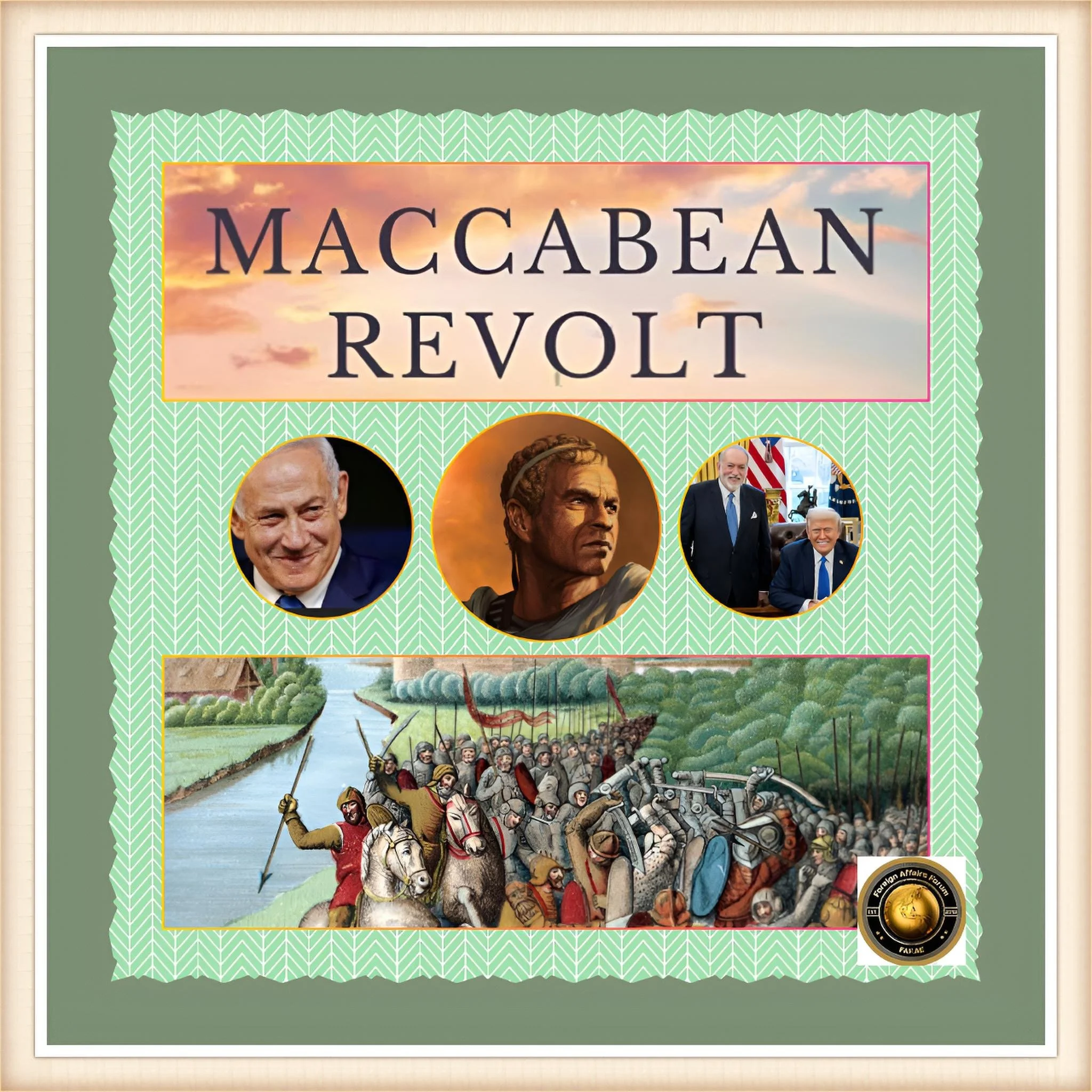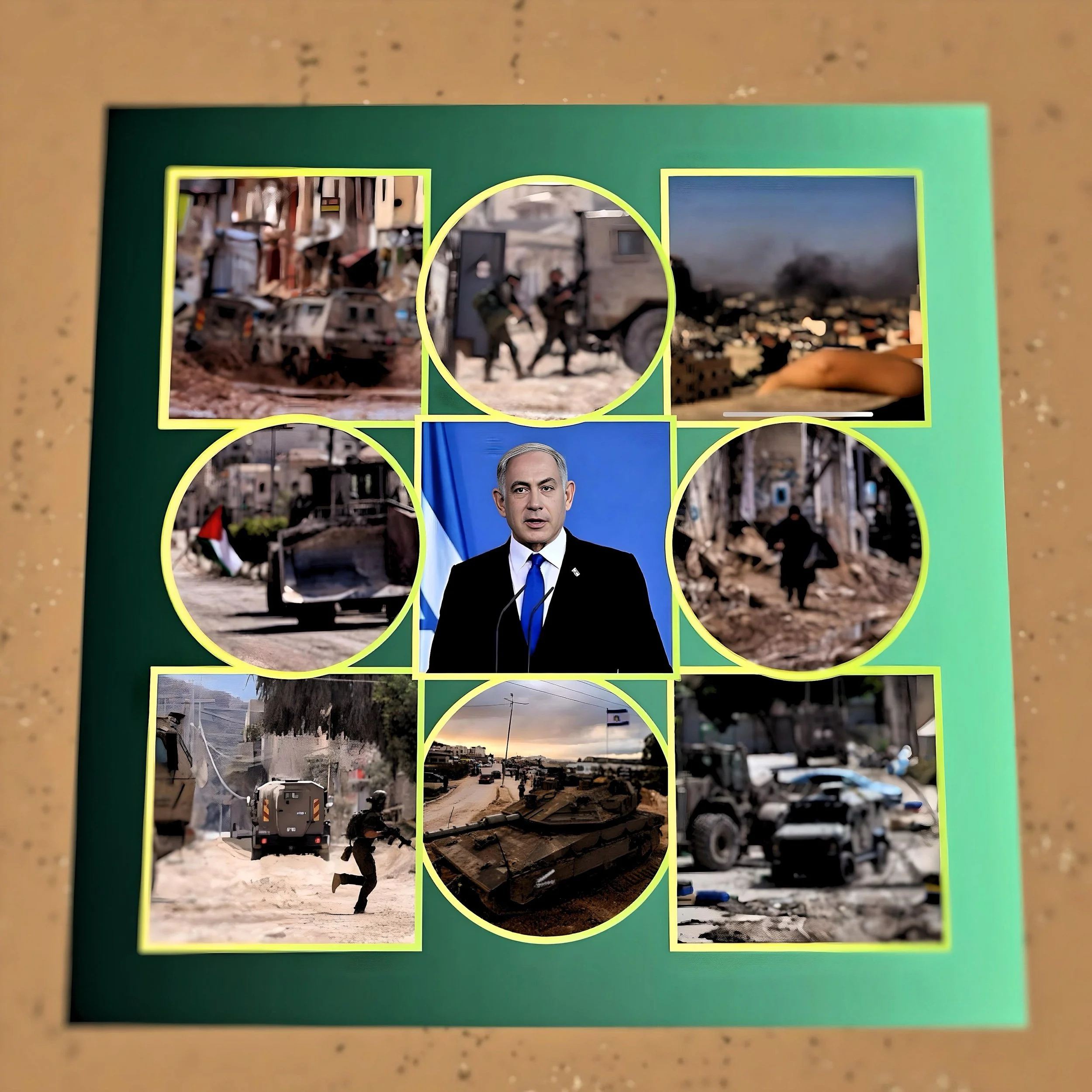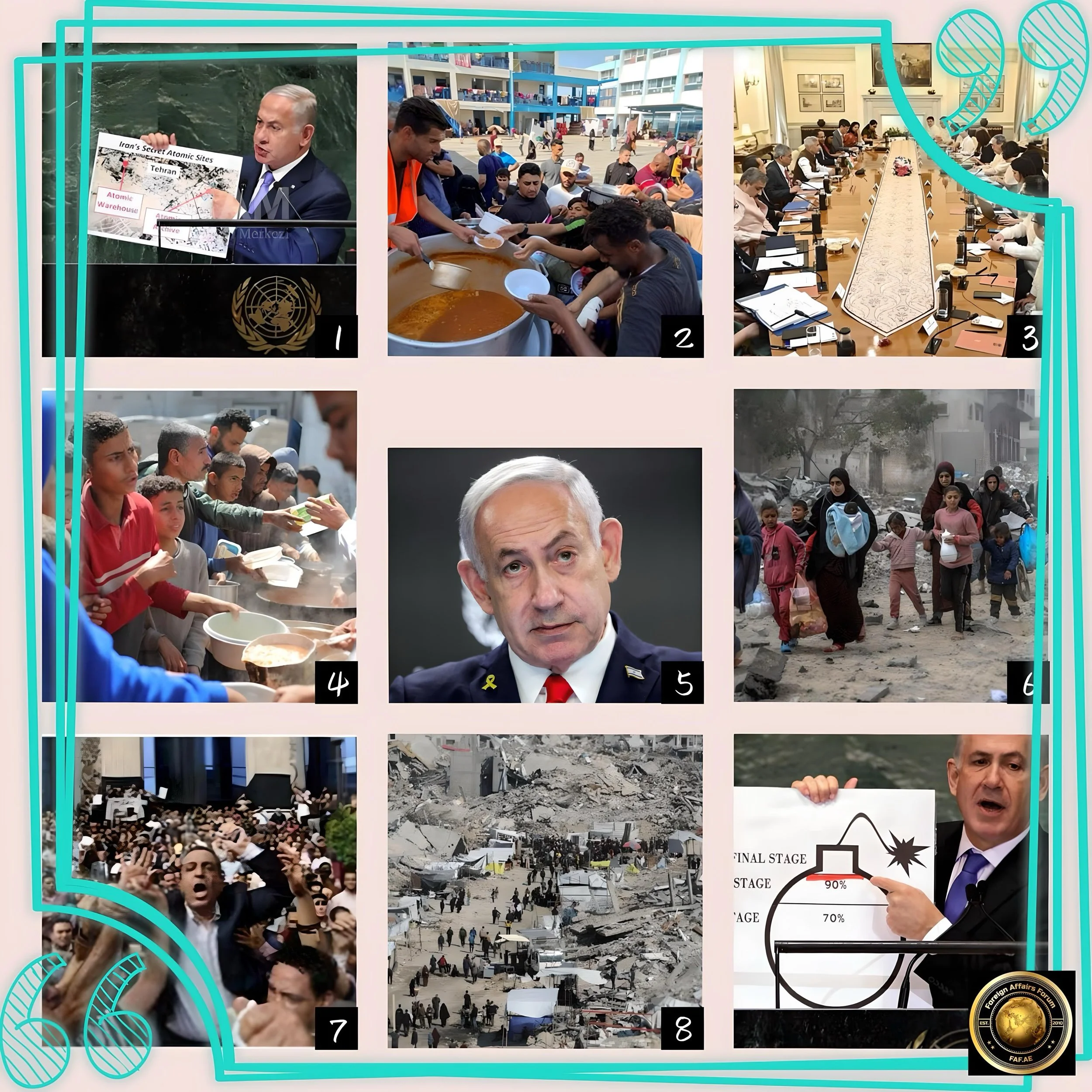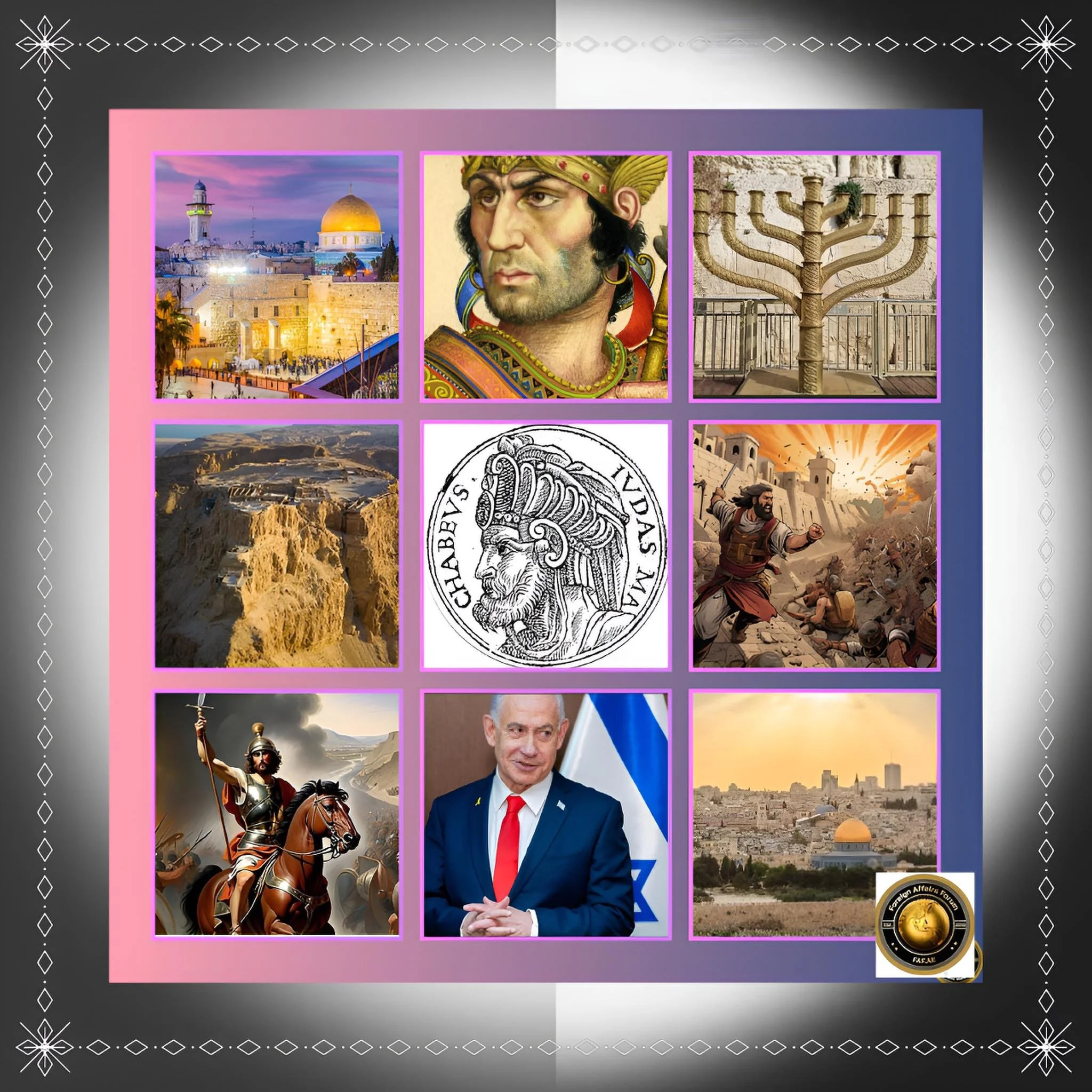
The Maccabean Precedent and Modern Israel: From Resistance Against Persecution to Imperial Expansion - Part II
Executive Summary
The ancient Maccabean Revolt (167–160 BCE) represents a historical turning point wherein a Jewish minority, persecuted and forbidden from practising their faith, rose against the Seleucid Greek-Syrian empire and ultimately achieved religious autonomy.
Yet the narrative obscures a troubling trajectory: having secured religious freedom through defensive warfare, the Maccabees subsequently engaged in territorial expansion, forced religious conversion, and dynastic kingship—essentially replicating the imperial patterns they had resisted.
Modern Israel’s invocation of the Maccabean narrative to justify contemporary military operations across Gaza, the West Bank, Lebanon, Iran, and Syria exhibits striking structural similarities to this historical transformation.
Rather than defensive resistance against existential persecution, Israel’s multi-front operations increasingly resemble offensive territorial consolidation justified through Holocaust trauma, biblical claims, and securitization of existential threats.
This paradox—wherein historical victims adopt the strategic and ideological apparatus of historical oppressors—poses fundamental questions about the sustainability of occupation-based security doctrines and the moral coherence of invoking victimhood narratives to justify the dispossession and subjugation of civilian populations.
Introduction
Ancient Maccabees, Modern Occupation: How a Freedom Struggle Became Imperial Precedent
The Maccabean Revolt occupies a singular place in Jewish historical consciousness and contemporary political rhetoric.
Commemorated annually through Hanukkah, the narrative depicts an outnumbered Jewish population under the Seleucid king Antiochus IV Epiphanes mustering courage, military ingenuity, and spiritual conviction to overcome foreign oppression and restore religious sovereignty. Yet this sanitised account masks a more complex historical reality.
The revolt emerged not as a straightforward conflict between a foreign oppressor and a unified Jewish resistance, but rather as a religiously fractious struggle in which traditionalist Jews in rural areas confronted not only Seleucid military power but also cosmopolitan, Hellenised Jewish elites who collaborated with the Greek-Syrian regime.
Moreover, having achieved religious restoration through military means, the Maccabee leadership (later the Hasmonean dynasty) pursued the following agenda
(1) Territorial expansion.
(2) Forced religious conversion of conquered people.
(3) Consolidation of political authority—a trajectory that troubled contemporary Jewish pietist communities and demonstrates the capacity for revolutionary movements to absorb and replicate the hierarchical, expansionist logics of their predecessors.
Netanyahu’s invocation of the Maccabean narrative—particularly the formulaic assertion that “if the Maccabees had failed, there would be no Huckabees, no Judeo-Christian civilization, no United States”—represents an attempt to anchor contemporary Israeli military posture within an ostensibly defensive historical precedent.
Yet the structural parallels between post-victory Maccabean expansion and modern Israeli operations suggest a more troubling alignment as narrated below
(1) Historical memory is being instrumentalised to legitimise territorial consolidation.
(2) Subjugation of civilian populations under the rhetorical cover of security exigency and religious destiny.
What Led to the Maccabean Revolt
When Religion Became Illegal: The Antiochus IV Persecution That Sparked Hanukkah’s Hidden Civil War
Religious Persecution and the Eruption of Resistance
The Maccabean Revolt originated in a specific historical context of religious suppression and cultural domination.
Antiochus IV Epiphanes, having assumed the Seleucid throne around 175 BCE, initiated a systematic campaign to impose Hellenistic religious and cultural practices upon the Jewish population of Judea.
This was not merely administrative policy but rather ideological warfare: Antiochus IV issued formal decrees suppressing Jewish religious practices entirely.
Jews were compelled to violate their foundational religious codes
(1) Consuming pork in violation of kosher dietary law
(2) Performing labour on the Sabbath
(3) Ceasing the practice of circumcision
(4) The most provocatively, offering worship to Greek deities in place of the God of Abraham.
The centrepiece of this assault occurred in 167 BCE when Antiochus IV’s forces desecrated the Jewish Temple in Jerusalem, transforming it into a sanctuary dedicated to the Greek god Zeus and thereby severing the primary conduit through which Jewish monotheistic identity was spiritually constituted and transmitted.
This suppression was not met with uniform Jewish resistance; revisionist scholarship has established that the conflict was simultaneously a civil war among Jews themselves.
The Hellenised urban elites—including the high priest Menelaus and cosmopolitan Jewish merchants—broadly accommodated or actively facilitated Seleucid policy, recognising in Greek cultural integration a pathway to commercial and political advancement within the imperial system.
By contrast, traditionalist rural Jewish communities experienced the Hellenistic programme as an existential threat to the survival of Judaism itself.
The Maccabean Revolt thus erupted in 167 BCE not as a unified national uprising but rather as a regional insurgency, centred in the countryside, wherein traditionalist Jewish families (the Maccabees among them) mobilised armed resistance against both the Seleucid occupier and the collaborationist Jewish establishment in Jerusalem.
This distinction is historically critical: the revolt was simultaneously a response to foreign religious suppression and an internal Jewish conflict regarding the terms of cultural belonging and religious authenticity in a cosmopolitan, pluralistic empire.
The Maccabees: Judea’s Fiery Hammers of Faith
In the shadowed hills of rural Modiin, 2nd-century BCE Judea, the Maccabean family—known as the Hasmoneans—rose from priestly obscurity to forge a legend of defiance.
Led by the resolute priest Mattathias and his five sons—Judas (Maccabeus, the “Hammer”), Jonathan, Simon, John, and Eleazar—they unleashed a ferocious revolt against Seleucid Greek overlord Antiochus IV Epiphanes, whose edicts had desecrated the Jerusalem Temple, outlawed circumcision, and demanded pagan sacrifices.
Mattathias’s dramatic slaying of a Greek enforcer ignited guerrilla warfare from hidden Judean strongholds, with Judas Maccabeus, the military leader, masterminding audacious victories that reclaimed and purified the Temple in 164 BCE, birthing the Hanukkah miracle of enduring light.
From Rebels to Kings and Tragic Fall
Jonathan and Simon propelled the dynasty forward: Jonathan cunningly secured the high priesthood amid shifting alliances, while Simon clinched full Judean independence by 142 BCE, establishing Hasmonean rule that blended sacred and secular power.
Under successors like John Hyrcanus I and Alexander Jannaeus, the realm expanded aggressively, conquering Idumea and Galilee, yet internal strife, Pharisaic clashes, and Roman intrigue eroded their grip—culminating in Pompey’s 63 BCE conquest and Herod’s eventual usurpation.
The Maccabees’ saga of rural uprising to sovereign glory, followed by factional downfall, remains a timeless epic of Jewish resilience against assimilation and empire.
The Paradox of Maccabean Victory
The Maccabee Twist: How Freedom Fighters Became Forced Convertors and Kings
From Defensive Resistance to Territorial Expansion
The initial military victories of the Maccabees, particularly under Judas Maccabeus, were extraordinary.
Employing guerrilla tactics, superior knowledge of Judea’s mountainous terrain, and exceptional morale compensating for numerical disadvantage, Judas systematically defeated successive Seleucid expeditions.
By approximately 164 BCE, the Seleucid regent Lysias, preoccupied with internal dynastic conflicts, agreed to a political compromise that revoked Antiochus IV’s ban on Jewish religious practices.
From a pure strategic standpoint, the Maccabean objective had been achieved: Jewish religious freedom had been restored, and the Seleucid suppression had ended.
Yet this represented a turning point, not a terminus.
The Maccabean leadership, rather than consolidating religious autonomy, continued their military campaigns with explicitly expansionary aims.
After 164 BCE, Judas conducted what historical sources describe as “liberating” expeditions to peripheral regions where Jewish communities allegedly faced persecution by Gentile populations.
Maccabees’ Conquests: Rescue, Conversion, and Irony
The Maccabees pushed their military campaigns into three key areas:
(1) Gilead across the Jordan River
(2) Galilee in the north
(3) Idumea to the south.
They saved Jewish communities under threat there and went further by forcing the local non-Jewish people to convert to Judaism.
This changed the region’s makeup on a huge scale—for example, Idumea’s entire population was compelled to adopt Jewish practices, shifting the area’s ethnic and religious identity forever.
It’s a striking twist that modern Jewish scholars find uncomfortable: the Maccabees fought back against Antiochus IV’s forced conversions on them, yet used the exact same tough tactics on others they conquered.
The trajectory did not halt with Judas.
His brother Jonathan (who assumed leadership after Judas’s death) navigated the successive civil wars within the Seleucid empire, alternating alliances strategically to extract territorial concessions and expanded autonomy.
Jonathan conquered coastal cities, established diplomatic ties with Rome and Sparta, and laid the foundation for Judean independence—transforming the Jewish polity from a persecuted minority into a small imperial power.
The later Hasmonean kings proceeded further, combining the office of high priest with explicit royal kingship, thereby fusing religious and political authority in ways that violated Jewish scriptural tradition and provoked opposition from pietist communities (Pharisees and Essenes) who perceived in this consolidation a betrayal of the original religiously-driven liberation movement.
The historical trajectory thus demonstrates following recurrent pattern.
(1) Revolutionary movements, having overthrown oppressive hierarchies
(2) Frequently reconstitute those hierarchies in altered form
(3) Replicating the territorial ambition, coercive methods
(4) Hierarchical governance structures of their predecessors.
Modern Israel’s Narrative Construction
Never Again to Compromise: How Holocaust Trauma Hardened Israel’s Existential Security Doctrine
The Holocaust, Existential Threat, and Religious Destiny
Israel’s contemporary political leadership, particularly Benjamin Netanyahu, consciously instrumentalises the Maccabean narrative to anchor Israeli security strategy within a redemptive historical framework.
However, the construction of this narrative requires careful examination of the psychological and political scaffolding upon which it rests.
Israel’s national identity has been constituted, since its establishment in 1948, through a fusion of three distinct but reinforcing narratives
(1) The Holocaust as historical trauma demanding absolute security precautions
(2) Biblical and religious claims to territorial possession of the Land of Israel
(3) The construction of existential threat from regional and international adversaries.
The Holocaust narrative operates at the deepest psychological level.
The Holocaust represents, within Jewish historical consciousness, the ultimate civilisational catastrophe: the systematic, industrialised extermination of six million Jews by Nazi Germany and its collaborators.
This historical trauma has been institutionalised within Israeli political culture such that security policy itself is justified as a mechanism for ensuring that such civilisational genocide never recurs.
Israeli leaders repeatedly deploy the phrase “never again,” which functions not merely as historical memorial but as an active security doctrine: with following assertion that
(1) Israel must maintain overwhelming military superiority
(2) Unilateral capacity for self-defence.
(3) Willingness to employ preemptive force to prevent any scenario in which Jewish vulnerability could be exploited by adversaries.
This doctrine has acquired what scholars term “intergenerational transmission”: research demonstrates that descendants of Holocaust survivors (children and grandchildren) exhibit measurably higher rates of post-traumatic stress disorder when confronted with events perceived as analogous to or reminiscent of the original trauma.
Following the October 7, 2023 attack by Hamas—in which approximately 1,200 Israeli civilians were killed—studies documented a dramatic surge in probable PTSD among Holocaust descendants, rising from 10.4 percent pre-attack to 20.9 percent post-attack.
The psychological impact was particularly acute among those whose parents or grandparents themselves carried diagnosed PTSD.
This intergenerational amplification of trauma has profound political consequences: it creates a national psyche disposed toward interpreting security threats through the lens of existential annihilation and renders compromise or restraint politically illegitimate, as such measures are cognitively processed as capitulation to historical recurrence.
Netanyahu’s invocation of the Maccabean precedent operates within this trauma-saturated psychological matrix.
By asserting that without ancient Jewish resistance there would be “no Judeo-Christian civilization, no United States,” Netanyahu constructs an identity narrative in which contemporary Israel is positioned not merely as a nation-state pursuing legitimate security interests, but as the existential guarantor of Western civilisation itself.
The Maccabean Revolt becomes, in this rhetorical architecture
(1) A prefiguration of October 7 and beyond
(2) The Jewish struggle against Antiochus IV’s persecution mirrors contemporary Israel’s defence against Hamas, Hezbollah, and Iranian regional ambitions.
The effect is psychologically potent: to question Israeli military operations becomes, in this framework, to question the legitimacy of Jewish survival itself and to implicitly endorse the reoccurrence of genocide.
The Securitisation of Existential Threat
Netanyahu’s Iran Existential Threat: Securitisation Strategy or Sincere Assessment?
Iran, Hamas, and the Logic of Preemption
The second major narrative scaffolding Israeli security policy consists of what scholars term “securitisation”—the transformation of political issues into security crises through rhetorical framing and institutional practice.
Netanyahu, throughout his political career, has been a principal architect of this securitisation process, particularly regarding Iran.
Beginning in the 1990s and intensifying through Netanyahu’s various terms as Prime Minister, Iran has been constructed as an absolute existential threat to Israel’s survival.
Netanyahu’s rhetoric consistently frames Iran not merely as a regional rival or political competitor, but as an apocalyptic force committed to Israel’s annihilation.
In a 2015 speech to the U.S. Congress, Netanyahu warned that Iran’s nuclear programme represented a civilisational existential threat not merely to Israel but to Western civilisation broadly.
This framing serves multiple political functions.
(1) Domestically within Israel, the construction of Iran as an absolute existential threat permits Netanyahu to subordinate all other foreign policy considerations—including Palestinian rights.
(2) Settlement expansion.
(3) International legal obligations—to the singular imperative of countering the Iranian threat.
Finally, by tying the Palestinian question to the broader conflict with Iran, Netanyahu argues that Israel cannot address occupation or Palestinian statehood until the existential Iranian threat has been neutralised.
The Palestinian issue is thus rhetorically repositioned from a primary foreign policy challenge requiring negotiated resolution into a secondary concern subordinate to security exigency.
Internationally, the existential threat narrative serves to mobilise American and Western support for Israeli military operations by framing Israeli security as integral to Western security interests.
The logic operates as follows
Iran seeks regional hegemony and nuclear weapons; therefore, Iran constitutes an existential threat to Israel; therefore, Western powers must support Israeli military preemption; therefore, Israeli military operations in Gaza, the West Bank, Lebanon, and Syria—ostensibly undertaken to degrade Iranian proxies or deterrent capacity—become rational expressions of legitimate self-defence.
Yet critical scholarship on securitisation theory identifies a fundamental problem: securitisation moves are substantially about threat construction rather than response to pre-existing objective threats.
In other words, Netanyahu’s Iran narrative does not reflect an empirical assessment of Iranian military capability relative to Israeli capability, but rather constructs Iran as an existential threat through rhetorical and institutional practices designed to mobilise support and bypass democratic deliberation.
One manifestation of this securitisation is Netanyahu’s complete asymmetry in threat assessment: Iran’s pursuit of nuclear weapons is framed as apocalyptic and illegitimate, whilst Israel’s undeclared but substantial nuclear arsenal (estimated at 75–400 nuclear warheads) is presented as morally legitimate and necessary.
Netanyahu argues that Iran’s nuclear ambitions are illegitimate because Iran is ruled by “unhinged” ideological extremists committed to Israel’s destruction, whereas Israel’s nuclear weapons are justified because Israel, as a historical victim of persecution and genocide, possesses moral rectitude and responsible stewardship over weapons of mass destruction.
This asymmetry reveals the underlying mechanism: securitisation rhetoric constructs moral hierarchies in which certain actors are deemed inherently hostile (and therefore must be prevented from acquiring weapons) whilst others are deemed inherently benign (and therefore their weapons acquisition is justified).
The effect is to create an epistemological closure wherein questioning Netanyahu’s threat construction becomes, itself, a form of naïveté or antisemitic bad faith.
Multi-Front Military Operations
The Seven-Front War: Has Israel’s Multi-Theatre Operations Become Imperial Consolidation?
Gaza, West Bank, Lebanon, Syria, and the Architecture of Imperial Control
The strategic consequences of this securitisation apparatus are evident in Israel’s multi-front military posture.
Since October 7, 2023, Israel has simultaneously engaged in major military operations across at least five distinct geographic and political theatres: Gaza, the West Bank, Lebanon, Syria, and Iran (through strikes targeting Iranian military facilities).
Each operation is justified through security rhetoric emphasizing existential threat and counterterrorism imperatives.
However, the cumulative effect of these simultaneous operations, combined with examination of their stated objectives and material outcomes, reveals patterns structurally analogous to the post-victory Maccabean expansion described above.
Gaza: Humanitarian Catastrophe Under the Banner of Security
Following the October 7 Hamas attack, Israel responded with an invasion of Gaza characterised by unprecedented scale and intensity.
The Gaza operation has resulted in approximately 76,000 confirmed deaths (according to Gaza Ministry of Health data, widely cited by international agencies), with the vast majority being civilians.
The territory has experienced systematic destruction of infrastructure, healthcare systems, water and sanitation facilities, and food supply networks.
As of December 2025, Gaza faces famine conditions affecting over two million people, with the United Nations warning of imminent mass starvation.
International bodies, including the International Court of Justice and multiple human rights organisations, have documented evidence of violations of humanitarian law principles including proportionality, distinction between combatants and civilians, and the prohibition on collective punishment.
Yet Israeli security doctrine frames the Gaza operation as necessary counterterrorism and as response to existential threat.
The rhetorical architecture functions as follows: Hamas attacked Israel; therefore, Hamas and its infrastructure must be eliminated; therefore, operations in Gaza, regardless of civilian casualty levels or infrastructure destruction, are justified expressions of self-defence.
What this framing obscures is the underlying demographic and territorial logic: Gaza, a territory of 2.3 million Palestinians with limited water, electricity, and food resources, has been under Israeli military blockade since 2007.
The blockade itself, according to Amnesty International and human rights organisations, constitutes collective punishment prohibited under international humanitarian law.
The Gaza operation, within this longer trajectory, functions not primarily as counterterrorism but as a mechanism for reducing the Palestinian population through forced displacement, forced starvation, and destruction of civilian capacities for self-governance and economic survival.
West Bank: Territorial Consolidation Through Settlement Expansion and Military Control
Parallel to the Gaza operation, Israel has dramatically intensified military operations in the West Bank, a territory under Palestinian Authority nominal civil administration but Israeli military control.
In December 2025, the Israel Defence Forces mounted what has been described as its largest military deployment in the West Bank since the supposed October 2024 Gaza ceasefire.
The stated objective is “broad counter-terrorism operation,” yet the practical effect is to consolidate Israeli military control, disable Palestinian armed resistance, and create conditions for the construction of new Israeli settlements and military infrastructure.
The underlying logic of West Bank military operations is territorial consolidation. Israel has maintained a systematic programme of settlement expansion throughout the West Bank since the 1967 occupation.
These settlements—numbering over 600 distinct settlements and outposts—are constructed on Palestinian land, utilise Palestinian water and mineral resources, and function as de facto instruments of territorial annexation.
International law, specifically the Fourth Geneva Convention, explicitly prohibits an occupying power from transferring its own civilian population into occupied territories.
In 1967, Israel’s own legal advisor concluded in a classified memo that civilian settlement in occupied territories would violate the Geneva Convention; the memo was kept secret for decades.
Despite this legal determination, Israel proceeded with systematic settlement expansion, treating the Geneva Convention’s prohibitions as inapplicable to Israeli actions.
The material consequences have been documented by human rights organisations: over fifty years of occupation, Israel has demolished tens of thousands of Palestinian homes, forcibly displaced Palestinian communities, and expropriated Palestinian agricultural land and water resources for settlement use.
A thriving “settlement economy” has emerged wherein Israeli businesses in settlements export hundreds of millions of dollars’ worth of goods internationally, profits derived from unlawfully appropriated Palestinian resources.
The West Bank military operations, under the guise of counterterrorism, enable the continuation and acceleration of this territorial consolidation process.
Military deployments create “security zones” where Palestinians are excluded, paving the way for new settlements or military infrastructure.
The logic is fundamentally imperial
(1) Use of military force to establish territorial control.
(2) Israeli civilian settlement and economic extraction.
(3) Permanent demographic transformation.
Lebanon and Syria: Buffer Zones and Regional Hegemony
Israel has similarly intensified military operations in Lebanon, maintaining what it describes as “strategic positions” in southern Lebanon despite a supposed cessation-of-hostilities agreement signed in 2024.
Israel’s defence minister has explicitly threatened escalation against Lebanon unless Hezbollah is “disarmed by the end of the year.”
Yet the stated strategic rationale—that these positions provide Israeli security—obscures a deeper territorial logic.
Israel’s maintenance of buffer zones in Lebanon and Syria functions to establish Israeli control over territory outside Israel’s internationally recognised borders, effectively extending Israeli de facto sovereignty across borders and into neighbouring states.
This pattern mirrors Maccabean expansion:
(1) Achieved initial strategic objectives (in this case, defence against Hamas and Hezbollah)
(2) Israeli operations have evolved into explicit territorial expansion
(3) Consolidation of control over territories inhabited by non-Jewish populations.
The Lebanese government, economically devastated and politically fractious, lacks capacity to expel Israeli forces; thus, Israeli military occupation persists indefinitely.
Similarly, Israel has maintained occupation of the Syrian Golan Heights since 1967, territory that international law treats as occupied Syrian territory under military administration.
The strategic benefit of these occupations is leverage by maintaining military positions in foreign territories, Israel gains bargaining power over neighbouring governments and creates fait accompli territorial configurations that international bodies are subsequently forced to recognise or accommodate.
The Cumulative Pattern: Occupation as Permanent Strategy
Examined cumulatively, Israel’s multi-front military operations since October 2023 reveal a strategic architecture fundamentally predicated on territorial occupation and military control rather than negotiated political settlement.
The stated rhetorical framework emphasises security exigency and counterterrorism, yet the practical trajectory involves the permanent consolidation of military occupation, settlement expansion, and demographic transformation across multiple territories.
This pattern—from initial defensive resistance (October 7 response) to territorial expansion and demographic consolidation (ongoing operations)—mirrors precisely the Maccabean trajectory identified by historians:
(1) Revolutionary movements, having achieved initial defensive objectives
(2) Proceed to territorial expansion justified through security rhetoric.
(3) Ideological narratives of civilisational destiny.
The Holocaust Comparison Paradox
When Victims Replicate Perpetrators’ Methods
Holocaust Survivors’ Dissent: When Victimhood Narratives Become Tools of Oppression
Perhaps the most morally fraught dimension of contemporary Israel’s policies involves the relationship between Holocaust history and Palestinian displacement.
Netanyahu and other Israeli leaders repeatedly invoke Holocaust memory and the principle of “never again” to justify Israeli military operations and rejection of Palestinian political claims.
Yet this rhetorical move has become increasingly contested by a significant cohort of Holocaust survivors themselves, who have begun drawing explicit parallels—not inversions—between Israeli policies toward Palestinians and Nazi occupation methods.
In July 2024, thirteen Holocaust survivors issued a public statement comparing Israeli policies to those of Nazi Germany. Here are some striking examples.
(1) Survivor Suzanne Berliner Weiss, who experienced Nazi occupation of France, stated explicitly: “Many Israeli techniques – the expulsions, the ghetto isolation, the pervasive checkpoints – have a disquieting resemblance to Nazi methods.”
(2) Another survivor observed that the Warsaw Ghetto uprising, wherein Jewish resistance fighters deliberately chose armed confrontation knowing they would likely perish, parallels the choices confronted by Palestinian resistance movements in Gaza, where civilians face overwhelming military superiority yet possess limited options for non-violent political expression or territorial self-determination.
Most provocatively, survivors have questioned the moral coherence of invoking “never again” to prevent genocide against one people whilst employing policies structurally comparable to those utilised in the perpetration of genocide against another people.
(3) One survivor, confronted with Netanyahu’s claim that October 7 constituted “a Holocaust,” responded: “What does he call 31,000 dead people?” referencing the death toll in Gaza.
(4) Holocaust scholar Omer Bartov has warned that Israel’s repeated invocation of the Holocaust to justify military actions represents “a profound moral and historical distortion,” transforming Holocaust memory from “a universal warning against inhumanity” into a “carte blanche for destroying others by invoking one’s own past victimhood.”
These comparisons are highly contested.
The World Jewish Congress and other Jewish institutional bodies classify such comparisons as antisemitic, arguing that equating Israeli policy to Nazi policy represents a demonisation of Israel and a trivialization of the Holocaust.
Yet the contention is not merely a matter of rhetoric; it reflects a deeper moral and historical question: whether the experience of victimisation and persecution necessarily conveys moral wisdom regarding the treatment of other vulnerable populations, or whether, conversely, historical trauma can become a mechanism for justifying the infliction of comparable suffering upon others.
The psychological research on this phenomenon suggests a paradoxical dynamic.
Intergenerational trauma transmission, as documented in studies of Holocaust descendants, renders individuals and communities hypersensitive to perceived threats to their own survival and security.
This hypersensitivity may, however, correlate paradoxically with diminished empathy for the suffering of other groups perceived as threats. In other words, trauma may generate both heightened vigilance against external threat and reduced capacity for moral imagination regarding the humanity and suffering of those classified as potential adversaries.
This psychological dynamic helps explain why Holocaust memory, rather than generating universal sympathy for all victims of persecution and displacement, has instead become instrumentalised within Israeli political culture to justify policies that create new victims and displace new populations
The Forgotten Irony: Has Modern Israel Adopted the Imperial Posture of Its Oppressors?
The Maccabean Mirror: When Persecuted Peoples Become Persecutors
The deepest irony embedded in Israel’s contemporary security posture consists in the observation that Israel, established as a refuge for a persecuted people and justified through reference to Jewish historical victimisation, has evolved into an occupying power employing methods structurally comparable to those utilised by historical occupiers and persecutors.
This is not an argument that Israel is “equivalent” to Nazi Germany or other totalitarian regimes; such equivalencies obscure more than they clarify.
Rather, the observation concerns the recurrence of structural patterns:
(1) The use of military force to establish territorial control
(2) The settlement of the occupying population’s civilians in occupied territories
(3) The confiscation of indigenous resources (land, water, minerals)
(4) The systematic displacement of indigenous populations
(5) The construction of ideological narratives (religious destiny, historical right, security exigency) to justify these practices.
The Maccabean historical pattern illuminates this recurrence.
The Maccabees resisted forced religious conversion and cultural suppression imposed by Antiochus IV; having achieved military victory, they subsequently imposed forced religious conversion upon conquered Gentile populations.
This is not portrayed as hypocrisy in historical accounts; rather, it is presented as a pragmatic expansion of territorial and religious authority.
Yet from the perspective of the conquered Idumeans, the Maccabean victory and subsequent expansion appeared not as liberation but as conquest and subjugation—practices morally identical to those they had witnessed in the Seleucid occupation, merely with different actors and religious justifications.
Modern Israel exhibits comparable structural dynamics.
The Jewish people, having experienced persecution and attempted genocide in Nazi Germany, established a state justified as a refuge and haven for Jewish peoples worldwide.
Yet the establishment and consolidation of that state has necessitated, from the moment of Israel’s creation in 1948, the displacement and subjugation of the Palestinian population that inhabited the territory.
United Nations Resolution 194 (passed unanimously in December 1948) affirmed the “right of return” for Palestinian refugees displaced in 1948; Israel has rejected this resolution for over seventy years.
Israeli law explicitly privileges Jewish immigration and citizenship whilst restricting Palestinian rights.
Israeli military occupation of the West Bank, established in 1967, has persisted for fifty-seven years without end, violating international law provisions regarding temporal limitations on military occupation.
The confiscation of Palestinian land for settlement expansion, the systematic destruction of Palestinian homes, and the imposition of military restrictions on Palestinian freedom of movement all parallel the methods utilised by occupying powers throughout history.
What distinguishes Israeli policy from classical colonialism is not the methods employed but the ideological and historical justifications invoked.
The Maccabean narrative, the Holocaust memory, the biblical claim to the Land of Israel—these constitute an interpretive framework that permits Israeli political leaders and many Israeli citizens to understand occupation not as occupation but as legitimate historical restoration and necessary security measure.
This interpretive framework is psychologically and spiritually powerful for those who embrace it; yet from the perspective of Palestinians experiencing military occupation, settlement expansion, home demolition, and resource expropriation, the effect is indistinguishable from classical colonialism.
The historical irony consists in the fact that the Jewish people, having experienced what they rightly identify as historical persecution and attempted genocide, have created a state that, from the perspective of Palestinians, appears as a persecuting and occupying power.
Cause-and-Effect Analysis: The Logical Chain from Trauma to Occupation
The trajectory from Holocaust trauma to contemporary occupation policy involves several interconnected causal dynamics.
First Causal Link
Holocaust Trauma Creates Existential Security Doctrine
The Holocaust represents, in Jewish historical consciousness and in global historical memory, an unprecedented civilisational catastrophe.
The systematic attempt to exterminate an entire people created, within Jewish communities and within the nascent Israeli state, a profound conviction that Jewish survival could never again be made contingent on the tolerance or goodwill of non-Jewish authorities.
This conviction generated what might be termed an “absolute security imperative”: the conviction that Jewish survival requires overwhelming military superiority, territorial sovereignty, and the capacity to defend oneself unilaterally without reliance on international law, diplomatic arbitration, or external protection.
This doctrine manifests in several policy consequences
(1) Israel’s refusal to renounce nuclear weapons or submit to international inspection regimes
(2) Israel’s refusal to accept international judicial authority regarding alleged violations of humanitarian law
(3) Israel’s assertion of the right to conduct preemptive military operations against perceived threats, without waiting for exhaustion of diplomatic channels or international deliberation
(4) Israel’s refusal to accept limitations on military operations based on anticipated civilian casualties or violations of humanitarian law principles.
Second Causal Link
Existential Insecurity Generates Territorial Expansion as Security Logic
From the absolute security imperative flows a second strategic logic: if survival depends upon military superiority and cannot be guaranteed through international law or diplomatic agreements, then territorial control becomes a substitute for legal protection.
The more territory Israel controls militarily, the deeper the buffer zones surrounding Israeli population centres, the more settlements established in occupied territories—the greater the perceived security.
This logic does not require Israeli conquest of all territory from the Mediterranean to the Jordan River; rather, it requires maintaining military control and demographic dominance sufficient to prevent any hostile power from establishing capability to threaten Israeli cities.
Yet this logic encounters a fundamental problem: there is no determinate end-state to territorial expansion justified through security logic.
(1) If security requires buffer zones, then greater buffer zones mean greater security
(2) if security requires demographic dominance, then greater Jewish demographic majority in disputed territories means greater security
(3) if security requires settlement expansion, then each new settlement creates new territorial stakes requiring subsequent military protection.
The result is what might be termed a “security paradox”: the pursuit of security through territorial expansion and military occupation generates new insecurities (international condemnation, Palestinian resistance, regional hostility) which in turn justify further territorial expansion and military consolidation.
Israel finds itself trapped within an expanding cycle in which each security measure generates new threats requiring new security measures.
Third Causal Link
Ideological Narratives Legitimise Policies Contradicting International Law
To sustain territorial occupation and settlement expansion over decades, Israeli political leadership has developed sophisticated ideological narratives that reframe occupation as legitimate.
These narratives include
(1) Bibical and religious claims to the territory (“this is the land promised to the Jewish people by God”
(2) Historical claims based on ancient Jewish kingdoms (“the Jewish people have historical ties to this land extending back millennia”)
(3) Security justifications (“these territories must be controlled for Israeli security”)
(4) Demographic claims (“Jews have the right to settle anywhere in this historically Jewish land”).
Each narrative, individually, contains some historical or religious validity for those who embrace the theological and historical interpretations underlying them.
Yet collectively, these narratives function to create an interpretive closure wherein occupation becomes, for many Israelis, not a violation of international law but a legitimate exercise of national self-determination and historical restoration.
This interpretive closure permits Israeli citizens and leaders to reject international criticism, resist international law, and pursue policies that would be recognised as illegal if undertaken by other states, all whilst maintaining a sincere conviction that they are acting in accordance with justice and historical truth.
Fourth Causal Link
Demographic Transformation Becomes Irreversible
The cumulative effect of decades of settlement expansion is that the West Bank now contains over 600,000 Israeli settlers (excluding Israeli settlers in occupied East Jerusalem).
These settlers have established economic interests, political organisations, and military infrastructure deeply integrated into Israeli state structures.
The settler movement has become a significant constituency within Israeli electoral politics, with settler-aligned political parties holding cabinet positions and wielding disproportionate influence over Israeli security and settlement policy.
As the settler population has grown, the theoretical possibility of territorial compromise (whereby Israel would withdraw from significant portions of the West Bank in exchange for Palestinian statehood) has become progressively less feasible.
Each additional settlement reduces the territory available for Palestinian self-governance; each additional settler creates a constituency with political and economic interests in maintaining territorial control.
The result is what scholars term “demographic determinism”: the settlement expansion has made territorial compromise mathematically and politically nearly impossible.
Palestinians cannot have a viable, sovereign state on the fragmented, dismembered West Bank territories not covered by Israeli settlements; yet Israeli political decision-making, constrained by settler constituencies and ideological narratives of historical right, has made withdrawal from settlements politically impossible.
The two populations have become so thoroughly intertwined, the territorial boundaries so fractured by settlement expansion, that a negotiated two-state solution has become structurally implausible.
Fifth Causal Link
Existential Threat Construction Justifies Continued Occupation Despite Humanitarian Cost
Finally, the securitisation of existential threats (Iran, Hamas, Hezbollah) provides ongoing political justification for military operations that impose humanitarian costs upon Palestinian and neighbouring populations.
The logic operates as follows
(1) Iran seeks regional hegemony and nuclear weapons; therefore, Iran must be prevented from acquiring such capability
(2) Israel must maintain military operations against Iranian proxies (Hamas, Hezbollah) and against Iranian military facilities.
(3) Operations in Gaza, the West Bank, Lebanon, and Syria must continue regardless of civilian casualty levels.
(4) Humanitarian concerns regarding Palestinian casualties or Palestinian political rights must be subordinated to the imperative of preventing Iranian regional dominance.
This causal chain creates a situation in which humanitarian considerations are systematically subordinated to security exigency, and in which the scale of humanitarian suffering (76,000+ deaths in Gaza, widespread displacement in the West Bank, famine conditions affecting millions) fails to generate political pressure for policy change because security concerns are constructed as absolutes that cannot be compromised without risking existential annihilation.
Future Trajectories
Israel’s Unsustainable Paradox: Can Permanent Occupation Generate Lasting Security?”
Can the Security Paradigm Generate Durable Political Stability?
The current trajectory of Israeli military operations and territorial consolidation raises fundamental questions regarding sustainability.
A security doctrine predicated on permanent military occupation, demographic consolidation, and resistance to international legal constraints may generate tactical military advantages in the short term, yet faces profound long-term challenges.
Demographic Unsustainability
Israel currently maintains military control over approximately 12 million people (6 million Israelis and Palestinians within Israel’s internationally recognised borders, plus Palestinians in the occupied territories).
The Palestinian population growth rate exceeds the Jewish Israeli growth rate, such that demographic trends point toward eventual Palestinian numerical majority within the territories Israel controls.
This demographic trajectory creates an inherent contradiction: Israel cannot simultaneously maintain Jewish demographic majority, permanent military occupation, and democratic governance; only two of these three are sustainable simultaneously.
Israel will face a future choice
(1) Withdraw from territories and accept Palestinian self-determination, thereby abandoning the security logic of territorial control.
(2) Maintain permanent military occupation and accept non-democratic governance, effectively institutionalising apartheid.
(3) Permit Palestinian political integration into Israeli governance structures, resulting in the eventual erosion of Jewish demographic and political dominance.
None of these options is politically acceptable to the Israeli political leadership under current ideological frameworks, yet demographic mathematics render all other outcomes implausible.
International Legal Accountability
Israel’s resistance to international legal authority faces mounting pressure.
The International Criminal Court has initiated investigations into alleged Israeli war crimes; multiple states have filed suits at the International Court of Justice alleging Israeli violations of the Genocide Convention; human rights organisations document systematic violations of humanitarian law.
Whilst Israel currently enjoys sufficient political support from the United States and other Western powers to resist international legal accountability, the long-term trajectory is toward international isolation and legal accountability if occupation and settlements continue indefinitely.
The Trump administration’s apparent willingness to provide unlimited diplomatic cover for Israeli operations may create a temporary window of reduced international pressure; yet the underlying trend is toward greater international legal scrutiny and potential criminal accountability for Israeli leaders and military officers.
Palestinian Resistance and Regional Destabilisation
Israel’s military operations have not eliminated Palestinian capacity for resistance; indeed, successive generations of Palestinians have experienced Israeli occupation as their lived reality, creating deep reservoirs of grievance and willingness to resist.
Hamas and other Palestinian armed factions have demonstrated capacity to inflict significant Israeli casualties despite overwhelming technological and military disadvantage.
The October 7 attack, despite resulting in ultimate military defeat, demonstrated that Palestinian armed resistance remains capable of penetrating Israel’s security infrastructure.
Future Palestinian resistance is likely to take evolving forms as technology and military doctrine advance; drone capabilities, cyber warfare, and other asymmetric methods may increase Palestinian capacity to inflict strategic costs on Israeli occupation.
Similarly, the regional environment remains unstable: Iran continues to support anti-Israeli factions; Hezbollah remains militarily potent despite Israeli operations; and broader Middle Eastern dynamics may generate new coalitions or conflicts in which Israel’s interests are threatened.
Moral and Demographic Fractures Within Israeli Society
Perhaps most significantly, Israel’s pursuit of permanent occupation and territorial consolidation faces growing opposition from Israeli society itself.
Younger Israeli cohorts demonstrate less attachment to settlement ideology and greater willingness to acknowledge Palestinian human rights.
Surveys indicate that significant segments of Israeli Jewish society, particularly the secular, educated, younger demographic, recognise the unsustainability of the occupation and the necessity of political compromise with Palestinians.
Additionally, Arab Israeli citizens (Palestinians holding Israeli citizenship) face systematic discrimination and marginalisation; their growing political consciousness and electoral mobilisation represents a potential internal challenge to Jewish political dominance.
The Israeli settler movement, whilst politically influential, represents only a small minority of Israeli society; yet this minority’s political power derives from its strategic position within coalition governments and its concentration of ideological commitment.
As humanitarian costs of occupation mount and internal Israeli opposition grows, sustaining the occupation becomes increasingly dependent on coercive suppression of internal dissent and hardening of ideological commitment—a trajectory that itself generates risks of internal fracture and potential civil conflict.
Conclusion
The Maccabean Choice: Can Israel Break the Cycle of Occupation Before History Repeats Itself?
Historical Precedent and Future Reckoning
The Maccabean Revolt represents a singular moment in Jewish historical consciousness: a moment when a persecuted minority, forbidden from practising their faith and culture, rose against an oppressive empire and achieved religious autonomy and territorial sovereignty.
Yet the historical record reveals a more complex and troubling trajectory: having achieved initial defensive objectives, the Maccabee leadership proceeded to territorial expansion, forced religious conversion of conquered populations, and the construction of hierarchical political authority—replicating, in altered form, the imperial patterns they had resisted.
This historical precedent illuminates a recurrent pattern in human political history: revolutionary movements, having overthrown oppressive hierarchies, frequently reconstitute those hierarchies in altered forms, replicating the territorial ambition, coercive methods, and ideological justifications of their predecessors.
Modern Israel’s invocation of the Maccabean narrative, particularly in Netanyahu’s formulation that without ancient Jewish resistance “there would be no Judeo-Christian civilization, no United States,” represents an attempt to anchor contemporary Israeli military posture within a redemptive historical framework.
Yet the structural similarities between post-victory Maccabean expansion and modern Israeli operations suggest a more troubling alignment: that historical memory is being instrumentalised to legitimise territorial consolidation and the subjugation of civilian populations.
Israel’s multi-front military operations since October 2023—across Gaza, the West Bank, Lebanon, Syria, and Iran—reveal a strategic architecture predicated not on negotiated political settlement but on permanent territorial occupation and military control.
The stated rhetorical framework emphasises security exigency and counterterrorism; yet the practical trajectory involves the permanent consolidation of military occupation, settlement expansion, and demographic transformation.
Most troublingly, this trajectory contradicts the moral lessons that might be derived from Holocaust history.
The Holocaust represents a warning against the capacity of totalitarian states to construct ideological justifications for the persecution and extermination of other peoples.
Yet Israel’s contemporary policies demonstrate how historical victimisation and trauma can themselves become justifications for the infliction of comparable suffering upon other vulnerable populations.
Holocaust survivors who have drawn parallels between Israeli policies and Nazi occupation methods represent not antisemitic denigration but rather a profound attempt to resurrect the moral universalism that should underlie Holocaust remembrance—the conviction that all human beings, regardless of ethnicity or religion, deserve protection from persecution, displacement, and dispossession.
The fundamental question facing Israel is whether it can break the historical cycle evident in the Maccabean precedent and in colonial history more broadly: the cycle wherein revolutionary movements, having achieved initial defensive objectives, proceed to territorial expansion and the replication of hierarchical power structures.
Israel possesses the military and economic capacity to sustain permanent occupation indefinitely; yet this capacity does not translate into sustainability in moral, demographic, or international legal terms.
The occupation has generated humanitarian catastrophes in Gaza, systematic displacement and dispossession in the West Bank, and regional instability across Lebanon and Syria.
These costs cannot be sustained indefinitely without generating internal Israeli fracture, international isolation, and the perpetual renewal of Palestinian resistance.
An alternative trajectory remains theoretically possible: Israel could recognise that permanent occupation and territorial expansion represent not security but rather a security paradox that generates new threats and vulnerabilities.
Israel could pursue a negotiated political settlement with Palestinians, establishing Palestinian self-determination in the West Bank and Gaza, whilst accepting limitations on territorial expansion and settlement construction.
Such a settlement would require compromises: Israel would need to dismantle many settlements, accept limitations on military operations in Palestinian territories, and renounce territorial ambitions in Lebanon and Syria.
Palestinians would need to accept a state on less than all of the territory they claim, renounce right of return for refugees, and accept security arrangements limiting Palestinian military capacity.
Such compromises would be politically difficult and psychologically painful for both peoples; yet they represent the only pathway toward a sustainable political arrangement that respects the legitimate historical claims, security concerns, and human rights of both Israeli Jews and Palestinian Arabs.
Yet the current trajectory, under Netanyahu’s leadership and the ideological framework of permanent occupation, moves in the opposite direction.
Each military operation generates new grievances; each settlement expansion forecloses political possibilities; each assertion of existential threat justifies further military consolidation.
The Maccabean historical precedent suggests that this trajectory ultimately proves unsustainable: great empires and occupying powers, no matter how militarily dominant, cannot maintain permanent occupation of large populations indefinitely without generating resistance, international pressure, and internal moral fracture.
Israel stands at a historical crossroads: it can continue down the path of territorial expansion, demographic consolidation, and military occupation, accepting the long-term consequences of international isolation, internal fracture, and perpetual conflict.
Or it can choose a different path: recognition of Palestinian self-determination, acceptance of territorial limitations, and pursuit of a just and negotiated political settlement.
The Maccabean narrative, properly understood, counsels the latter course—not as weakness but as wisdom, not as surrender but as recognition that security ultimately rests not on permanent military dominance but on the construction of just political arrangements that respect the humanity and rights of all peoples.